Category: Packaging Design

  • Best Flexible Pouch Formats for High-Volume Food Brands

    Best Flexible Pouch Formats for High-Volume Food Brands

    Best Flexible Pouch Formats for High-Volume Food Brands

    When it comes to high-volume food buyers and manufacturing companies, you face different trade-offs and issues than smaller food brands do. At scale, a cost-per-unit difference of a few cents can add up to six figures (or more!) annually, while the wrong pouch format can create friction on the fill line or in the warehouse, be detrimental to consumer convenience, or affect shelf visibility in retail. In this article, we’ll break down the best flexible packaging types for high-volume food brands, along with several factors to consider when purchasing.
    Stand-Up Pouch Packaging: The Retail Workhorse for Food Brands

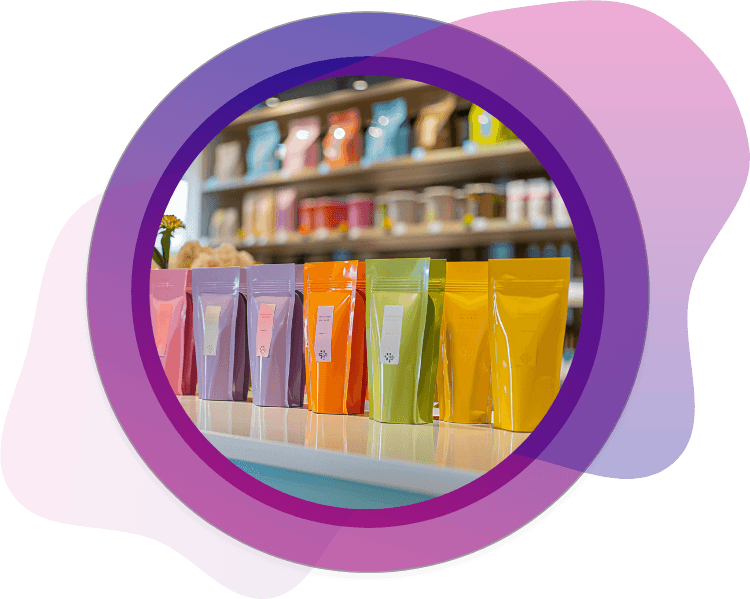
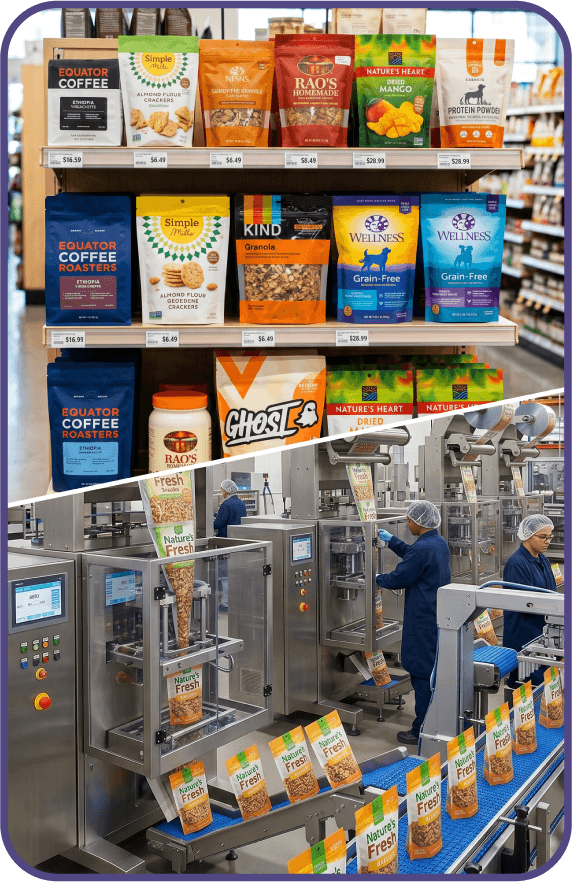
    Stand-up pouch packaging is the most widely used flexible packaging format for frozen food, dry snacks, baby food, coffee beans, pet food, supplements, liquids, dried fruits, personal care products, powders, sauces, heavy products, and dried goods. Not only does this type of packaging provide barrier protection, but the gusseted bottom construction is essential, as it enables the stand-up pouch to stand on a shelf or retail display. It’s also beneficial to brands because it enables a “billboard effect” at the point of purchase, as the entire front (and really, all four sides) of the recyclable or compostable pouch can be customized with branding, your website, or text to your preference.

    There are several benefits to stand-up pouch packaging, particularly for high-volume food brands. This type of packaging is available in rollstock for form-fill-seal lines and is compatible with VFFS (vertical form-fill-seal) and HFFS (horizontal form-fill-seal) equipment. Stand-up pouch packaging is ideal for any retail food product where the brand competes visually on a shelf; in these situations, the extra cost per unit pays back in velocity. In terms of limitations, the higher per-unit cost might not be the right call for every product.

    Flat Bottom Pouches: Premium Shelf Presence for Flagship SKUs

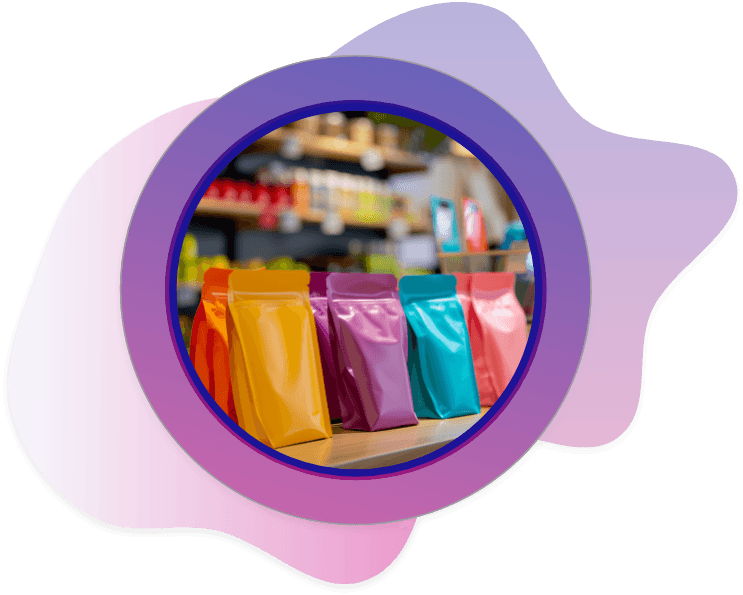
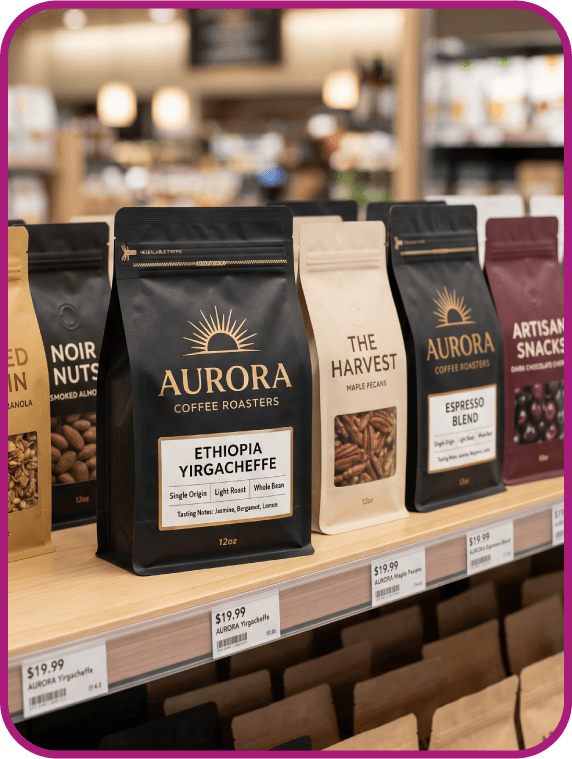
    Flat-bottom gusset pouches are a step up from a standard pouch and other more basic sustainable packaging options. They’re more structured and feel more premium, making them a great option for flagship or hero SKUs where the brand wants a box-like appearance without the cost and sustainability tradeoffs of a carton. While a stand-up pouch has a gusset that enables it to stand upright on a shelf, the construction of a flat-bottom pouch is a bit different: it has a rectangular, flat base and side gussets that create box-like stability, with a full printable surface on all panels.

    One important thing to note about flat-bottom pouches is that they require different filling equipment from standard mono-material doypacks, so you may need to flag this with your co-packer before purchasing. If you sell specialty coffee, gourmet snacks, premium nuts, tea, or any food or snack category that commands a higher price, this higher-quality, rigid packaging can help your product stand out on the shelf.
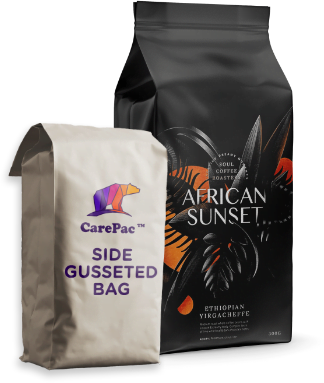
    Side Gusset Pouches: High Capacity for Coffee, Tea, and Bulk Food Products

    Side gusset pouches have expandable folds on both sides (rather than the bottom), creating a flat front and back panel with depth for high-fill-weight products. What sets side gusset pouches apart from other types of high barrier pouches is the flat front panel: it offers an uninterrupted, undistorted print surface at any fill weight. This type of packaging is common in both retail and food service/bulk formats and is great for high-volume purposes: coffee roasters, tea brands, bulk nuts, and pet food. If you have heavy or high-volume fills that a standard doypack would underfill, this is the best choice for you.

    As with the other packaging types on this list, side gusset pouches provide enhanced barrier properties and can be customized to include custom shapes or features like a resealable zipper, child-resistant properties, or a degassing valve, and can be made from different types of materials, such as plastic or kraft paper.

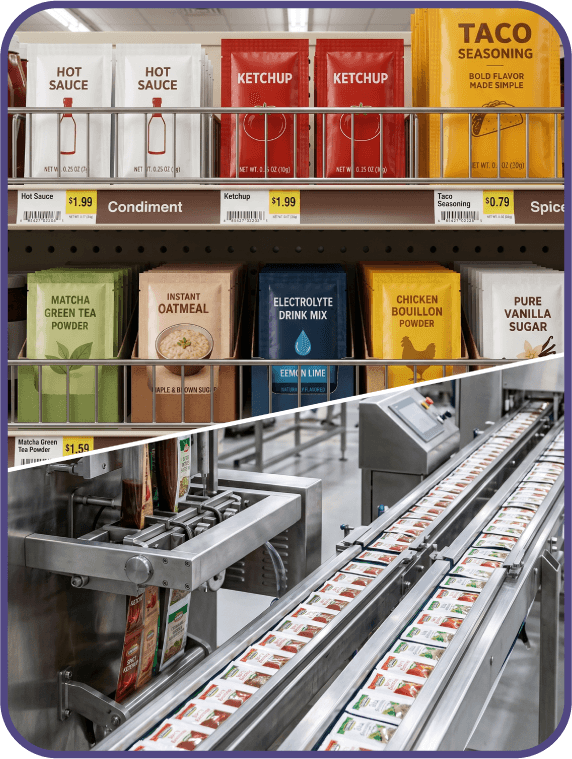
    3-Side Seal Pouches: The High-Volume, Low-Cost Flexible Packaging for Single-Serve Food

    For food brands that produce high volumes of single-serve products, 3-side-seal pouches are often the most cost-effective packaging format. Commonly used for spice packets, seasoning sachets, condiment portions, powdered drink mixes, and product samples, these pouches are designed for efficiency at scale. Their flat construction requires less material than gusseted formats, reducing per-unit packaging costs while also lowering freight expenses by allowing more units to ship in each case.

    While they are often associated with lower costs, 3-side seal pouches should not be viewed as a “cheap” packaging option. Rather, they are the operationally correct choice for many high-volume, single-serve applications. In fact, numerous large food brands use 3-side seal pouches as their primary packaging format for portion-controlled products while reserving stand-up pouches for larger retail sizes. They are particularly well-suited for foodservice portioning, single-serve condiments, ingredient packets, product sampling programs, and subscription box inclusions, where efficiency, consistency, and cost control are key priorities.
    Choosing the Right Flexible Food Packaging for Your Food Operation

    For most food brands, pouch selection is less about aesthetics and more about operational fit. The right structure is usually determined by three core questions that directly impact production efficiency, distribution cost, and long-term profitability.
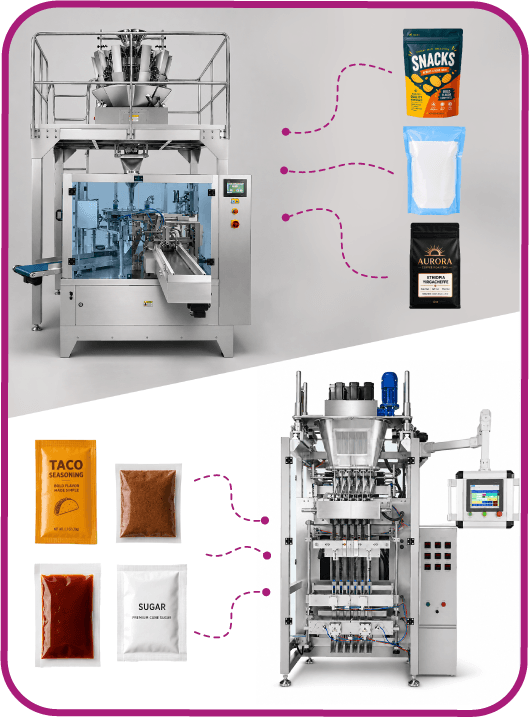
    1. What does your fill line look like?

    The thickness of a vacuum bag determines its puncture resistance and barrier properties, typically measured in mils (thousandths of an inch) or microns. 3 mil is the industry standard for most applications, and offers a great balance of flexibility and protection against freezer burn. 4 mil is good for items with sharp edges, and 5+ mil are ideal for heavy-duty industrial applications.

    2. What channel are you selling into?

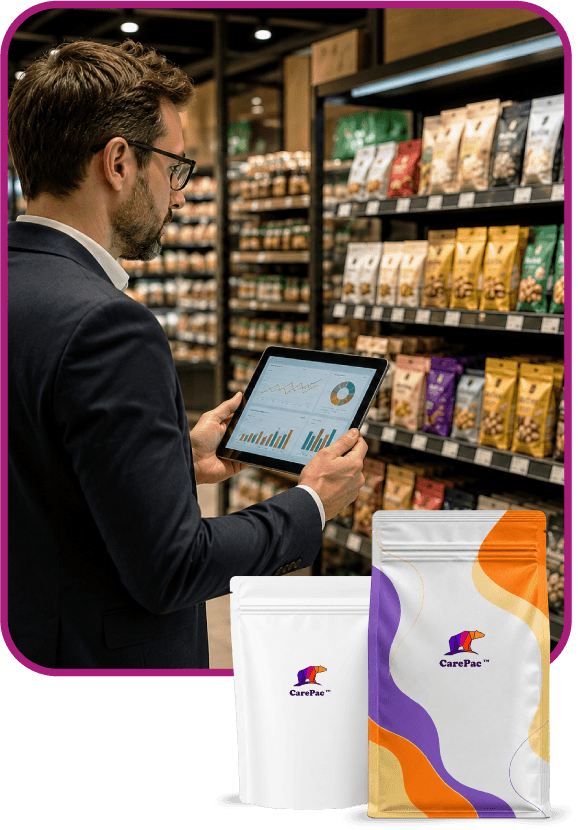
    Your go-to-market channel should strongly influence format choice. Retail shelf presence benefits from structures with strong shelf stability and billboard impact, such as stand-up pouches, flat-bottom pouches, and side-gusset bags. E-commerce and subscription programs often prioritize shipping efficiency, in which flat formats and 3-side seal pouches perform well because they stack tightly and reduce dimensional weight in mailers. Foodservice applications, on the other hand, typically rely on 3-side-seal sachets or larger side-gusset bags for portion control and bulk-dispensing efficiency.
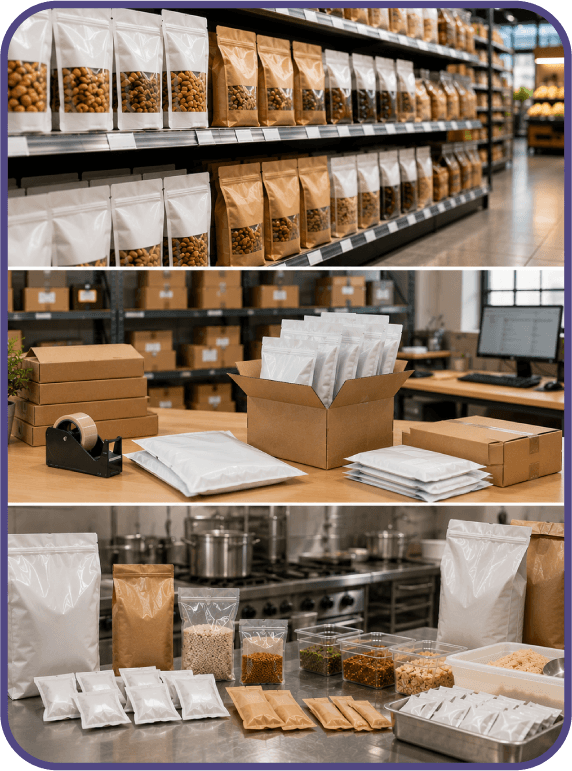
    3. What does your margin math look like per SKU?

    Cost per unit matters, but only in context. A slightly more expensive pouch format that improves retail visibility and sell-through can ultimately outperform a lower-cost option that slows shelf movement. The real decision comes down to balancing packaging costs against expected velocity, shrink risk, and replenishment cycles. In many cases, the most profitable structure is not the cheapest per unit—it’s the one that optimizes total SKU performance across production, distribution, and retail execution.

    CarePac works with food brands at every volume level. If you’re evaluating formats or looking to optimize an existing run, request a quote and our team will match you to the right structure.

    Best Pouch for Food Packaging: FAQs

    Lets Get Started

    Made In The USA

    Full PouchCustomization

    Scalable Printing Digital & Plate

  • How Does a Chamber Vacuum Sealer Work

    How Does a Chamber Vacuum Sealer Work

    How Does a Chamber Vacuum Sealer Work

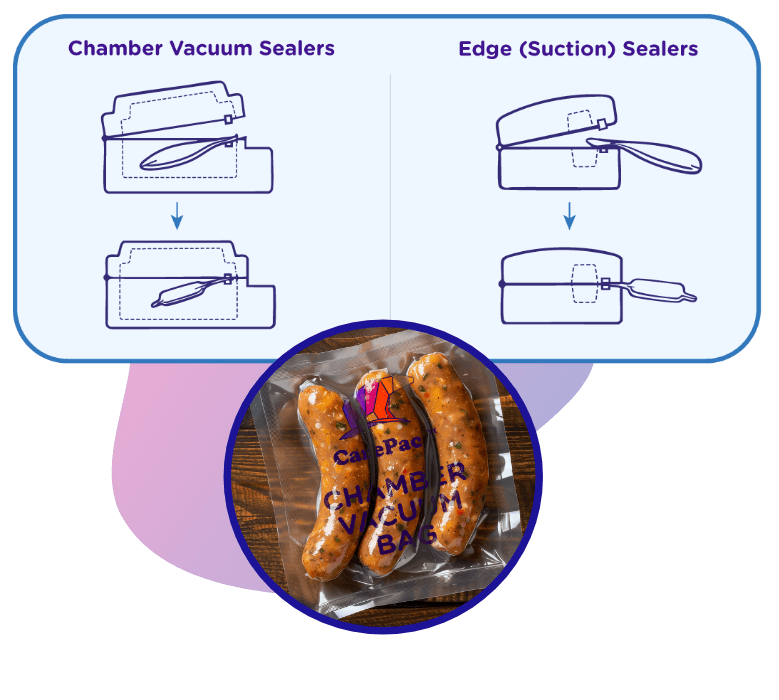
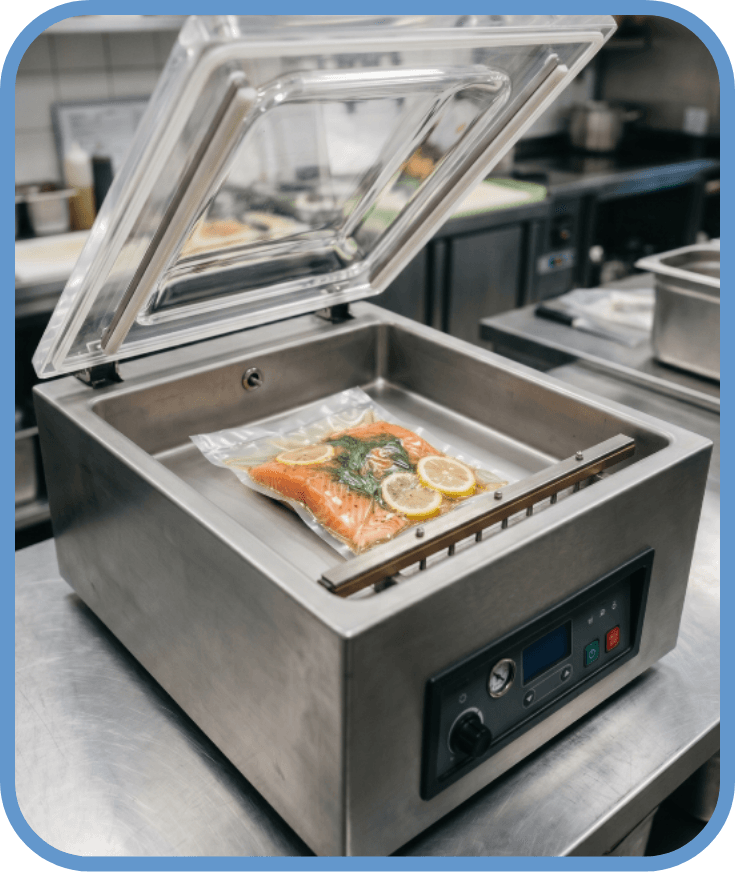
    A chamber vacuum sealer operates by placing a filled pouch inside a sealed enclosure where air is extracted from the entire chamber before the bag is sealed. As the pressure drops evenly inside and outside the pouch, air escapes from the package without the aggressive suction used in edge-style machines. The sealing bar then closes the bag while the vacuum is still maintained, and normal air pressure is restored once the cycle finishes, tightening the package around the product. The end result is a very tight package that perfectly protects the product inside. 

    Because the vacuum is created in a controlled environment, the process is especially effective for producing uniform seals and consistent results. This makes chamber sealing well suited for delicate foods, liquids, and high-volume production where reliability matters. Manufacturers such as Pouchworth often recommend chamber systems when consistency, efficiency, and product protection are priorities.

    What Is a Chamber Vacuum Sealer?

    A chamber vacuum sealer is a type of vacuum packaging equipment designed for professional and commercial use. Unlike countertop edge sealers, where the open end of the bag sits outside the machine and air is pulled directly from the pouch, chamber sealers hold the entire package inside the unit during the sealing cycle. The machine evacuates air from the whole chamber — not just the bag — creating balanced air pressure inside that allows the contents to remain stable during sealing.

    This structural design is why chamber vacuum sealers are widely used in commercial kitchens, food manufacturing operations, and sous vide preparation. They are particularly useful for packaging liquids and wet foods because the equalized pressure prevents spills and produces dependable seals. The result is a versatile packaging method that supports longer shelf life and more consistent product presentation.

    How a Vacuum Chamber Sealer Works (Step by Step)

    Though we’ve answered “how does a chamber vacuum sealer” work in theory, you might be wondering how it works in practice. Here’s a step-by-step breakdown of how a chamber vacuum sealer works.

    Step 1 – Air Is Removed From the Entire Chamber

    During this step, the vacuum pump removes air from the whole chamber. The pressure inside the bag and outside the bag stays equal, which is why this prevents liquids from being pulled out.

    Step 2 – The Bag Is Heat-Sealed Under Vacuum

    In step 2, the sealing bar engages while the chamber is still under vacuum. The heat melts the bag layers together, which creates a strong, more reliable seal.

    Step 3 – Air Re-enters the Chamber (Compression Effect)

    Finally, the chamber returns to normal atmospheric pressure inside. Here, the outside pressure compresses the bag tightly around the product and users typically “see” the vacuum effect. It’s important to note that compression does not happen during air removal, which is a common misconception people have about chamber vacuum sealers.

    Why Chamber Vacuum Sealing is Better for Liquids

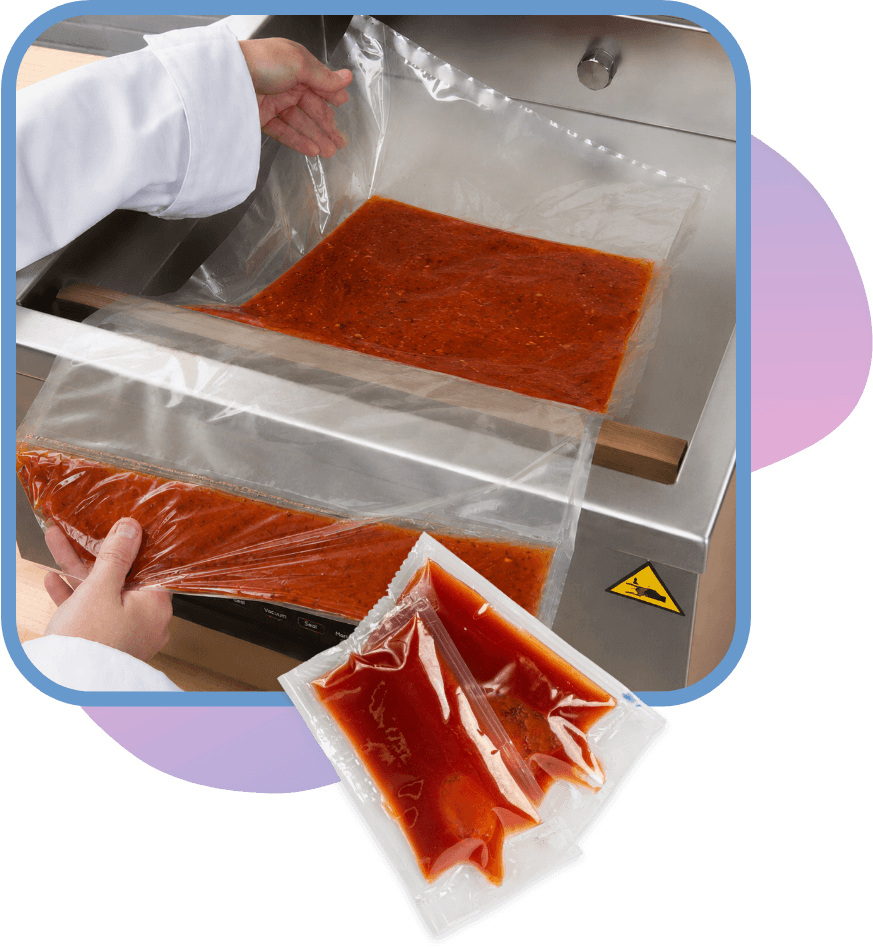
    Chamber vacuum sealers are especially well suited for packaging liquids such as soups, sauces, marinades, and brines. Because the entire chamber is evacuated during the sealing cycle, pressure is reduced evenly around the pouch. This allows liquids to remain stable inside the bag instead of being forced toward the opening, making it much easier to achieve a clean, reliable seal.

    Unlike edge-style vacuum sealers that rely on directional suction, chamber machines do not pull liquids upward through the bag opening. This greatly reduces the risk of spills entering the sealing area or the machine itself. As a result, users experience fewer messes, less equipment wear, and fewer seal failures, making chamber vacuum sealing a more dependable solution for packaging wet foods and liquid products.

    Chamber Vacuum Sealers vs Edge (Suction) Sealers

    How Edge Sealers Work

    Edge (or suction) vacuum sealers remove air by pulling it directly through the open end of a bag. The bag opening is positioned outside the machine while a vacuum pump extracts air and then heat-seals the edge. Because the air has to travel through the bag opening, these machines require textured or channeled vacuum bags that allow air to flow out during the sealing process.

    This design works well for dry foods but creates challenges when sealing liquids. Directional suction can pull soups, sauces, or marinades toward the sealing area, increasing the risk of spills, weak seals, or machine contamination.

    Key Differences at a Glance

    Featur​​​​​​​e

    Chamber Vacuum Sealers

    Edge (Suction) Sealers

    Air removal method

    Air is removed from the entire sealed chamber

    Air is pulled directly from the bag opening

    Liquid compatibility

    Excellent for liquids and wet foods

    Limited; liquids can interfere with sealing

    Bag type

    Uses smooth, standard vacuum pouches

    Requires textured or channeled bags

    Seal strength

    Consistent, uniform seals

    Can vary depending on air removal

    Typical use cases

    Commercial kitchens, food production, sous vide, liquid packaging

    Home use, small batches, mostly dry foods

    Understanding these differences helps ensure you select the right equipment for your application and packaging needs.

    What Types of Bags Do Chamber Vacuum Sealers Use?

    Chamber vacuum sealers use smooth, non-textured pouches designed to handle the full vacuum process inside the sealed chamber. Unlike edge (suction) sealers, these bags don’t require mesh or channeling to allow air to escape, because the air is removed from the entire chamber rather than just through the bag opening.

    This design offers several advantages: it typically uses less plastic, lowers overall bag costs, and allows for more consistent seals. Some chamber pouches are even reusable, depending on the material and application. It’s important to note that chamber bags are not interchangeable with edge sealer bags — using the wrong type can result in poor seals or machine damage. Choosing the correct bag ensures optimal performance, reduces waste, and maintains food quality.

    Common Use Cases for the Chamber Vacuum Sealing Process

    Chamber vacuum sealers are versatile tools widely used across commercial and culinary applications. One of the primary use cases is commercial packaging — from meal prep services to food manufacturers — where consistent, professional-quality seals are essential. For more examples of how businesses use chamber sealing, see our use case pages.

    They’re also key for food preservation and shelf-life extension, helping restaurants, catering operations, and production facilities keep ingredients fresh longer by removing oxygen and reducing spoilage. Additionally, chamber sealers are commonly used for infusion and compression techniques, allowing chefs and food innovators to marinate, flavor, and compress ingredients efficiently while maintaining precise control over texture and taste.

    Final Thoughts

    Chamber vacuum sealers combine a simple yet effective three-step process: place the pouch in the chamber, evacuate air from the entire chamber, and seal the bag under vacuum. This method ensures consistent, reliable results that are difficult to achieve with edge (suction) sealers.

    The key advantages — excellent liquid compatibility, uniform seal strength, smooth pouch use, and reduced risk of spills or seal failure — make chamber sealers the preferred choice in professional kitchens, food manufacturing, and high-volume packaging operations. For businesses looking to optimize packaging efficiency and product quality, understanding both the machine and the correct pouch materials is essential.

    If you’re sourcing chamber vacuum pouches or other packaging solutions, choosing the right materials matters just as much as the machine.

    Lets Get Started

    Made In The USA

    Full PouchCustomization

    Scalable Printing Digital & Plate

  • How to Choose the Right Bag Size

    How to Choose the Right Bag Size

    A Guide to Choosing Packaging Size for Your Product

    Why Bag Sizing Is Confusing for First-Time Buyers

    If it’s your first time buying packaging materials and you feel completely lost in finding the right sized packaging, you aren’t alone. Many of our first time customers struggle to optimize packaging and often find themselves with excess packaging waste or product dimensions that are totally off, especially if they are packaging irregular items or fragile products. This type of material waste can have a negative environmental impact, which is why finding the right sized eco friendly packaging options is so important.

    Unfortunately, finding the sweet spot is tough. Simply put, finding the right packaging measurements for shipping boxes, particularly sustainable packaging, is not intuitive for new brands. But doing so can help you achieve certain business goals, enhance the customer experience, and decrease your carbon emissions. If you’re looking for an efficient fit for multiple products, keep reading to learn more.

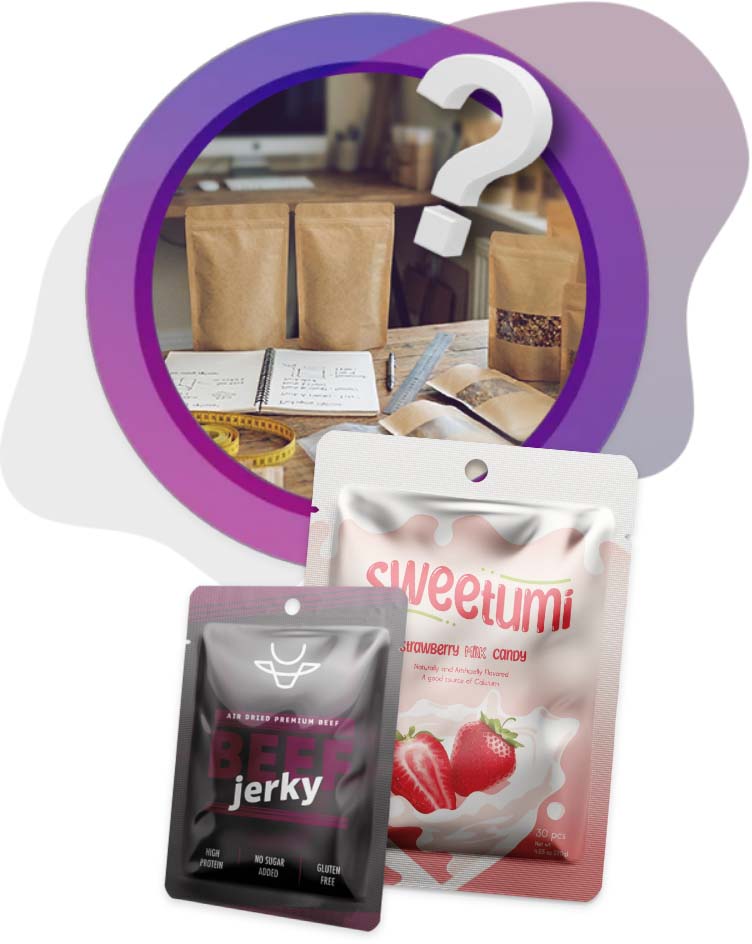
    Different flexible packaging pouch sizes and product packaging formats, including snack pouches and beef jerky bags, illustrating how packaging dimensions impact branding, storage, and shelf appearance.

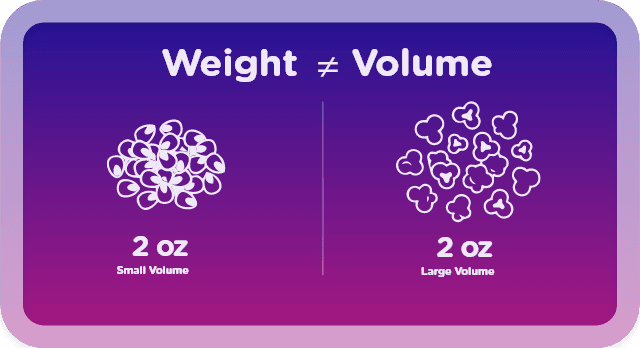
    Weight ≠ volume, and density affects everything

    This is an extremely common misconception when it comes to dimensional weight pricing and finding the right packaging dimensions. People are used to going to the store and buying Ziplock bags in quart or gallon sizes, which is easy and convenient for at-home use but not as part of the packing process for commercial products. Why? The volume of various products is different and must be accounted for in your packaging strategy. An example of this is popcorn kernels vs popped popcorn. Each has a different density that must be considered when purchasing packing materials.

    Packaging infographic explaining the difference between product weight and product volume, comparing two-ounce dense snacks versus lightweight popcorn to demonstrate flexible pouch sizing requirements.

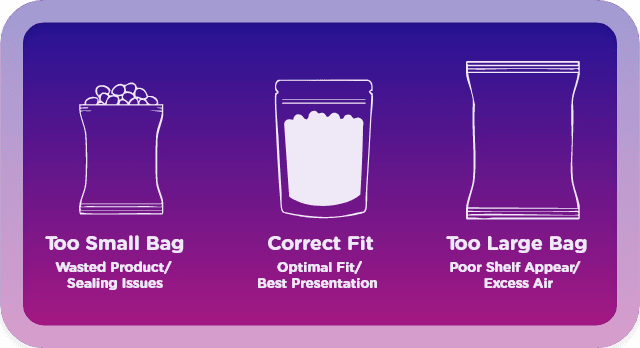
    Incorrect sizing = wasted product, empty bags, and poor shelf presence

    Most of the time, customers design their packaging size to be too small. Although it’s seldom that customers make their packaging too big, both can be problematic. A bag that’s too small and doesn’t have enough space will lead to wasted product, and packaging that’s too big means half empty bags and unhappy customers. In both instances, the shelf presence is poor and your bottom line and overall customer experience is impacted.

    Infographic comparing too small, correctly sized, and oversized flexible packaging bags, showing how proper pouch sizing improves product presentation, reduces wasted space, and prevents sealing issues.

    Length, Width, and Height — And Why Density Changes Everything

    When it comes to volume and weight, you need to remember that density changes everything. “Ounces” or “grams” on packaging doesn’t directly translate to bag dimensions because product density impacts how much space your product actually takes up. For example, two ounces of chips and two ounces of nuts require completely different packaging sizes. If you’re having difficulty with this aspect of your packaging strategy, you aren’t alone. A lot of our customers are challenged with this, and we’re more than happy to help, especially if you’re trying to find the right material and size for multiple items.

    Pro Tip: Use Competitor Custom Packaging as Your Benchmark

    If you’re curious about product protection and want to avoid waste materials during packaging selection (i.e., be more eco friendly), we recommend buying competing products and measuring the bag yourself to find a starting size. After all, the packaging already meets customer satisfaction metrics and doesn’t impact the shelf life of the product. This is the fastest (and cheapest) way to avoid sizing mistakes. Simply cut the bag open, flatten it fully, and measure length, height, and gusset. If you send us the length, width, and height or the bag dimensions, we can match competitor packaging dimensions exactly.

    Connect with us today to get started with finding the right packaging choice that can help reduce costs and enhance your sustainable practices.

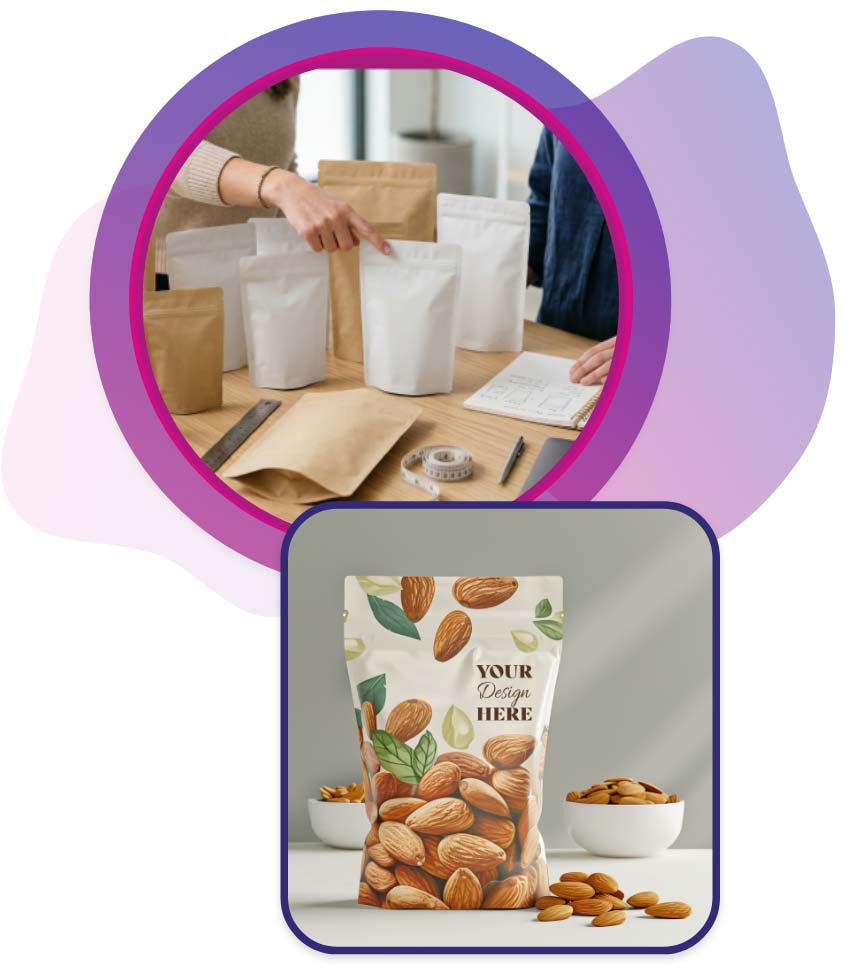
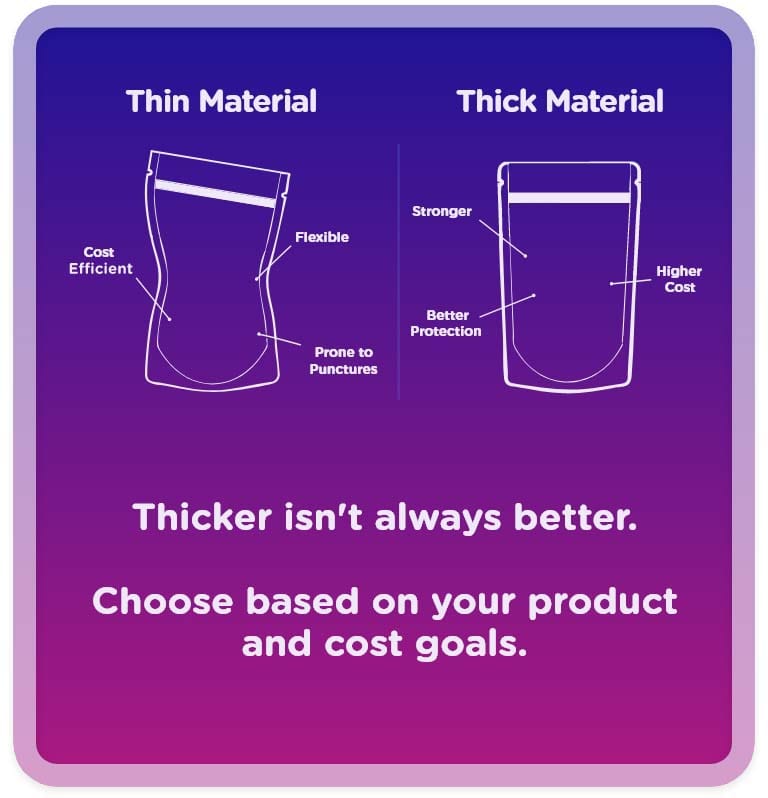
    Custom stand-up pouch sizing process showing packaging prototypes and almond packaging samples used to determine the correct flexible packaging dimensions and optimal product presentation.Flexible packaging material comparison chart showing thin versus thick pouch materials, highlighting cost efficiency, durability, puncture resistance, and product protection for custom packaging bags.

    Visual Guide: Packaging Dimensions to Cut Costs

    Thickness (mil or micron) affects how much stress a bag can handle. Thicker bags generally support heavier or sharper items, while thinner bags work well for more lightweight products. It’s important to note that weight capacity also depends on packaging material and seam quality, not just on the thickness. Thinner bags are also more cost efficient, but more prone to punctures or tearing. Thicker bags provide more protection and structure, especially during shipping and handling. Thicker bags also feel sturdier and more premium, signaling protection and quality. 

    Just remember: thicker isn’t always better. It means more cost and material, so the right choice depends on the product you’re packaging and how badly you need to lower costs – not what the thickest or most premium option is.

    Reality Check: Common Sizing Mistakes to Avoid

    When it comes to improving your operational efficiency, here are some common mistakes to avoid:

    Ordering way too big – We regularly see brands order 8″ × 10″ bags for a 2 oz product, only to realize the bag looks half-empty on shelf. Oversizing or the tendency to add extra space hurts product presentation and makes customers question the product safety and value.

    Underestimating bulky or irregular shapes – Products that are airy, chunky, or uneven don’t settle neatly and typically requires a bigger bag than you think. Brands often size based on weight alone, then discover the product needs far more volume than expected.

    Forgetting headspace – Food packaging needs room for sealing, freshness, and sometimes nitrogen flushing. Filling a bag edge-to-edge leaves no margin for proper closure or compliance, which can detract from product protection and decrease customer satisfaction.

    Overfilling to “make it work” – Trying to force product into a too-small bag can compromise seal integrity, leading to leaks, failed drop tests, and higher returns. If you’re seeking a minimal packaging look, you can achieve this by leaving extra space in the bag on purpose. 

    When to Get Expert Help (And Why It Improves Cost Efficiency)

    If you’re guessing on bag size, thickness, or structure, you’re taking a risk—and packaging mistakes get expensive fast. CarePac helps brands size packaging based on real product samples, not assumptions. We test fit, recommend the right packaging dimensions and thickness, and make sure the bag performs the way it should.

    We also match competitor bags, optimize material thickness for your specific use case, and help prevent costly misprints or reorders caused by sizing errors. Most importantly, we help you avoid ordering thousands of bags in the wrong size—saving time, money, and frustration.

    Get expert sizing help — free with your first quote.

    Packaging team reviewing custom flexible pouch sizes and stand-up pouch samples to determine the best packaging dimensions for product fit, shelf appeal, and branding performance.

    FAQs: Finding the Right Packaging

    Lets Get Started

    Made In The USA

    Full PouchCustomization

    Scalable Printing Digital & Plate

  • How Metal Detection Enhances Packaging Safety

    How Metal Detection Enhances Packaging Safety

    How Metal Detection Enhances Packaging Safety and Supply Chain Quality

    Why Detecting Metal Is Critical in Packaging Quality Control

    Metal detection is a crucial aspect of packaging quality control because even a trace amount of metal contaminants in the food production process can create costly recalls or safety risks for consumers. To help combat this risk to food safety, CarePac has proactively added a metal detector QC stage as part of its risk-based preventive controls. The inclusion of a metal detection system to identify metal contaminants in our production process benefits both manufacturers and consumers — you’ll be better protected from liability and your customers will be better protected from harm these metal contaminants may cause when it’s present in packaged foods.

    Quality control technician using a handheld metal detection scanner to inspect sealed food packaging on a production line, ensuring packaging safety and contamination prevention in the supply chain.Gloved hands inspecting sealed flexible packaging during food safety checks, highlighting metal detection processes that protect packaging integrity and product quality.

    Whether you’re packaging products for pharma applications, frozen products, packaged foods, or any other type of food product, our system will keep contaminants out of the food production pipeline.

    How Metal Detection Systems Work

    When it comes to our proprietary metal detection system, the metal detection process is straightforward: the finished bags pass through a sensitive metal detector that can identify metal contaminants, including ferrous, non-ferrous metals, and stainless steel contaminated products. Our metal detection thresholds are calibrated for precision and speed, which prevents bottlenecks in production. Our metal detection system is integrated in the final inspection stage, ensuring contamination-free packaging before shipment. With this system integrated into our production lines, you can rest assured that your packaging will be free from metal contaminants.

    The Benefits of Detecting Metal Contaminants in the Supply Chain

    Food-grade flexible packaging being handled during inspection, representing metal detection and packaging safety measures used to prevent foreign object contamination.

    Detecting metal contaminants early in the process protects the supply chain from product recalls, rejections, or shipping delays. Detection for metal contamination also protects food processors, co-packers, and retailers who rely on safe, compliant packaging. Reliable detection of metal contaminants early in the production process can also protect your brand from regulatory issues, especially those under the FSMA and HACCP frameworks. Finally, there are downstream benefits to consider, including less waste, better traceability, and stronger consumer safety and trust.

    Integrating Industrial Metal Detection Into CarePac’s QC Process

    CarePac’s quality control workflow is designed to ensure every food-contact packaging product meets strict safety, regulatory, and performance standards. The process begins with material selection and incoming inspection, where all raw materials are verified for compliance, quality, and suitability for food applications. From there, printing and lamination quality checks confirm that graphics, adhesion, barrier layers, and structural integrity meet customer specifications and manufacturing requirements. CarePac also conducts VOC testing for emissions, validating that materials used in production remain within safe limits for food-contact environments.

    As products near completion of the production process, metal detection during final QC serves as a critical safeguard, ensuring that each batch is screened for potential metallic contaminants before it can move forward. This is followed by a final visual and lot inspection, where inspectors verify seal integrity, dimensions, appearance, and packaging accuracy prior to shipment.

    Together, these steps create a layered safety system where every batch passes through multiple checkpoints—each designed to catch issues, like metal contaminants, early on in production lines and protect the end consumer. Throughout the workflow, CarePac’s QA and PCQI-certified staff maintain rigorous traceability and documentation, ensuring full accountability and compliance with food-safety expectations.

    How Metal Detection Supports Regulatory Compliance

    Though establishing a metal detection system is not required for food manufacturers for FSMA, HACCP, or GMP compliance, the oversight ensures that preventive control measures like this meet FDA expectations. This added layer of scrutiny reinforces CarePac’s commitment to going beyond baseline requirements and adopting practices that actively reduce contamination risk. It also provides customers with greater confidence that their packaging partners are aligned with modern food-safety standards and are doing their best to avoid metal contaminants. This proactive step helps our customers demonstrate supplier verification and safety assurance during audits, supporting smoother compliance reviews and strengthening their overall food-safety programs.

    Conveyor-based metal detection system scanning packaged food products, identifying metal contaminants to enhance packaging safety and ensure supply chain quality compliance.

    The Value to CarePac Customers Involved in the Food Production Process

    Our proactive approach to establishing a metal detection system for packaging adds values to brands and co-packers who depend on reliable packaging. Benefits of these detection systems include reduced risk of shipping a contaminated product, stronger audit readiness, improved consumer confidence, and supply chain continuity and fewer product rejections. At CarePac, we only have one focus: helping your business stay compliant, efficient, and trusted within the food industry.

    Packaged food products passing through an industrial metal detector with digital readout, demonstrating how metal detection improves food packaging safety and supply chain reliability.

    Partner With a High Performance Packaging Supplier That Prioritizes Safety

    CarePac’s multi-layered quality control system — including VOC testing, metal detection, PCQI oversight, and full FSMA/HACCP alignment — is engineered to give you confidence in every order. These safeguards play a crucial role in product safety, reduce risk, and strengthen supply chain reliability from the moment materials enter our facility to the moment finished goods ship out.

    If you want packaging backed by rigorous controls and transparent documentation, contact CarePac. Our team is ready to walk you through our QC process and show how our systems can support your safety, compliance, and operational goals.

    FAQs About Metal Detection in Packaging for Food Products

    Lets Get Started

    Made In The USA

    Full PouchCustomization
    Scalable Printing Digital & Plate

  • Custom Trading Card Packaging Solutions

    Custom Trading Card Packaging Solutions

    Custom Trading Card Packaging Solutions

    Why Packaging Matters for Trading Cards

    Trading card packaging is an extremely important part of trading card collecting, as it can mean the difference between a card that maintains (or increases) its money value and one that’s damaged and has little to no value. Not only does high-quality trading card packaging protect the card inside, but it can enhance collectability and create a premium retail experience for collectors.

    While many people default to baseball cards when they think about trading cards, there are actually several industries and use cases for trading cards, including collectible card games, sports cards, promotional cards, event giveaways, prototypes, and retail-ready packs. If you produce trading cards for any of these industries, CarePac’s custom printed packaging for niche markets is the solution you’re looking for.

    Collection of baseball and fantasy trading cards in protective cases, showing CarePac custom printed packaging and card sleeves for collectors and retailers.

    Fin Seal Pouches for Trading Cards

    Fin seal packaging is the gold standard packaging for trading cards, and it involves a raised, vertical seam at the back of the package. This forms a strong, tamper-resistant, and moisture-proof barrier along the sides for the cards inside. With CarePac’s fin seal pouches, you can customize every square inch of your trading card packaging, including customizing the size, style, and color of the text on the pouch. Fin seal pouches are the same format used by major TCG brands, and it’s the gold standard for a reason!

    Whether you’re looking for small run packaging or packaging for mass production, there is a lot of flexibility with fin seal pouches. By purchasing fin seal pouches from CarePac, there are extra advantages, including FDA compliant materials, durable seals, customization in CYMK or PMS colors, and the confidence that you’re working with a tried-and-true packaging company.

    Hanging resealable CarePac pouches containing collectible baseball cards, designed for retail displays and protective trading card packaging solutions.

    Roll Stock Packaging Options

    Another packaging option for trading cards is roll stock. Roll stock is a printed or unprinted flexible film that can be run through your own packaging machines. Since much of the control is in your hands, at least in terms of how and when the packaging is produced, this is a very cost-effective packaging option for high-volume production. Roll stock packaging is compatible with horizontal form fill seal (HFFS) equipment, and can be used with several material options, including metallic foil, matte film, or clear film if you want to show off branded inserts. If you’re looking for scalability, efficiency, and a reduced per-unit cost, you can’t go wrong with roll stock.

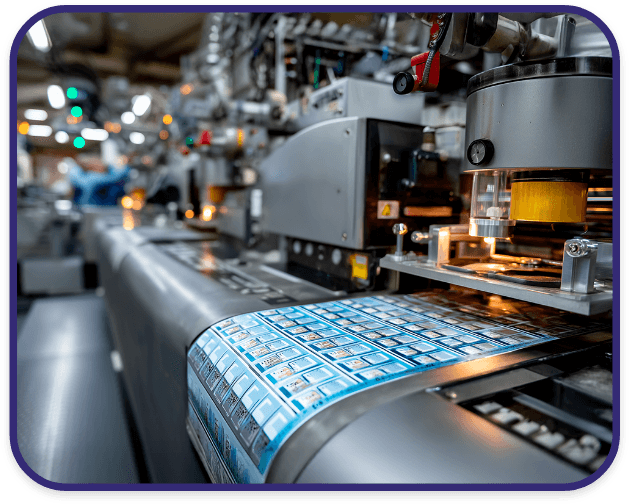
    High-speed manufacturing line printing CarePac custom card packaging with precision, featuring modern printing equipment and blue packaging designs for trading cards.Two foil trading card packs and a child holding collectible sports cards, highlighting CarePac’s durable and resealable packaging for gaming, anime, and sports card collections.

    Customization & Add-On Options

    Whether you opt for fin seal pouches, roll stock packaging, or some other type of trading card packaging, there are several customization and add-on options to consider: 

    As you can see, the sky is the limit when it comes to designing customizing your trading card packaging. From adding custom artwork on one side to incorporating a specific design or logo, no request is too difficult for the trading card packaging experts at CarePac.

    Minimums, Turnaround Times & Pricing

    At CarePac, we make it easy to start small and scale big. Whether you need to design a handful of prototypes for testing or full-scale retail packaging runs, our flexible MOQs ensure you get exactly what you need without overcommitting. Our standard turnaround time ranges from 2-4 weeks, depending on the specifics of your project, and we’re committed to meeting your deadlines without sacrificing quality. 

    Because every project is unique, we don’t publish static pricing. Instead, our team provides personalized quotes based on your exact specifications, materials, and order volume. For more information about our minimums, turnaround times, or pricing, contact us today.

    Clear resealable CarePac pouches containing collectible sports cards displayed on a counter, demonstrating protective packaging for baseball and sports memorabilia.Close-up of premium collectible card packaging and custom printed boxes with gold foil detailing, showcasing CarePac’s high-quality packaging for trading cards and limited edition sets.

    Why Choose CarePac for Trading Card Packaging

    When it comes to protecting and showcasing your trading cards, we bring deep expertise in specialty packaging for niche industries. We understand that trading card packaging isn’t just about protection—it’s about presentation, brand identity, and collectability.

    Our team combines precision quality control with advanced material science, ensuring that every pack or pouch meets the highest standards for durability and shelf appeal. And, unlike our competitors, you don’t have to print your cards with us to order packaging. Additionally, we offer sustainable packaging options so you can protect your cards and the environment at the same time. 

    Ready to partner with CarePac to design packaging that reflects the value of what’s inside? Bring your ideas to life with CarePac. Get a Quick Quote or contact us to get started. You won’t find a better packaging partner!

    FAQs

    Lets Get Started

    Made In The USA

    Full PouchCustomization

    Scalable Printing Digital & Plate

  • Implementing Circular Economy Principles in Flexible Packaging Design

    Implementing Circular Economy Principles in Flexible Packaging Design

    Implementing Circular Economy Principles in Flexible Packaging Design

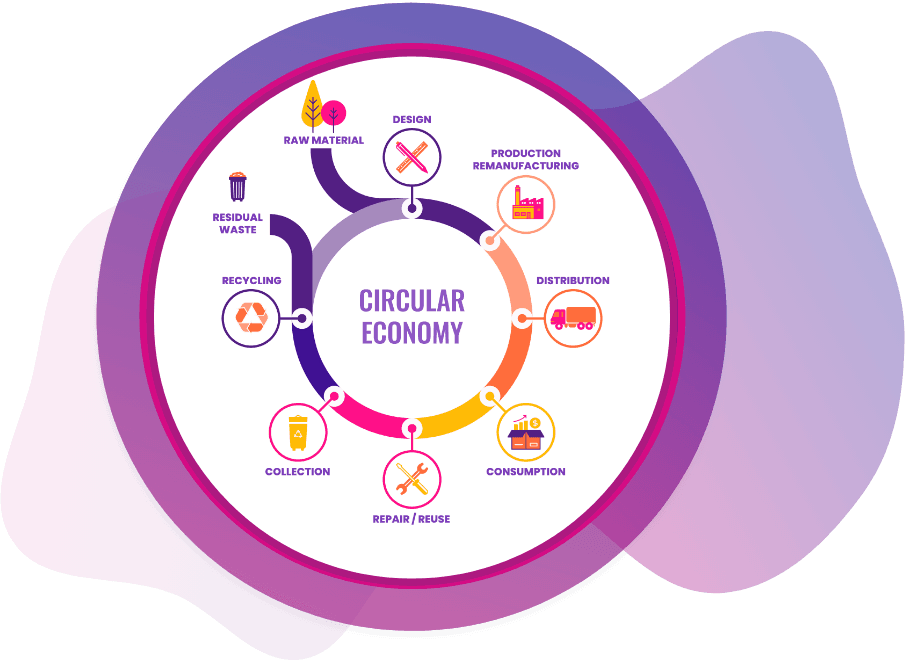
    What is the Circular Economy?

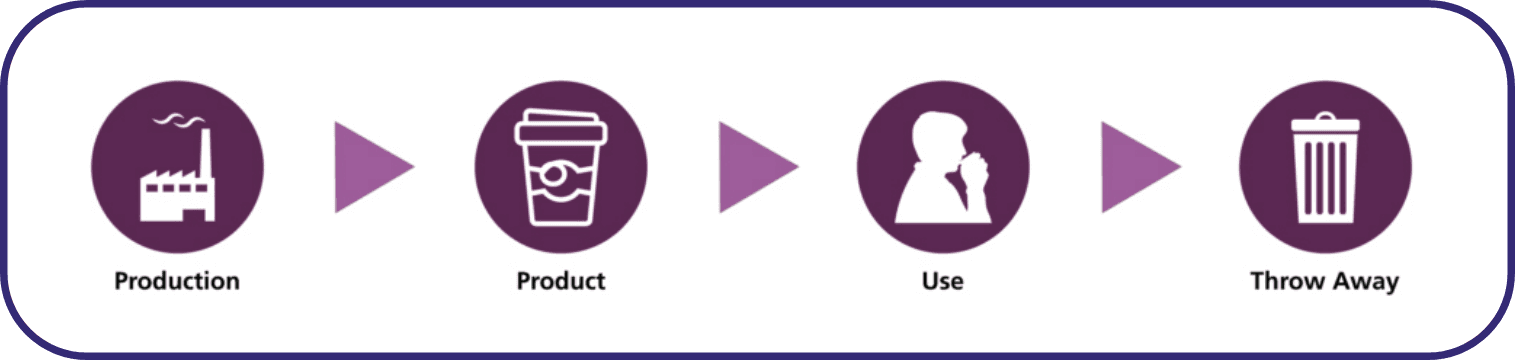
    A circular economy aims to minimize waste and maximize resource consumption by keeping materials, particularly packaging materials and plastic packaging, in use for extended periods of time (instead of using raw materials for every package or pouch.) This is done via strategies like reusing, recycling initiatives, and regeneration. At its core, the circular economy focuses on creating a closed loop system where materials are circulated and regenerated via innovative recycling systems, reducing reliance on using virgin materials and minimizing the environmental impact of packaging materials.

    Circular Packaging and Recycling Systems for Sustainability

    How Circular Economy Principles Apply to Plastic Packaging

    The principles of a circular economy apply to plastic packaging because plastic waste is one of the number one culprits behind climate change. When it comes to reducing your carbon footprint with your packaging, there are several things you can do to improve the sustainability of your packaging, including:

    • Making sure packaging is designed for reuse or used recyclable materials
    • Minimizing material inputs by leveraging innovative technologies like lighter materials or thinner films, which effectively turns single-use plastic into sustainable packaging
    • Using a more sustainable alternative like renewable, compostable, or biodegradable materials, like paper packaging or packaging that uses recycled material
    • Use recycled material whenever possible (and avoid using raw materials.)
    • Planning for end-of-life reuse or recovery, such as partnering with a materials recovery facility to responsibly turn recycled plastic into new packaging via a state-of-the-art recycling process, effectively closing the loop.

    The circular economy offers a promising path towards a more sustainable future for recycled plastic packaging. By embracing principles of designing for reuse or recycling, minimizing materials, utilizing non-virgin plastics, and planning for end-of-life recovery, businesses can significantly reduce their environmental footprint and contribute to a reduction in their carbon footprint and a healthier planet. This also helps provide consumers with peace of mind knowing their packaging is designed with the environment in mind.

    Benefits of Circular Economy Packaging for Your Brand

    When it comes to participating in a circular economy, there are several benefits to your brand. Some are more obvious, while others aren’t as obvious. Here’s how your brand can benefit from participating in a continuous loop system for your packaging.

    Environmental Benefits   – Of course, the primary reason for participating in a circular economy is to protect our finite resources and to create a more sustainable future. The environmental benefits of using recycled plastic and avoiding the use of raw materials in packaging include reduced waste and pollution, reduced resource and energy consumption, a reduced carbon footprint, and the protection of biodiversity and ecosystems. Although there are other benefits to meeting ambitious targets re: greenhouse gas emissions and the use of fossil fuels, the environment should be the primary reason brands switch to circular packaging and a closed loop system.

    Financial Benefits  – There are several financial benefits to brands focusing on greater sustainability with their packaging. These include reduced costs, increased operational efficiency, tax advantages and incentives, and access to new markets and investments. Additionally, as local governments continue to place a strong focus on circular packaging and reducing greenhouse emissions, your company may also be able to avoid fines and fees if you stay one step ahead of these regulations. 

    Brand and Reputation Benefits Finally, there are several circular packaging benefits that will help support the reputation of your brand among consumers. By demonstrating a commitment to using recycled material and avoiding virgin plastics, consumers, investors, and stakeholders will have a positive opinion about your brand. You’ll also be able to leverage your use of recycled content to differentiate yourself in a competitive market and attract and retain top talent as employees, especially younger generations, are increasingly drawn to companies that leverage recycling infrastructure to use recycled content instead of new materials. 

    How to Start Transitioning to Innovative Packaging Design

    As a small business, moving to a circular packaging infrastructure might seem daunting. Fortunately, there are several things you can do right now to make the shift towards greater sustainability, including:

    Audit current packaging for waste- Evaluate your current packaging materials to identify areas where waste can be reduced. Assess if your packaging aligns with principles of a circular packaging economy and consider conducting a full packaging audit to identify wasteful elements, set sustainability goals, and evaluate the effectiveness of your current practices.

    Choose mono-material or compostable materials-Switching to mono-material packaging (where the packaging is made from a single type of material) or post consumer materials can help improve the sustainability of your brand. Consider using a life cycle assessment tool to determine the most sustainable option for your packaging needs

    Reduce layers and the complexity of your packaging-Do you really need to have multiple layers for your packaging? Unless you need it to make the packaging food safe or to include important consumer information, consider switching to minimalist packaging and focus only on including layers that are there for protective reasons

    Prioritize material sourcing and lifecycle- Finally, you can source sustainable materials like recycled cardboard, bioplastics, or materials made from renewable resources. Seek feedback from stakeholders, including suppliers and customers, to improve your sustainable future.

    Sustainable Design with Recycled Materials

    CarePac’s Role in Supporting Circular Packaging

    At CarePac, we’re committed to support improved infrastructure when it comes to all types of packaging. From paper packaging to packaging that uses recyclable materials, we offer several varieties of sustainable packaging and strategies to help make them more sustainable. From using recyclable barrier films to custom sizing your pouches to eliminate waste, we can provide expert guidance to help businesses navigate the evolving packaging landscape. 

    Ready to explore how we can help you achieve your circular packaging goals? Explore our diverse range of recyclable barrier films, custom sizing options, and sustainable packaging solutions today. Request a quick quote today or connect with one of our packaging experts for a personalized consultation.

    Recycled Materials and Sustainable Solutions

    Lets Get Started

    Made In The USA

    Full PouchCustomization

    Scalable Printing Digital & Plate

  • Minimalist vs Maximalist Packaging

    Minimalist vs Maximalist Packaging

    Minimalist vs Maximalist Packaging: Which One Fits Your Brand?

    Minimalist Vs. Maximalist

    When it comes to the visual aesthetics of your packaging design, it often comes down to two core design philosophies: minimalist design or maximalist design. In this blog, we’ll discuss these two design philosophies, including their pros and cons, so you can choose the design approach that’s right for you, your brand, and your consumers.

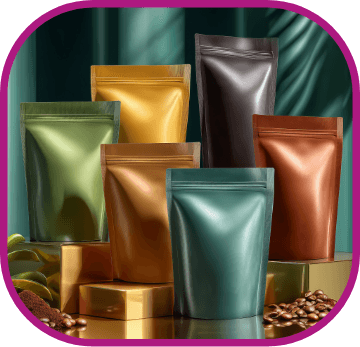
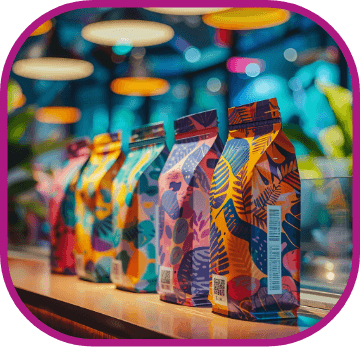
    Set of colorful stand-up pouches in green, gold, teal, brown, and black, ideal for CarePac custom coffee packaging, tea, snacks, and food storage.Vibrant CarePac coffee packaging bags with tropical and abstract printed designs, lined up on a counter in a café setting, perfect for specialty coffee branding.

    What is Minimalist Packaging Design?

    Minimalist packaging design is a design approach that emphasizes simplicity, and takes a “less is more” approach. Common features of minimalist packaging include fewer graphic elements, less intricate patterns, and more white space than its maximalist counterpart. Companies that take a minimalist design approach will often use clean lines, minimal designs, limited color palettes, and clean typography. Products with minimalist packaging often come across as being clean, high-quality, or premium. Products with natural ingredients and brands that value eco consciousness and luxury often take a minimalist approach with their packaging design.

    Example: Glossier is known for the brand’s commitment to minimalist design elements, and they use the same pink color and minimal text for its packaging.

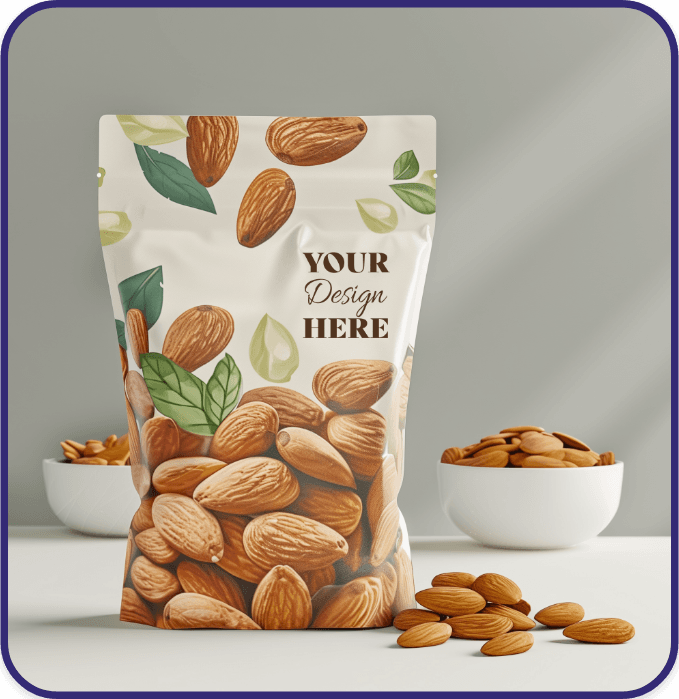
    CarePac stand-up pouch with a clear window showing colorful gummy candies, designed for resealable food packaging and retail display.CarePac stand-up pouch with almond and leaf graphics, showcasing custom printed packaging for nuts, trail mix, and healthy snacks with resealable closure.

    What is Maximalist Packaging Design?

    Maximalist packaging design, on the other hand, is the opposite: it uses bold typography, bright colors, and bold designs. This design approach aims to stand out on shelves, tell a story, and evoke a sense of excitement just by looking at the packaging. Key characteristics of maximalist packaging include vibrant colors and patterns, rich details and texture, intricate designs and typography, and little to no white space. This type of packaging design has gained popularity in recent years, as brands try to complete for the attention of younger demographics, like Gen Z.

    Example: Fenty Beauty, the incredibly popular makeup brand owned by Rihanna, uses maximalist design principles to create packaging that’s bold, confident, and appealing to younger consumers.

    Minimalist and Maximalist Packaging: Key Differences

    When it comes to minimalist vs maximalist packaging, there are several things to consider:

    Aspect

    Visual Impact

    Branding

    Consumer Perception

    Printing Cost

    Shelf Presence

    Minimalist Packaging Design

    Clean, uncluttered look.Conveys simplicity and elegance.

    Focuses on being subtle, which helps create an opulent feel.

    Appeals to consumers looking for sophistication and luxury.

    Typically lower because it uses less colors and simpler designs.

    Stands out by being understated.

    Maximalist Packaging Design

    Bold, busy visuals. Uses large fonts and bold colors to catch the eye.

    Its bold designs help emphasize energy and personality.

    Appeals to consumers who value creativity and innovation.

    Usually higher due to complex artwork and more detail.

    Grabs attention with its visuals.

    Which Product Packaging Trend Is Right for You?

    If you’re choosing between minimalism vs maximalism for your product packaging, it ultimately depends on the message you want to convey to your consumers. Packaging plays a significant role in how your target audience views your brand, and choosing between minimalist packaging and maximalist packaging isn’t about which is better – it’s about which is right for your brand. As you’re considering the two, ask yourself these questions: 

    Who is your target audience?  

    Are they drawn to clean, modern aesthetics or expressive and playful design elements? 

    Where will your product be sold?

    Retail shelves require high-impact visibility to stand out, while direct-to-consumer sales allow for a more intimate and curated experience. 

    What are your brand values?

    If your brand values sustainability and simplicity, minimalist design is the right approach. If your brand likes to focus on creativity and fun, maximalist packaging might be the better approach.

    How complex is your product or brand story?

    If your story or ingredients need a lot of explaining, maximalist packaging design offers more space to communicate.

    As you can see, both minimalist and maximalist packaging styles can feel premium, and the right style is the one that communicates your brand personality, meets your consumer expectations, and fits the environment where your product lives.

    How CarePac Can Help You Execute Your Vision

    Whether you opt for maximalist packaging or prefer to take a minimalistic approach, CarePac can support both styles with full customization, low MOQs, and fast turnaround. We specialize in designing and manufacturing packaging of all styles, including minimalist and maximalist packaging, and can help bring your packaging vision to life. We offer the flexibility and support to create premium packaging that aligns perfectly with your brand, no matter the style you choose. 

    Ready to bring your packaging vision to life? Reach out today or request a quote to get started.

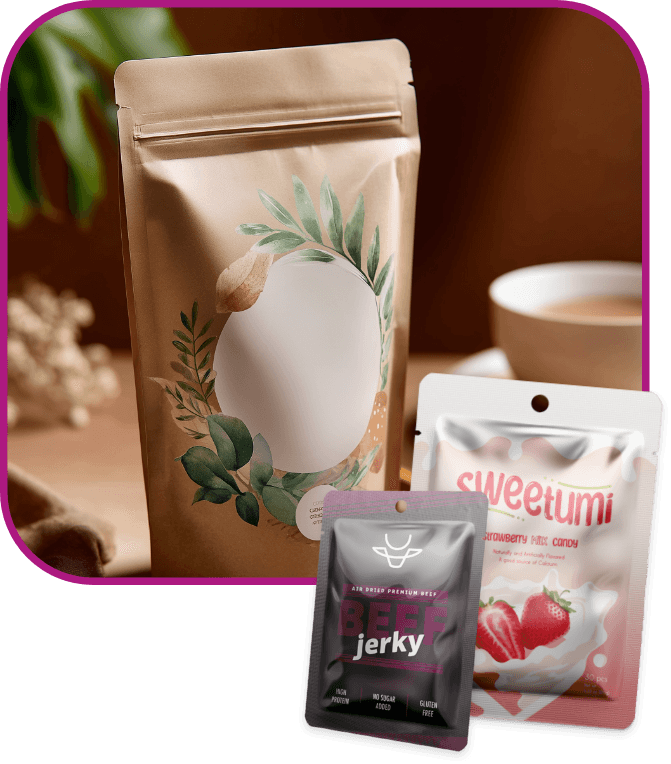
    Variety of CarePac flexible food packaging including a kraft stand-up pouch with leaf design, beef jerky bag, and strawberry candy pouch, highlighting custom branding options.

    Lets Get Started

    Made In The USA

    Full PouchCustomization

    Scalable Printing Digital & Plate

  • Why Degassing Valves Fail

    Why Degassing Valves Fail

    Degassing Valve Failure, Analyzed: What Goes Wrong & How to Prevent It

    When it comes to packaging fresh-roasted coffee, every detail matters—especially the addition of a degassing valve system. These small, often-overlooked valves have a critical effect on preserving product freshness and ensuring customer satisfaction by allowing carbon dioxide to escape while blocking hot air, oxygen, and moisture from entering the pipeline. But what happens when these valves result in a failure? From bloated bags and stale beans to product returns and reputational damage, valve failure can have costly consequences on your leads and bottom line. 

    In this blog, we’ll explore why degassing valve systems sometimes don’t work as intended, break down the most common problems that cause valve failure, and share how to prevent these situations with the right equipment, materials, instruments, and packaging expertise.

    A close-up of a pile of fresh coffee beansCustom printed stand-up coffee pouch featuring a one-way degassing valve for freshness and aroma control.

    What Degassing Valves Are Designed to Do

    Coffee beans and some other fermented products (like sauerkraut or kimchi) are prone to release gas after they’ve been roasted or processed. The process usually only lasts for a few hours to a day after the beans have been roasted, but many roasters want to bag the beans as quickly as possible. Others want insurance that there won’t be a possibility for the bag to bloat and explode under pressure if the beans continue to release gas long after packaging. This is where one-way degassing valves come into play. 

    One-way degassing valves are designed to release or remove Co 2 from inside the bag without introducing oxygen or moisture into the bag. Think of these valve systems like a pool vacuum pump: when turned on, the vacuum pump pulls water out of the pool, pushes it into a filter to get cleaned, and then the vacuum pump returns the water back inside the pool. A degassing valve system is like this except the final step is skipped. The result? Fresh, tasty beans that are saturated with their own natural oils and nothing else.

    Why Degassing Valves Fail: Common Causes

    When it comes to degassing valves in practical applications, there are several reasons why these valves can fail. Here are some of the most common reasons for valve failure.

    Adhesion issues from mismatched materials

    Contrary to popular belief, glue is not actually used when adding a degassing valve to packaging. Instead, the valves are heat-sealed into the bag, but the heat can fluctuate due to various reasons. Different materials require different amounts of heat and dwell time for the valve to adequately adhere to the bag. When it doesn’t adhere properly, the degassing valve can pop off. 

    Misplacement on bag (too far from gas pressure zones)

    Some customers want the valve position moved, and if it’s new location is not anywhere near where the gas is getting the most degassed, it can create a problem. This is not very common, but it’s an issue worth pointing out as the pressure from the gas can build up if the valve is improperly placed. 

    Non-functioning valves are blocked due to design defects

    There’s a constant pressure to reduce the cost of packaging. One of the more costly elements is the degassing valve because it consists of a very small one-way valve. We found that valve quality can vary between manufacturers and between lots. It’s very hard to QC a lot of valves because you only know if they’re working if they’re degassing. You can test individual valves out of the lot that you received, but unfortunately it’s not something you can systematically visually inspect.

    Close-up of a degassing valve being installed on a custom printed coffee pouch using precision heat sealing equipment.

    The Real Impact of Valve Failure

    If the “atmospheric pressure” (i.e., built up carbon dioxide) is not released properly via the valve, it can have huge impacts on both the product itself and the business. For the sake of this blog, we’ll divide these impacts into two sections: product consequences and business consequences, so you can better understand how essential proper valve systems are to a coffee manufacturer.

    Product Consequences

    If your degassing valve is not effective, it can cause your coffee to become stale and oxidized. Not only does this impact the taste of your product, but it can also impact the reputation of your brand. Nobody wants stale, discolored coffee beans that don’t even reach their “use by” date. A happy customer commonly means a repeat customer, so keep your customers happy with fresh, tasty coffee beans.

    Business Consequences

    In a day and age where everyone posts everything on social media, negative customer reviews and complaints can generally eat into your bottom line. Bags that are inflated, leaking, or collapsing on the store shelves won’t do your brand reputation any justice, and having to replace misshapen bags or oxidized coffee products can result in significant economic loss.

    CarePac’s Engineering-First Solution

    At CarePac, we take an engineering-first approach to our packaging. From understanding the chemistry behind off-gassing, the pressure it can create inside the bag, and the connection it has to packaging, we’ve crafted the perfect system to help relieve some of that built-up pressure. Our JW2 degassing valve application machines are capable of applying 1,500 valves per hour, and the alignment of the valve is controlled by an adjustable depth gauge and laser sight. 

    These state-of-the-art innovations are present in our valve application system and our equipment is calibrated, clean, and expertly maintained. We understand that coffee beans are sensitive to air and moisture but also release carbon dioxide, which is why our system pumps out the CO2 while keeping air and moisture out. If you have questions about the difference a valve installation can make when applied in your packaging pipeline, contact us for more information.

    Close-up of a degassing valve being installed on a custom printed coffee pouch using precision heat sealing equipment.

    Partner with a Packaging Company That Understands Valve Science

    Are you a roaster or CPG brand looking for a packaging partner who understands your needs and can help you avoid costly mistakes? CarePac is here to help you get out of the past and create future-proof packaging that will benefit your bottom line and help your product sell.

    So, why CarePac? We’ll help you:

    • Solve problems before they start: CarePac helps you navigate the ever-changing packaging landscape, offering custom solutions tailored to your specific needs.
    • Expert guidance and support: Helpful guidance on material choices, design updates, compliance, and more, ensures a seamless transition to better packaging. We’ll respond to your questions and won’t force our opinions on you. 
    • Customer-focused approach: Deeper data knowledge, a wider product selection, and higher quality service are offered compared to competitors. 
    • Long-term partnership: CarePac is committed to helping you create packaging that remains competitive, compliant, and consumer-friendly. Generally speaking, we’re a cut above the rest.

    Level up your coffee packaging and contact CarePac today to schedule a free consultation and discuss how we can fit into your coffee packaging pipeline. There’s no time like the present to take action.

    Premium custom printed coffee pouch with colorful geometric pattern and a functional degassing valve for maintaining coffee freshness.

    Degassing Valves: FAQs

    Lets Get Started

    Made In The USA

    Full PouchCustomization

    Scalable Printing Digital & Plate

  • Innovation in Packaging: Smart Packaging Solutions for Large Brands

    Innovation in Packaging: Smart Packaging Solutions for Large Brands

    Innovation in Packaging Design: Smart Packaging Solutions for Large Brands

    The Rise of Innovative Packaging Design: Why It Matters for Brands & Consumers

    In today’s fast-paced and highly competitive marketplace, food packaging has evolved far beyond its traditional role of protecting the products inside. Nowadays, packaging design is a critical component of brand identity, customer engagement, and sustainability strategies. With growing consumer awareness, technological advancements, and increased market competition, packaging innovation is no longer optional—it’s essential for both small companies and large brands aiming to differentiate themselves, improve their supply chain, and remain relevant within the food industry.

    Colorful stand-up pouches displayed, highlighting CarePac’s food-safe custom packaging for everyday brands.Custom CarePac pouch displayed in a sci-fi space setting, symbolizing next-generation barrier packaging and innovation

    Twenty years ago, plain or basic food packaging was the norm in the food industry around the world: whether it was unbranded plastic packaging, recycled cardboard, or some other type of basic packaging material, consumers and brands weren’t as focused on sustainable packaging solutions as they are today. 

    In 2025 and beyond, the packaging supply chain will shift to focus on food packaging made from plastic alternatives, including recyclable materials and plastic-free packaging. These sustainable packaging materials can help companies and brands just like yours achieve a lower carbon footprint, avoid single use plastic, and meet their sustainable packaging goals in style.

    Smart Packaging Innovations: How Technology is Transforming the Packaging Industry

    Modern consumers expect more from manufacturers and packaging design than just aesthetics or protection. They seek efficient packaging that aligns with their values—particularly around environmental responsibility and convenience. This has driven companies and manufacturers to invest in smart packaging that integrates digital features like QR codes, sensors, and NFC tags, enhancing the consumer experience through interactivity, traceability, and real-time information. 

    At the same time, sustainable and recyclable packaging has become a top priority. With concerns over plastic pollution, climate change, and the overall environmental impact of plastic packaging, companies have significantly reduced their dependence on high barrier single use plastic. Instead, they’re focusing on packaging made from eco-friendly materials, like biodegradable films and other innovative materials.

    Types of Smart Packaging Innovations

    Generally speaking, there are two types of smart packaging solutions you can create: active packaging and intelligent packaging. Learn a bit more about each of these innovations below.

    Worker wearing protective gear operating in a hygienic packaging facility, emphasizing CarePac’s commitment to quality and food safety standards

    Active Packaging

    Active food packaging is a packaging innovation that actually interacts with the environment around it in order to extend shelf life, preserve freshness, and improve safety. This is especially helpful in the food industry, where things like oxygen scavengers, moisture regulators, and antimicrobial coatings can help prevent spoilage, while freshness indicators can help consumers and markets make informed decisions and reduce food waste.

    Digitally printed flexible pouch with floral design and QR code, ideal for interactive smart packaging and product tracking

    Intelligent Packaging

    Intelligent packaging leverages digital technologies that allow the packaging to communicate information, track movement, and engage users. Think: QR codes that users can scan to learn more about the farmers that create their food and RFID that allows for real-time supply chain tracking and improved inventory management. Whether you’re a small batch jam maker or sell fresh milk, keeping track of your products via more efficient packaging, artificial intelligence, or machine learning technology can help you make better purchasing decisions.

    Custom Packaging Innovation: How Large Brands Are Adapting to Consumer Needs

    In today’s diverse and ever-changing e-commerce landscape, taking a one-size-fits-all approach to packaging and sustainability will no longer cut it. Brands are tailoring their packaging innovations and materials to align with their products and the growing demands of their target consumers. Over the years, we’ve noticed a growing demand for these types of packaging throughout the packaging industry:

    • High barrier protection for food and pharmaceuticals- Whether your physical packaging is intended for food products or medications, using high-barrier packaging materials can help prevent contamination, preserve freshness, and maintain potency. 
    • Tamper-proof and child-resistant designs- As cannabis continues to be legalized for recreational use across the United States, we’ve noticed an uptick in demand for tamper-proof and child-resistant packaging design. 
    • Personalized consumer experience via packaging technology- As consumers continue to value personalization and interactivity, packaging design has become a new frontier for marketing. By using QR codes, AR, or leveraging digital printing to customize packaging for different regions, creating packaging that’s as personalized as possible is key.

    If you’d like to bring innovative packaging with visual appeal to your consumers, we can help. Our packaging innovations can take your basic, plastic packaging to the next level while continuing to protect the shelf life of your product. Whether you opt for recycled resin, paper boxes, or other eco friendly options, we’ll create packaging that will protect products, reduce your carbon footprint, promote recycling, and improve consumer engagement.

    The Role of Eco-Friendly Packaging Innovations in the Industry

    Key takeaways from recent studies show a clear shift in consumer expectations, with more and more consumers willing to pay a premium for eco-friendly packaging materials that are recyclable. This demand and forward-thinking is pushing companies to rethink their packaging design process to align with the growing preference for sustainable products. Here are a few innovations we’ve seen among packaging designers and manufacturers in recent years.

    Colorful floral stand-up pouch displayed in a bright kitchen, highlighting CarePac’s food-safe custom packaging for everyday brands.

    Biodegradable and Compostable Food Packaging

    One of the more promising trends is making packaging that breaks down naturally without producing waste or harmful residues. Packaging made from bioplastics or compostable materials (i.e., potato starch, corn-based polymers) are approved by the Sustainable Packaging Coalition and play an essential role in the push towards greater sustainability.

    Recyclable Flexible Barrier Materials

    In the past, flexible barrier packaging has been difficult to recycle. But, with recent innovations, like new-generation polyethylene (PE) and polypropylene (PP) that are more recyclable, you can achieve similar performance without the recycling challenges.

    Minimalist Designs to Reduce Plastic Packaging Waste

    Finally, taking a minimalist approach to packaging design can help companies maintain their identity while reducing their footprint in markets. This trend focuses on things like “right size” packaging that eliminate excess layers or boxes that will just end up in the landfill.

    What’s Next? The Future of Smart & Sustainable Packaging Innovations for Large Brands

    So, what’s next in the packaging industry? Well, the future is limitless. From artificial intelligence and machine learning to IoT, technology is constantly changing and new innovations are constantly being discovered. Companies can prepare for the future with adaptable, scalable, and technology-driven packaging solutions, like ours. By partnering with CarePac for your packaging needs, you’ll always be one step ahead of the competition. Our expertise in flexible packaging innovation can’t be beat, and we invite you to explore our line of sustainable, recyclable, and eco-friendly options

    Contact us today to discuss your sustainability goals, which materials we recommend, and how we leverage technology to bring you the best packaging materials we can.

    Vibrant custom stand-up pouches in leopard and abstract patterns, showcasing CarePac’s high-quality flexible packaging for consumer products.

    Let’s Get Started

    Made In The USA

    Full PouchCustomization

    Scalable Printing Digital & Plate

  • Packaging Procurement Strategy: Choosing the Right Packaging Partner

    Packaging Procurement Strategy: Choosing the Right Packaging Partner

    Packaging Procurement Strategy: Choosing the Right Packaging Partner

    What is a Packaging Procurement Strategy?

    A packaging procurement strategy is a systematic approach to sourcing and acquiring packaging materials and supplies. At its core, the packaging procurement process aims to find a balance between cost-effectiveness, material quality, and operational efficiency. 

    A company’s packaging procurement process impacts several areas of the business, including supply chain resilience and overall business performance. When done correctly, it can also improve their competitive advantage, help streamline operations, and enhance their sustainability goals. 

    Businesses need to take a structured approach to their packaging procurement efforts because it plays a vital role in every business operation. Key elements include supplier collaboration and selection, material sourcing, quality assurance, logistics, and technology. If your business puts an emphasis on customized packaging solutions, it’s time to consider implementing a packaging procurement strategy.

    How to Establish Your Packaging Procurement Process

    Are you looking to improve your existing packaging procurement process? If you want to enhance supply chain resilience by improving your packaging solutions, here are some tips.

    Evaluate Your Current State

    Before you can make more efficient packaging procurement for your company, you’ll need to evaluate where you’re currently at. To thoroughly assess the current state of your packaging procurement, you can analyze your spending trends, identify your key suppliers, and honestly assess your current process. Identify what’s working, what’s not, and what you think can be changed.

    Engage Team Members Across the Company

    Evaluating or finding a packaging supplier is a cross-functional process that involves every part of your organization. If you’re evaluating packaging material quality and other packaging details on your own, consider using collaboration tools like a shared document or project management software to get others involved. You should be regularly reviewing your processes with others on an ongoing basis.

    Analyze Your Current Packaging Solutions

    From packaging printers to the different suppliers involved in designing and manufacturing your packaging solutions, you need to make sure to assess the capabilities of your existing procurement teams. What are their strengths and weaknesses?

    Minimize Planning Fallacy

    Planning fallacy isn’t often discussed, but it’s a major issue within the packaging industry. It also impacts everyone from procurement teams to the print provider and everyone in between. People always underestimate how long it will take to get packaging. They underestimate the utilization and almost always purchase less than they will actually use. This is one major benefit of working with a packaging partner with a lead time menu.

    Develop a New Framework

    Now that you’ve analyzed your existing state, gotten various stakeholders’ feedback, and understand the impact planning fallacy has on your packaging supply chain, it’s time to use all that intel to develop a brand new framework. Things to include: a clear strategic sourcing process, your desired results, a clear timeframe, define roles and responsibilities for various team members, and any technology solutions you’ll be using as part of your new strategy.

    Execute, Execute, Execute

    With a clear strategy in place, the final step is execution. Communicate the strategy, make sure your employees are trained, assign responsibilities, and monitor progress. Consider outside elements like customer satisfaction, transportation costs, a customer’s location, your carbon emissions, and other aspects as you execute your new packaging vision.

    Managing Inventory for Packaging Success

    Managing inventory properly is an essential part of the packaging process. You want to source eco friendly packaging materials in the right volume, so you aren’t running out of packaging too quickly. But, at the same time, you don’t want to purchase too many packaging materials and have to pay extra for storage. There is a fine balance, which is why minimizing planning fallacy is so important. 

    By working with a professional and experienced packaging supplier, you can avoid some of these pitfalls. Leverage their tools and expertise and seek advice on the right packaging materials (and volumes) for your job.

    The Role of Software in Packaging Procurement Strategy

    So, you’ve found the best packaging supplier and have ensured your packaging solutions align seamlessly with your company’s larger goals. If you’re not using a procurement software solution, it’s time to enter the 21st century. A robust procurement process utilizes technology, like specialized software, to enhance their organization’s procurement strategy. 

    Look for procurement software that’s functional, scalable, user-friendly, can integrate with your existing platform of tools and technology, and offers robust security features.

    Choosing the Right Packaging Supplier for Your Business

    Selecting the right packaging supplier is just as important to your procurement strategy as finding opportunities to reduce costs or enhance your brand image. Whether you’re seeking food safe folding cartons, packaging that meets the regulatory compliance standards in your industry, or hope to find packaging options that will help minimize waste, finding a packaging supplier you can trust is key.

    When evaluating potential partners, consider these essential factors: 

    Materials​​​​

    Does your packaging provider offer high quality materials? What about eco friendly materials that can help enhance your sustainable practices? Your supplier should offer packaging to suit your diverse product lines, and should offer several options to support consumer preferences.

    Customizabili​​​​ty

    If your packaging partner can’t customize your packaging to enhance your brand’s essence, it’s time to find a new partner. A good supplier should offer tailored solutions, including sizing, printing, and design flexibility. 

    Production & Lead Times

    If your supplier isn’t consistent with their delivery schedules, it’s time to find one who is. We provide a clear lead time menu so you know exactly what to expect and how long you’ll be waiting for your finalized design files and packaging.

    How CarePac Delivers Tailored Packaging Solutions

    We specialize in custom, flexible barrier packaging designed to meet the unique needs of businesses across industries. With a focus on quality, compliance, and customization, CarePac helps brands create durable, visually appealing, and functional packaging solutions. Whether you need stand-up pouches, child-resistant bags, or eco-friendly alternatives, CarePac offers flexible MOQs, fast lead times, and expert guidance to ensure your packaging aligns with your business goals.

    Want to learn more? Explore our custom packaging solutions today!

    Let’s Get Started

    Made In The USA

    Full PouchCustomization

    Scalable Printing Digital & Plate