Category: Flexible Barrier Packaging

  • Degassing Valves for Flexible Packaging

    Degassing Valves for Flexible Packaging

    Inside CarePac’s New Degassing Machine: Fresher Flexible Packaging Starts Here

    What Is a Degassing Valve — and Why It Matters

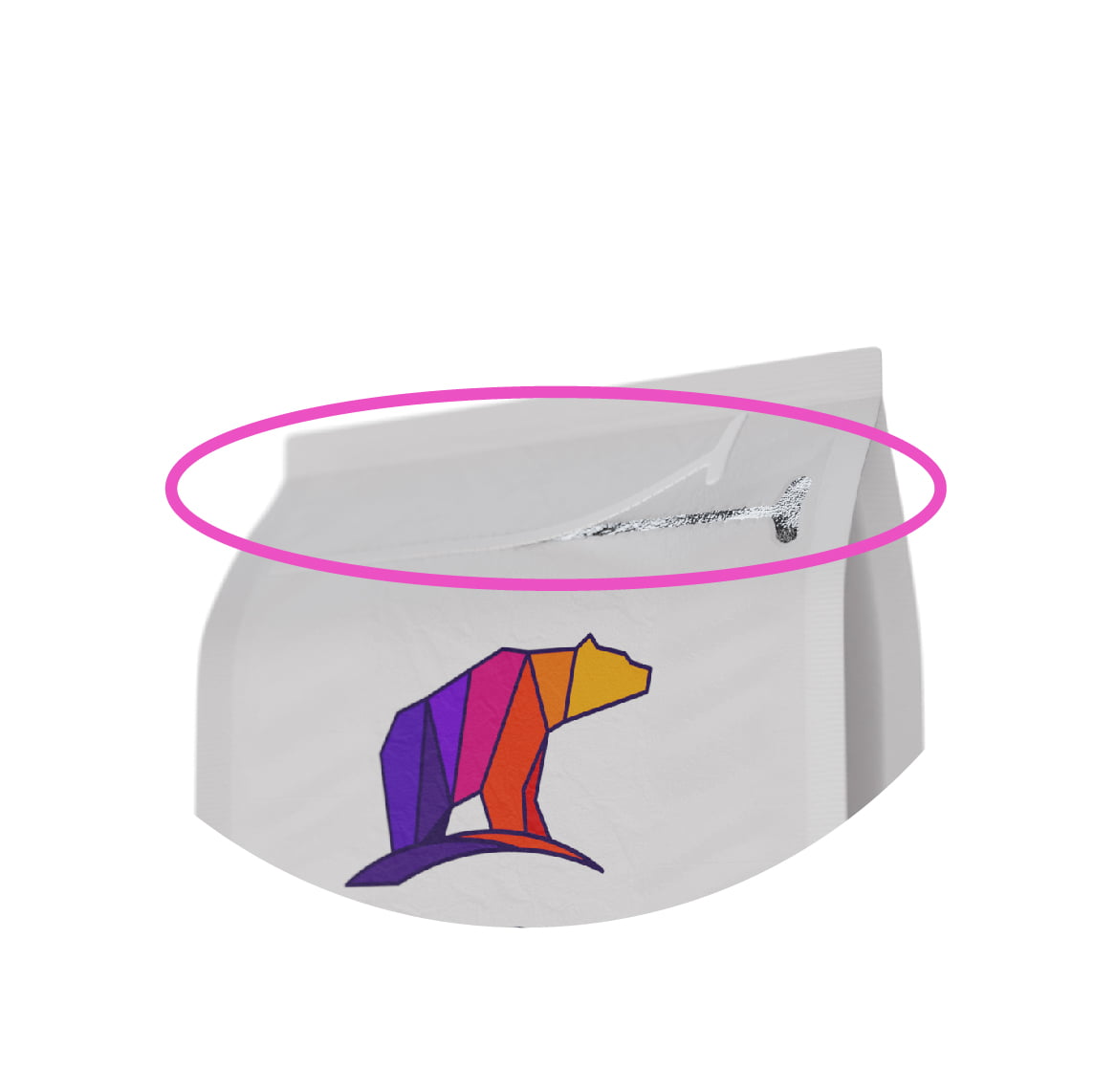
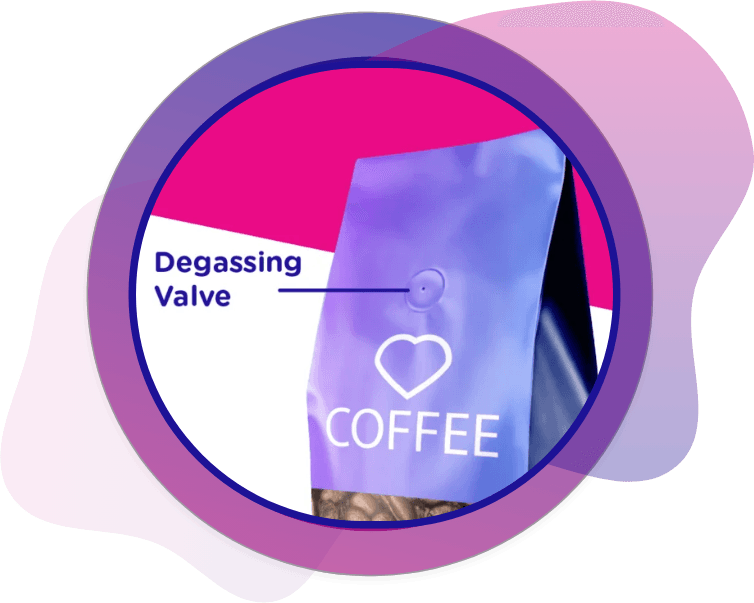
    A degassing valve, also called a one-way degassing valve, is a small, specialized valve used in flexible packaging solutions that release gases. This one-way vent integrates into your packaging and allows gas to escape while preventing outside air, dust, moisture, or bacteria from entering the packaging. It’s especially popular in coffee packaging because coffee, especially beans with natural oils, continues to release gases after it goes through the packaging process. These gases build up pressure inside the sealed packaging, and if the gas isn’t released through valves in the lid it can cause the package to burst.

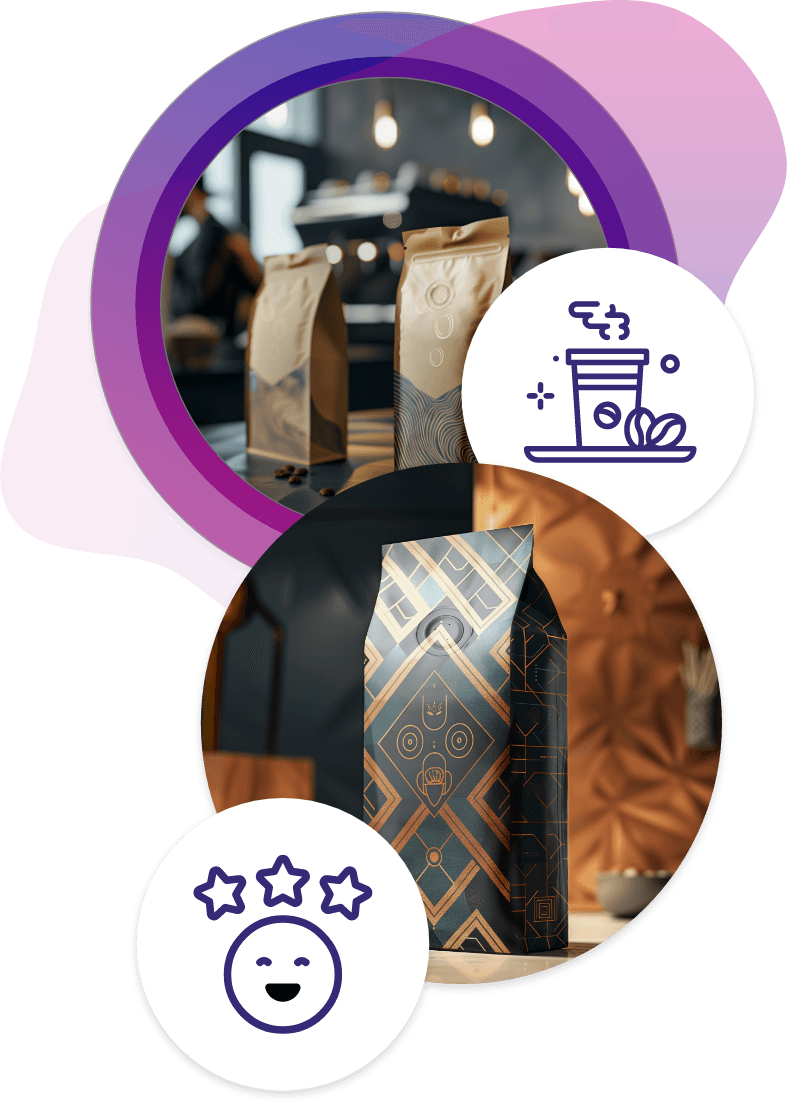
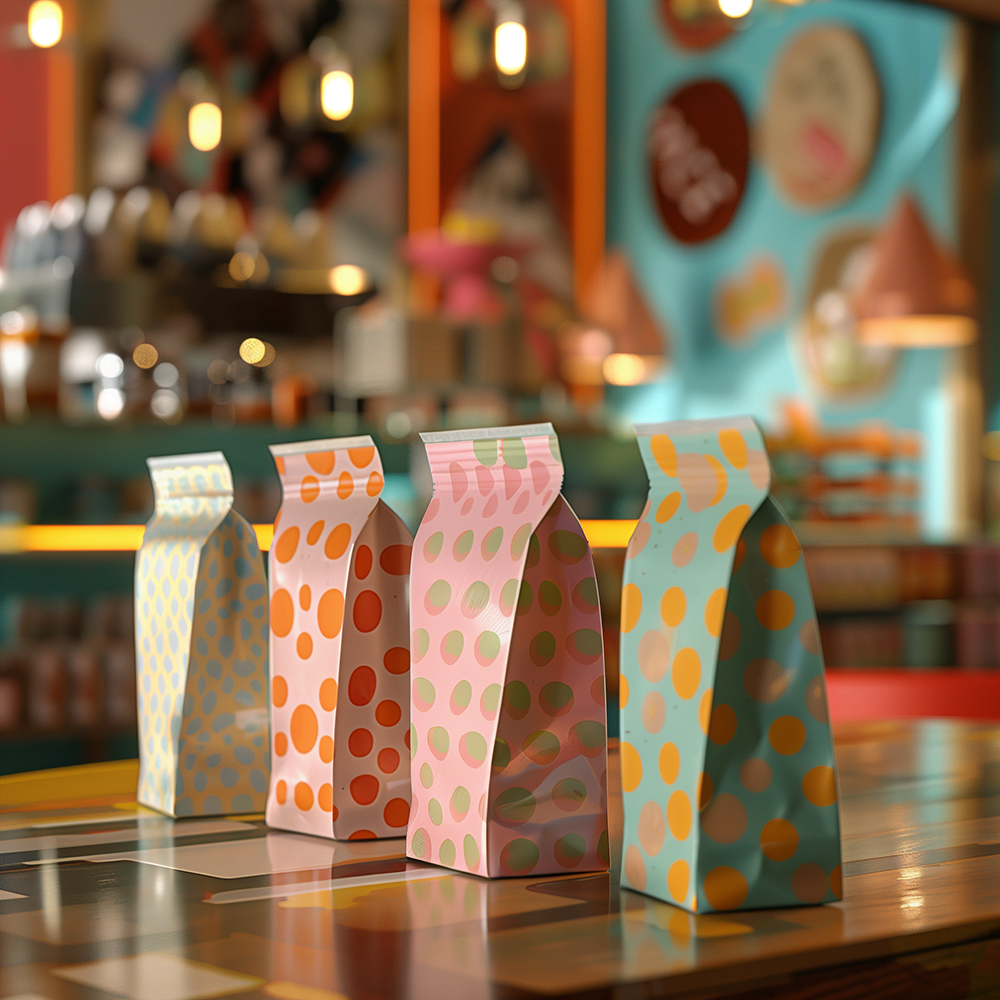
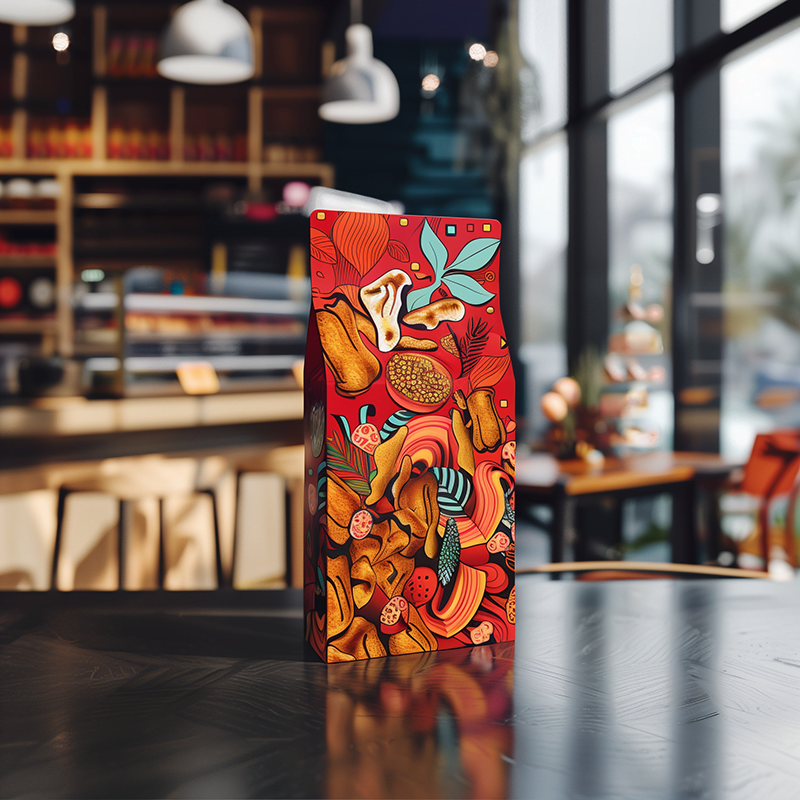
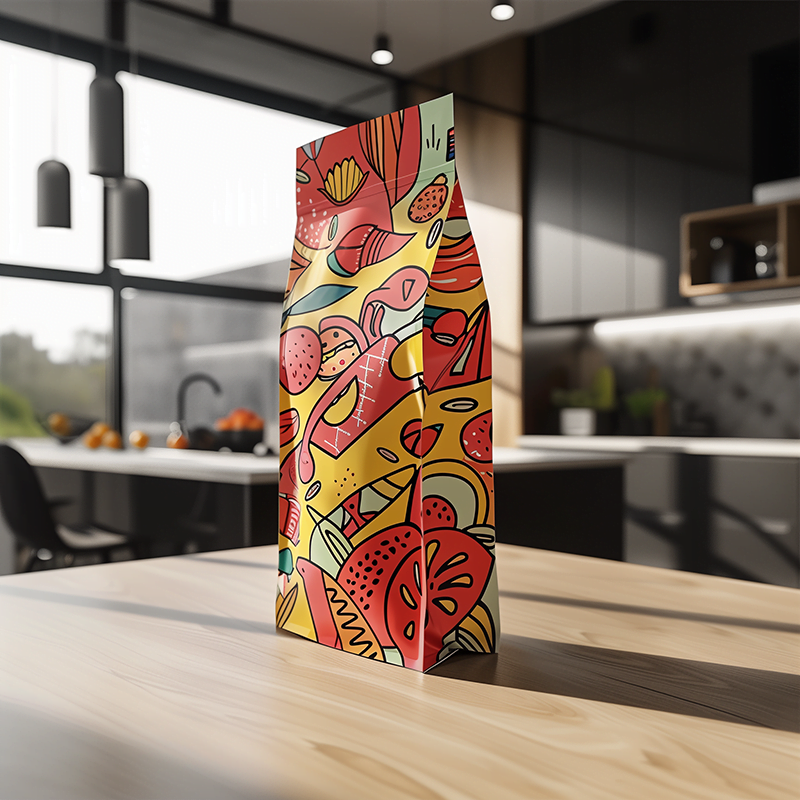
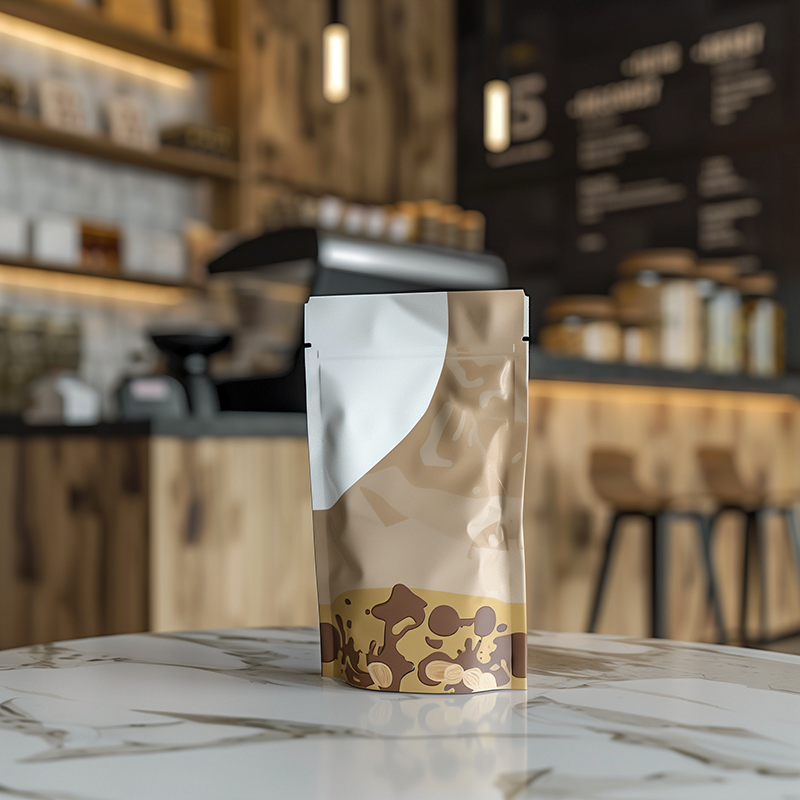
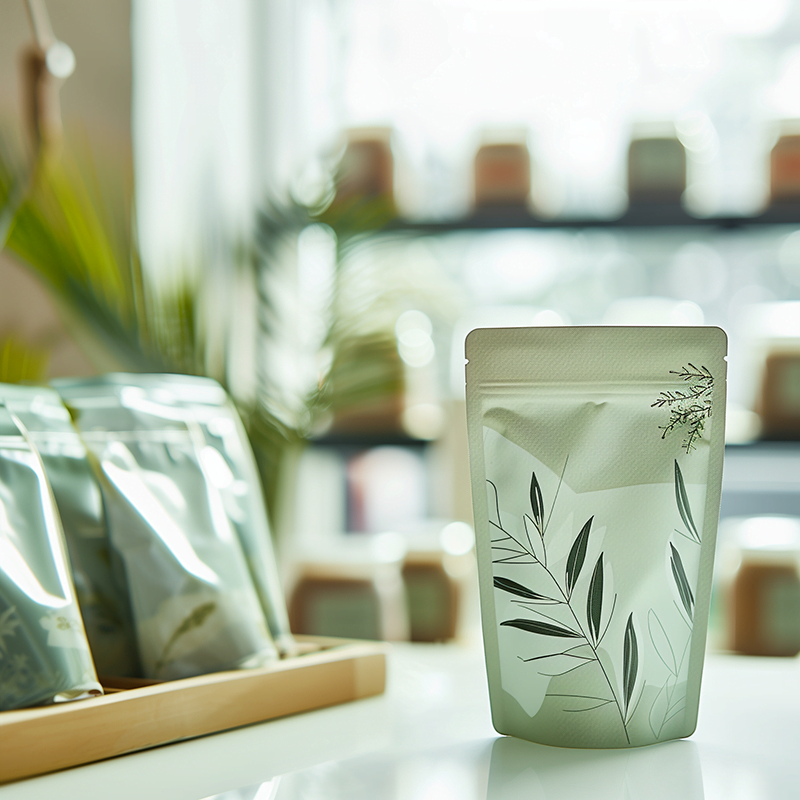
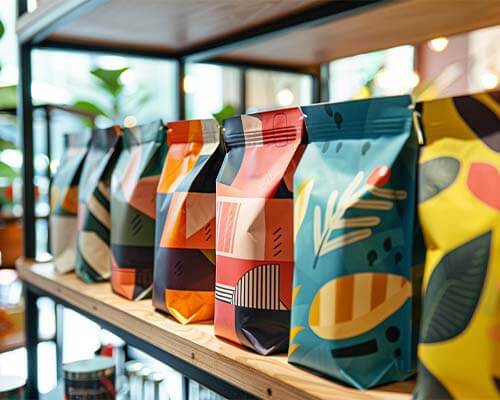
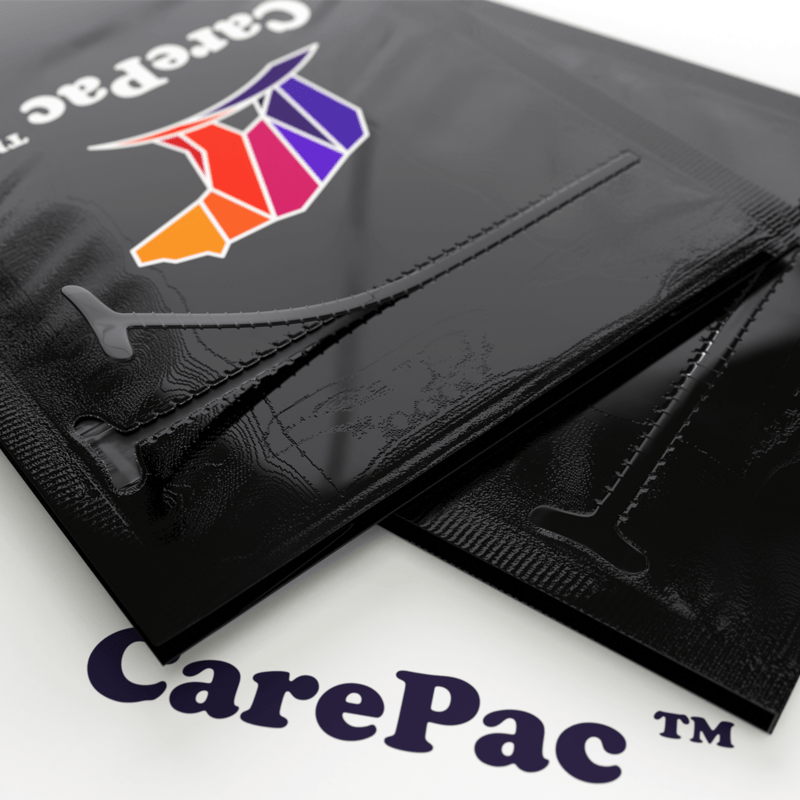
    Custom printed stand-up coffee pouch featuring a one-way degassing valve for freshness and aroma control.Custom-printed coffee packaging pouches with degassing valves displayed in a premium café environment for retail-ready presentation.

    Degassing valves are critical for coffee quality, pouch integrity, and customer satisfaction. Here’s more info about the impact degassing valves have on product quality and customer happiness:

    Coffee freshness: Degassing valves prevent the build-up of excess carbon dioxide or days or even weeks after packaging. It also keeps oxygen out of the package. Both of these can help pre-oiled, powder, or ground coffee retain its rich aroma and strong flavors. 

    Maintaining pouch integrity: Most coffee drinkers want to keep their coffee in the vertical packaging it came in. Imagine how upset they would be if the coffee packaging didn’t have a degassing valve and the package exploded after just a few days in storage? 

    Enhancing customer satisfaction: Since degassing valves work to keep the product fresh and the packaging intact, they help ensure that customers receive a high-quality product that retains its smell and flavor for a long time. And happy customers = repeat customers.

    With the right packaging partner, these degassing valves can be seamlessly integrated into your coffee packaging, helping to keep oxygen and moisture out of your pre-oiled coffee beans.

    Common Issues with One-Way Degassing Valve Applicators

    When it comes to applying degassing valves to coffee packaging, there are several common issues that can cause the one-way degassing valves to operate incorrectly or not at all.

    Misaligned valve application: If the valves aren’t aligned correctly on the bag, the integrity of the seal can be impacted. This can cause leaking, reduced valve efficiency, and compromised sealing performance, among other issues.

    Inconsistent adhesion: In this case, valves don’t adhere properly to the bag film, resulting in detachment or leaks. These leaks can lead to product loss from degradation, compromised seal integrity, and reduced resistance to chemicals and high temperatures.

    Poor valve placement or incompatible film: When the valves aren’t compatible with the film, functional issues such as incomplete valve closure, leakage, reduced efficiency, and premature wear can occur.

    Labor bottlenecks: If the valves are placed manually, this can lead to slower production rates and increased labor costs. Manual valve application is extremely time-consuming, so finding an automated way to add one-way degassing valves is key. 

    Issues with semi-automatic valve application machines: Issues with valve application machines can also occur, such as issues with power indicators, clogged filters, and maintaining consistent fill line volumes. 

    Industrial-grade packaging equipment applying one-way degassing valves to flexible coffee pouches on a high-speed production line.

    Introducing CarePac’s Degassing Machines for Flexible Packaging

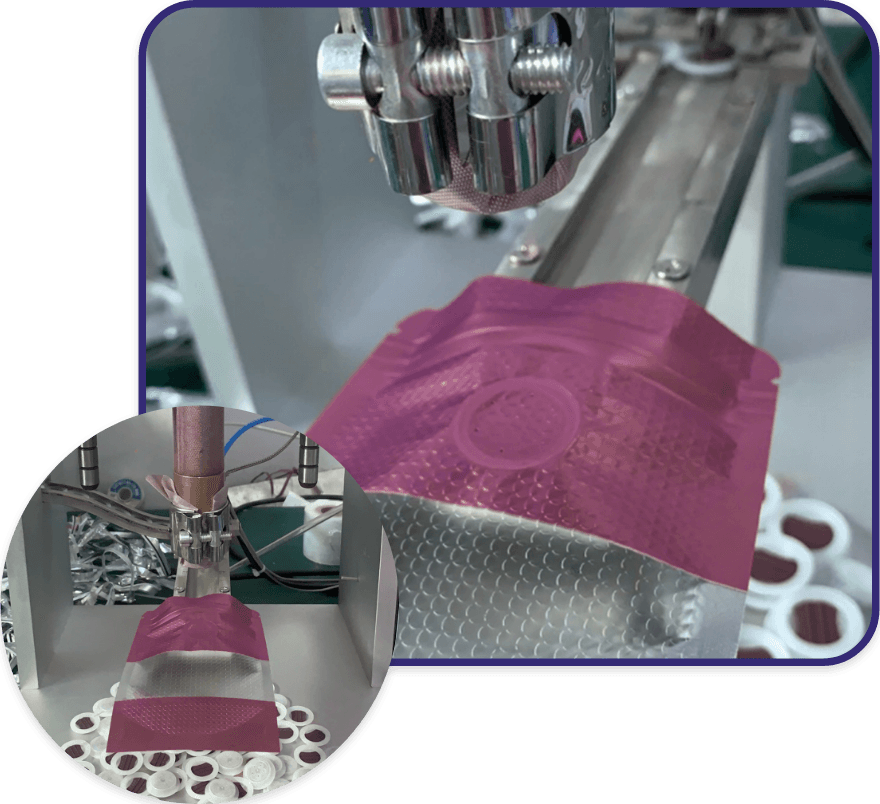
    If you’re concerned about the packaging machinery your current provider uses running into any of the above degassing valve issues, consider outsourcing your coffee packaging needs to a company with plenty of valve applicator experience, like us. CarePac uses state-of-the-art JW2 degassing valve application machines. Each machine is capable of applying 1,500 one-way degassing valves per hour. Alignment of the valve is controlled by an adjustable depth gauge and laser sight control system. 

    With CarePac’s degassing valve machinery, you’ll achieve automation speed and consistency, accurate valve placement, compatibility with all types of bag types and film materials, and efficiency gains vs. manual or older semi-automatic models. Plus, it integrates into our existing workflows so you can continue to experience the customized and cost-effective CarePac flexible packaging you’re already accustomed to.

    This professional and seamlessly integrated machinery allows us to process a higher number of bags per hour with higher accuracy of valve placement. Typically between 10 and 20 bags are destroyed during the heat calibration process. Our valve applicator machine is capable of using different valve molds, so we can apply one way degassing valves from different manufacturers. This way, air and carbon dioxide can escape from your packaging, regardless of its material or individual features.

    Close-up of a degassing valve being installed on a custom printed coffee pouch using precision heat sealing equipment.

    What Makes CarePac a Trusted Coffee Packaging Authority

    For companies seeking a flexible packaging expert with valve applicator capabilities, you can’t go wrong with trusting us for your coffee packaging needs. We specialize in providing FDA-approved, food-safe packaging for a variety of industries and other markets, including coffee, snacks, and pet food. If you’re looking for flexible packaging with valves, we’ll keep the oxygen and moisture out of your product. Here are a few benefits to working with CarePac for your coffee packaging needs:

    Responsive customer service

    We pride ourselves on our customer service and strive to make the entire process as hassle-free as possible. While we use automation in the packaging plant, we maintain a human touch throughout our sales and customer service functions.

    Low MOQs

    With CarePac, you won’t be tied to a huge minimum order volume. We offer low MOQs so businesses of all sizes can get started with customized products. For even faster turnaround, consider CarePac Express, which offers digitally printed pouches with MOQs as low as 100 bags.

    R&D capabilities

    We love pushing the needle on all things packaging, and one of the benefits of working with us is that we use our years of research and development to continuously improve our packaging. From enhancing the sealing capabilities of our bags to designing freshness systems, we’ll make sure you’re supplied with the best bags technology can offer.

    Is Your Packaging Losing Freshness? Let’s Fix That.

    If your coffee is being exposed to air and losing freshness, it’s time to draw the line and talk to professionals about your issues. Our helpful sales team is on hand to create the customized coffee packaging you’ve always dreamed of. We’ll integrate with your current processes and will always be available to answer questions and support your packaging goals. 

    Contact us today to learn more about our new degassing machine or request a quote today!

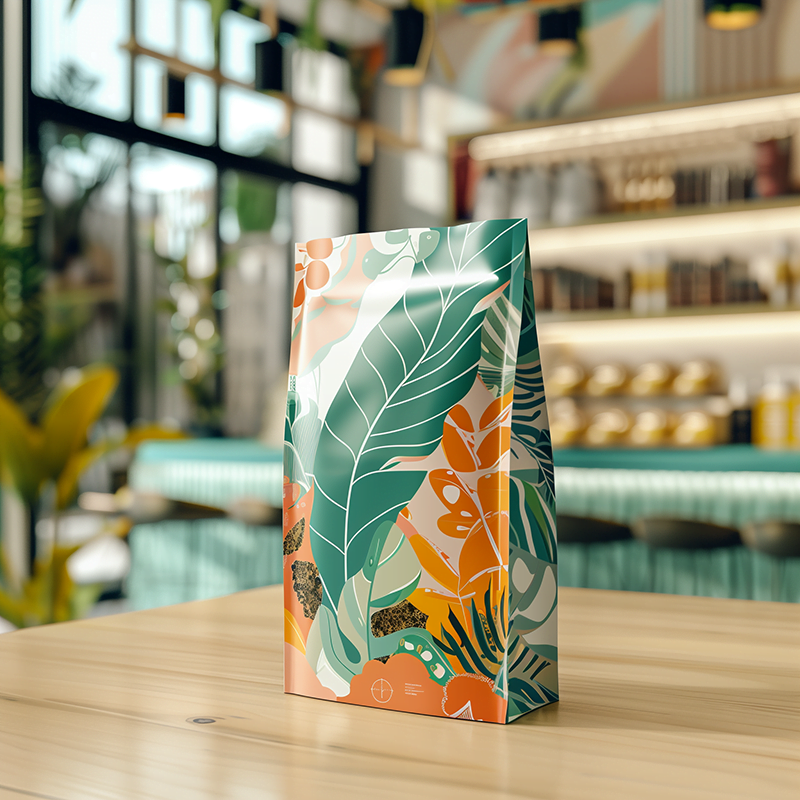
    Premium custom printed coffee pouch with colorful geometric pattern and a functional degassing valve for maintaining coffee freshness.

    Let’s Get Started

    Made In The USA

    Full PouchCustomization

    Scalable Printing Digital & Plate

  • Optimizing Packaging for Cold Chain Logistics

    Optimizing Packaging for Cold Chain Logistics

    Optimizing Packaging for Cold Chain Logistics

    Introduction to Cold Chain Logistics

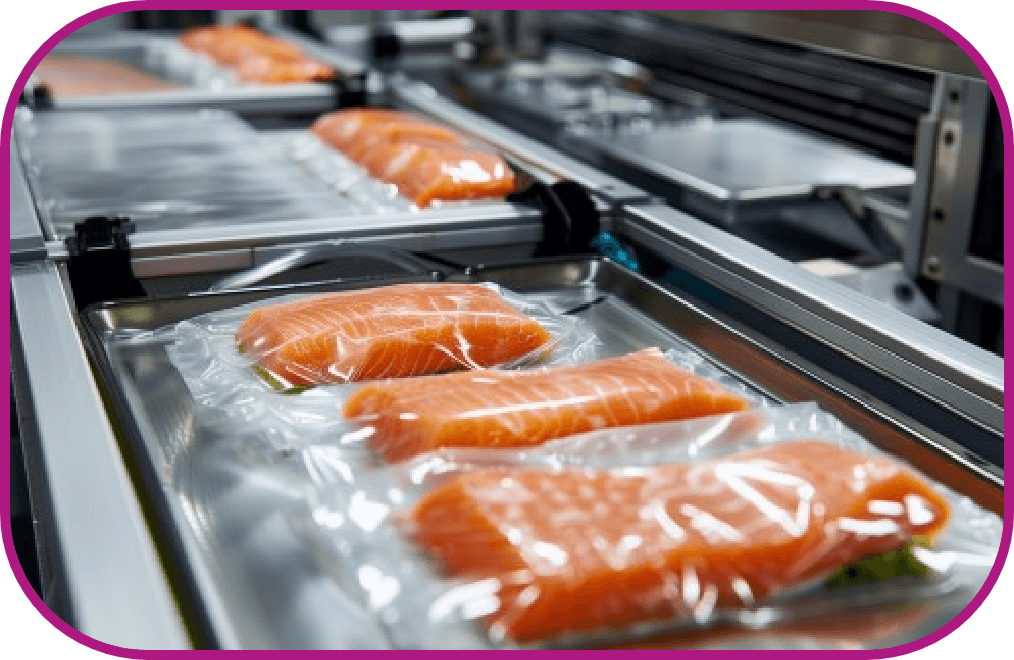
    Cold chain logistics is essential for maintaining the quality, safety, and sustainability of temperature sensitive products, like food and certain pharmaceuticals. If you’ve ever tried to keep food cold during a long day at the beach, though, you already understand that keeping things at a specific temperature is more difficult than it sounds. That’s where cold chain packaging solutions come into play.

    The right cold chain packaging solutions ensure the integrity of vaccines, biologics, medication, and food products as they make their way from the manufacturing and shipping facility to the store or pharmacy shelves. There are three types of cold chain packaging: active, passive, and hybrid, all of which use different methods to maintain a consistent temperature for temperature sensitive items.

    In this blog, we’ll discuss the key challenges of cold chain packaging, how cold chain packaging manufacturers can better optimize their processes, and how CarePac can help support your cold chain products with our customized and high-quality packaging.

    Key Challenges in Cold Chain Packaging

    There are several key cold chain challenges, including maintaining temperature integrity, preventing condensation and moisture damage, and ensuring compliance with industry standards. We’ll cover each of these cold supply chain challenges more in-depth below.

    Maintaining Temperature Integrity

    Whether you’re transporting vaccines or shipping frozen goods and dairy products, you’ll need to maintain temperature integrity via insulated box liners, gel packs, and robust seals. Finding packaging solutions that fit the bill can be difficult and expensive, especially for an industry that’s already strained.

    Preventing Condensation and Moisture Damage

    You’ll need to find moisture-resistant packaging that will help protect your products from moisture damage. Additionally, you’ll need to invest in expensive technology to protect your frozen foods and pharmaceuticals from drastic temperature changes in the first place.

    Ensuring Compliance with Industry Standards

    Cold chain packaging materials will need to meet strict industry standards that are set forth for the cold chain industries. This protects the end user from sickness (or even death) due to consuming spoiled food or expired vaccines or pharmaceuticals that spoiled during transport.

    Best Practices for Optimizing Cold Chain Packaging

    Optimizing cold chain packaging is crucial for ensuring product integrity and reducing costs throughout the supply chain. Here are a few best practices:

    Use Insulated and Durable Materials

    By using cold chain solutions that focus on insulated and durable materials you can avoid damage during transit. Higher quality materials may be more expensive on the onset, but they’ll save you money in the long run. Invest in materials and gel packs that retain temperature and help you avoid food waste.

    Optimize Package Design for Efficiency

    Compact, stackable designs can help maximize shipping space and reduce costs. Find cold chain packaging solutions and providers that will work with you to truly understand your shipping logistics and craft cold chain packaging that’ll fit the bill. Even better if they offer thermal packaging solutions in various sizes.

    Incorporate Real-Time Tracking Solutions

    The benefits of integrating tracking for temperature-sensitive shipments are many. Not only will you be able to track your goods throughout the transportation cycle, but you’ll be able to rest easy knowing that your temperature sensitive goods are being transported in the proper temperature environment.

    Cost-Effective Strategies for Cold Chain Logistics

    If all of the above sounds expensive, it’s because it is. Fortunately, there are a couple things you can do now to cut back on costs.

    Minimize Packaging Waste

    Use reusable or recyclable materials to lower costs. Some companies even offer discounts or other incentives for customers that send their packaging back in the mail. Whether you use expanded polystyrene or sustainable materials, anything you can do to improve sustainability is a step in the right direction.

    Streamline Packaging Processes

    You can streamline your packaging processes by partnering with trusted suppliers for efficient packaging solutions. It’s always a good idea to find a few companies that can manufacture your temperature controlled packaging; that way, if one of your temperature controlled packaging solutions goes out of business or needs to close due to bad weather, you won’t be left in a lurch.

    How CarePac Supports Cold Chain Packaging Needs

    At CarePac, we are proud to offer custom cold chain packaging solutions for temperature sensitive products. Not only will our packaging help you ensure proper temperature control for your sensitive items, like pharmaceuticals, chemicals, or food products, but our customization capabilities mean that your product will stand out to your customers.

    Ready to learn more about our cold chain solutions for packaging? Contact us today to get started!

    Lets Get Started

    Made In The USA

    Full PouchCustomization

    Scalable Printing Digital & Plate

  • Top Packaging Trends of 2024

    Top Packaging Trends of 2024

    Top Packaging Trends of 2024

    Although we’re already mid-way through 2024, new packaging trends continue to emerge that will shape the packaging industry through December and beyond. This year’s packaging industry trends range from the purely functional to more design oriented; regardless, the packaging industry and the packaging companies within it are keeping an eye on the trends so they can create new packaging processes to meet demand.

    In this blog, we’ll dive into this year’s top packaging trends we’re seeing among our customers and how packaging design and the packaging industry is changing to meet the demand. Here are the key trends:

    Trend 1: Sustainable Packaging Solutions

    Sustainable packaging made from recycled materials (+ recyclable materials or raw material that can be recycled) is no longer simply a trend: choosing a sustainable packaging material has become the new normal for millions of brand owners and companies around the world.

    Technological advancements have made it easier than ever before for brands to reduce their environmental impact and plastic pollution. This can be done by using biodegradable and recyclable materials instead of plastic, or by moving to a closed loop system that’s aided by new technology. Many brands are finding that their customers simply demand sustainable packaging from them and are making every effort to reduce their plastic waste and overall environmental impact by avoiding fossil fuel based plastics as often as they can.

    CarePac is one of those packaging companies that is proud to offer a variety of sustainable materials for your product packaging, and we’re adding more sustainable packaging solutions each and every year! In today’s world, there’s simply no excuse for e commerce brands to not use eco friendly inks and packaging. Protecting the environment and reducing waste in the packaging industry is NOT just a fad!

    Trend 2: AI-Supported Smart Packaging Design

    Let’s face it: artificial intelligence is everywhere and unlike other innovative ideas, it doesn’t seem to be going away anytime soon. Currently, artificial intelligence is transforming the design process for each and every customer, from design concept to production.

    This new technology helps enhance creativity and efficiency, and makes it easier than ever before for companies to come up with innovative packaging that will enhance product shelf life and help attract even more consumers. The main downside to using artificial intelligence is that much of the design work will still fall on the companies themselves, which can be difficult for many brands to swallow.

    If you prefer to work with humans (let’s face it — who doesn’t!), our consulting services can help make your plastic and paper packaging ideas a reality. By working with humans, you won’t have to worry about silly mistakes or oversights ruining your customer’s unboxing experience.

    Trend 3: Retro and Nostalgia Styling

    Although simplistic packaging material and modern designs continue to be popular among our customers, we’re seeing a resurgence in the popularity of vintage designs. These retro designs evoke a sense of nostalgia, and major food packaging brands and companies like McDonald’s and Wendy’s are jumping on board.

    One decade that seems to be exceedingly popular among consumers is the 50s. Think: bright colors, watercolors, and simple line drawings that will wrap your consumers in the arms of comfort. These packaging designs are sure to continue to grow in popularity, so start designing now!

    CarePac has the capabilities to produce intelligent packaging that looks like it comes from any decade, and will draw attention to your brand. Playing with memories and mood is a powerful tool in advertising, and brands seeking to evoke those feelings through their packaging should look no further.

    Trend 4: Hyper Contrast

    With attracting a customer’s attention being harder than ever, the visual experience of a package’s design is just as important as its functionality. Gone are the days of mono material packaging: today’s e-commerce packaging needs to include vivid colors that contrast which each other, which helps create a spark of joy and interest in the things your customers are purchasing. In the past, many packaging companies took a “less is more” approach to their packaging, but those days are in the past.

    If you want to infuse your food or cosmetics packaging with vivid colors, we can help. Regardless of the colors or how saturated you want the bag to look, our team can help make your bag a reality.

    Trend 5: Interactive & Engaging Designs

    Another of the trends where where we’re seeing a lot of growth is packaging that enhances user interaction, such as using tactile materials and augmented reality features. It can even be as simple as using popular digital tools, like an app or QR codes to make your packaging more ‘fun’ to the user. Gone are the days when a product’s packaging just served to protect what’s inside – now your packaging can actively engage your customers and help your brand grow rapidly.

    Bonus points if your product’s packaging also encourages sustainability by incorporating reusable packaging, or providing warnings against single use plastics. Anything brands can do to increase recycling rates in a cost-effective manner is key.

    Trend 6: Working with Leaders in the Packaging Industry

    We might be biased here, but we’re finding that more and more e commerce companies are choosing to work with leaders in the packaging industry vs newcomers. The truth is, the packaging industry is incredible complex and there’s a lot to keep track of: packaging materials, smart packaging, supply chain issues, reducing waste, sustainable, and which materials can be recycled, among other things.

    By working with a smart packaging company that focuses exclusively on packaging processes, you can take a lot of the guesswork out of the process. We’ll handle supply chain issues, quality concerns, waste management, and know exactly which plastic materials can be recycled. We even have access to state-of-the-art technology and more materials than many other packaging companies do.

    Ready to create the paper packaging of your dreams that falls into one of the above trends? Want to cut back on waste without sacrificing quality? In our world, the customer is always right and we’re ready to make you a repeat customer. Contact us today to get started!

    Lets Get Started

    Made In The USA

    Full PouchCustomization

    Scalable Printing Digital & Plate

  • Barrier Packaging Guide

    Barrier Packaging Guide

    Barrier Packaging Guide

    Choosing the right packaging materials for your product can be a daunting task. Not only does the packaging need to look great, but it needs to protect the perishable products within, working to extend shelf life and extend freshness. Additionally, you’ll need to take a variety of things into account: how long will the product be in storage? Will it be stored in a climate controlled environment, or outside in a hot and stuffy warehouse? Does the packaging require more than one layer of protection, or just one?

    Fortunately, you’re not alone in your hunt for the perfect barrier packaging material. Our barrier packaging guide will walk you through some of the most common questions we receive about barrier packaging, the advantages of an oxygen barrier, and more. Welcome to our guide to barrier packaging, created by the people who know barrier packaging best.

    What is barrier packaging?

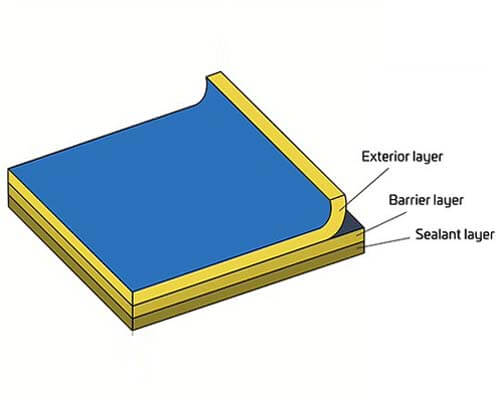
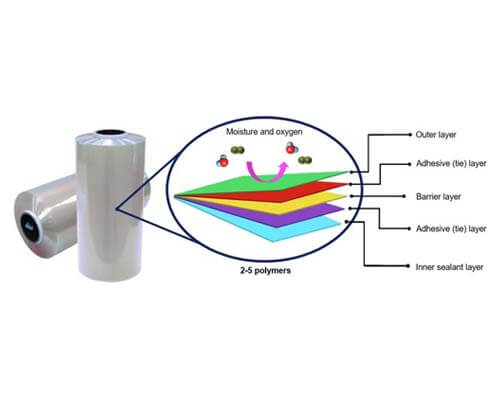
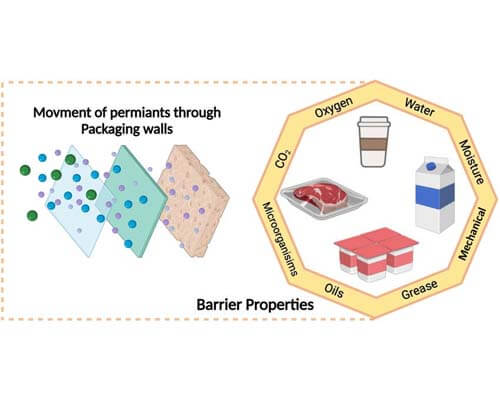
    First things first: what is barrier packaging? Barrier packaging is any packaging that prevents the migration of moisture, gas, or oxygen through the packaging, creating what some refer to as a modified atmosphere package. This barrier can be thought of as a firewall, preventing the movement of gas or liquid. In short, barrier packaging is made from a packaging material that provides a high barrier between the product inside and oxygen, moisture, light, and gas. In some cases, barrier packaging can also act as an aroma barrier, keeping products fresh and odors and scents inside the plastic bags.

    What is barrier packaging

    How is barrier measured in packaging?

    The two main measurements of barrier are moisture vapor transmission rate (MVTR) and oxygen transmission rate (OTR). There are other measurements, but for food products these are the most common measurements. Learn more about what exactly these measure in regards to barrier packaging materials.

    Moisture vapor transmission rate

    This is measured using standardized testing protocols from ASTM or ISO. Grams per square meter over 24 hours (g/m²/day) is a common measurement, and it measures how many grams of moisture are transmitted through the packaging material in a 24 hour period. In the United States, some companies use grams per 100 square square inches over 24 hours (g/100 in²/24 hr) which measures the amount of moisture passing through 100 square inches of material in 24 hours.

    Moisture vapor transmission rateOxygen transmission rate

    Oxygen transmission rate

    Typically measured in CC/100in square in 24 hours (cc/m²/day), this measures the amount of oxygen that passes through the material over a specific area across 24 hours. In the United States, some companies use CC/100 in²/day, which measures square inches per 24 hours.

    Understanding these common measurements for barrier packaging materials can be confusing, which is why it’s so important to work with a professional and experienced packaging company, like CarePac. We’ll walk you through the various oxygen and moisture barrier properties, ensuring that the packaging material you choose has the barrier properties you need.

    What are the different levels of barrier protection in packaging?

    When it comes to understanding the different barrier levels of plastic films, they’re typically divided into four categories: basic single, basic double, moderate, and high performing. Each level offers a stronger oxygen and moisture barrier and the barrier strength increases with each step up. Here’s a little more information about the barriers and the metallized films that fall within each category.

    Basic Barrier- Single Layer

    This offers your most basic level of moisture and oxygen barrier. It temporarily protects the product within from exposure to light, oxygen, and moisture, but won’t do much to extend the shelf life of the product. Think of this as your most basic low barrier material, such as the monolayer materials that make up a sandwich bag. If you’re on the hunt for a high barrier material, keep looking!

    Basic barrier- single layerBasic barrier- multilayer materials

    Basic barrier- Multilayer Materials

    Basic barriers that use multilayer materials are still relatively “basic” in nature, but they do offer enhanced protection when compared to a basic barrier with a single layer. Often associated with laminated packaging, you’ll often see a combination of materials in a double layer barrier. For example, PET/PE combines polyethylene terephthalate and polyethylene, OPP/PE combines oriented polypropylene and polyethylene and OPP/OPP has two layers of oriented polypropylene.

    Polyethylene Terephthalate (PET) provides a good barrier against gas, moisture, and aromas, and is often used in multilayer basic barriers.

    Moderate Barrier

    A moderate barrier will often protect against gas, moisture, aroma, and sometimes UV light. These coated films are lightweight and food safe, and are often used for food packaging. CarePac’s PET/VMPET/PE is considered a moderate barrier material, and the metallization of these films offers an enhanced oxygen barrier. Unlike the basic barriers, a moderate barrier can help extend the shelf life of food, pet treats, and other items.

    Moderate barrier packagingHigh performing barrier

    High performing barrier

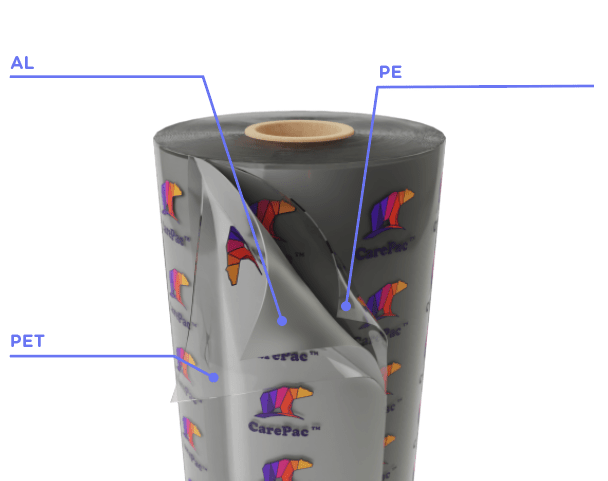
    Finally, high performing barriers are made up of multiple layers of heavy duty materials. Our high performing barriers protect against odor, moisture, gas, UV light, and visible light, and will keep the product inside fresh. If you’re concerned about your product being exposed to gases, chemicals, and other detrimental elements in the environment, choosing a high performing barrier is essential. CarePac’s PET/AL/PE bags use aluminum foil as the middle layer, which has incredible barrier properties, and is nylon reinforced for super protection and durability.

    Which barrier should you choose?

    So, which level of barrier protection is right for you? While a higher barrier is always better, especially for food products, excessive barrier is just a waste of money. Selecting which level of barrier you need also depends on a variety of unique factors, such as whether or not you need a window to view the product inside. For example, if you don’t need a window, choose a metalized material with a better barrier.

    We know this can be incredibly confusing, which is why it’s so important to work with an experienced and qualified packaging company that’s well versed in flexible packaging and barrier properties. Curious about the advantages of one barrier level over the other? Need help with the development of your packaging? We can help! Contact us today!

    Lets Get Started

    Made In The USA

    Full PouchCustomization

    Scalable Printing Digital & Plate

  • What is ePAC Flexible Packaging?

    What is ePAC Flexible Packaging?

    ePAC Flexible Packaging?

    what-is-epac-flexible-packaging

    What is ePAC Flexible Packaging?

    ePAC is a multinational corporation that manufactures flexible packaging for consumers in a variety of industries. Although ePac is a leader in the flexible packaging industry, their sheer size (and profit) mean that customers are just a number to them. Additionally, they were only established in 2016, making them a relative newcomer to the flexible packaging space.

    Similar companies have been around for decades, and have spent that time perfecting their flexible packaging solutions. From nailing down the right flexible packaging materials to use for a certain product to bringing sustainable options (like post consumer recycled materials) to the market, it’s evident that ePac’s competitors have the experience and passion that’s unmatched by ePac.

    In this blog, you’ll learn more about ePac flexibles alternatives and what other CPG companies are bringing to the table with their packaging products.

    ePac Flexible Packaging Alternatives

    While there are plenty of alternatives to ePac flexible packaging, for the sake of this blog post we’ll focus on two of ePacs main competitors: ABC Packaging Direct and CarePac.

    ABC Packaging Direct

    ABC Packaging Direct was founded in 2017 and strives to be a complete, end-to-end strategic partner for companies of all sizes. Regardless of how much funding ePac has, you can’t fake the relationship-first approach that you’ll find with ABC Packaging Direct. Their custom flexible packaging options include a variety of bags and lay flat pouches with high barrier structures, meaning their pouches are manufactured with preserving product freshness in mind.

    Currently, ABC Packaging Direct works primarily in the following industries: nutraceuticals, food, pet supply, coffee and tea, pharmaceuticals, and liquids/spouted products (alcohol, dressing, sauces, etc.)

    Feedback from their customers is generally positive, and the company works with brands such as Heinz, Kraft, McCormick, and Mars. They minimum production runs start at 5,000 units.

    abc-packaging-direct-epac-flexible-packagingflexible-packaging-by-carepac

    CarePac

    What can we say about ourselves that you don’t already know? If you’re a returning customer, you already know that our flexible packaging simply can’t be beat. We offer complete customization, from the look and feel of our lay flat pouches to the material used. We work with brands of all sizes, and are proud to offer three different printing options: digital, flexographic, and rotogravure. We’re one of the few CPG companies to offer this level of printing customization.

    Simply put, we offer more configurations than our competitors, and always put our customers over profit. That’s the CarePac guarantee.

    The Need for Custom Pouch Packaging

    Unless you’ve been living under a rock, it’s clear to see that there’s a growing demand for personalized and custom packaging solutions. Flexible packaging is the first thing consumers see when they pick up a food product or package in the store, and leverage flexible barrier packaging as a tool for branding and product differentiation has never been more important.

    Of course, finding the right flexible packaging company to work with can be challenging, and nobody understands that challenge more than we do. In the next section you’ll learn more about our digital printing process, our company ethos, and how we stand apart from our flexible packaging competitors.

    need-custom-pouch-packaging

    CarePac: The Preferred Vendor for Custom Pouch Packaging

    If you’re on the hunt for an alternative to ePac flexible packaging, you’ve come to the right place. Here are just a few ways our company blows our competitors out of the water:

    customized-vendor-pouch-packaging

    • Decades of experience– ePac and ABC Packaging Direct COMBINED have less operating experience than our company does on its own. Flexible packaging is our whole world, and we thrive in this environment.
    • Customization options & flexibility- We offer full customization, from the material used to the size and shape of your pouches. No customization request is too big, and our helpful CareDesign team is ready to help you design your bags. That’s one, of the many, benefits of working with CarePac.
    • Testimonials from happy customers- Our customers are happy with our bags, and many come back for repeat purchase. Reach out and we’ll be more than happy to share testimonials from consumers who are pleased with the durability and quality of our roll stock bags.
    • Competitive pricing & value-added services- Our pricing is ultra-competitive, whether you’re packaging food or wholesale products. Shipping is quick, and we even offer low MOQs.
    • Made in America- Last but not least, one of our primary differentiating factors is that our products are all made in America. We focus on quality, and the highest quality products are made in the U.S.A. Unlike ePac, who manufacturers their products in various locations (including Africa and Asia), all our products are made right here.

    Interested in experiencing the CarePac difference for yourself? Get a Quick Quote now to start the ordering process, and to experience for yourself how we’re a cut above our competitors.

    Overwhelmed with

    all the options?

  • ISO 9001 Requirements

    ISO 9001 Requirements

    CarePac Receives Certification for

    Meeting ISO 9001 Requirements

    San Dimas, California – CarePac, a flexible packaging solutions provider, is proud to announce that it has achieved ISO 9001:2015 certification.

    ISO 9001 sets out the criteria for a quality management system, and is the world’s best-known quality management standard. Adhering to ISO 9001 requirements and becoming certified means that a company adheres to these top management standards.

    Mandatory Requirements for ISO 9001

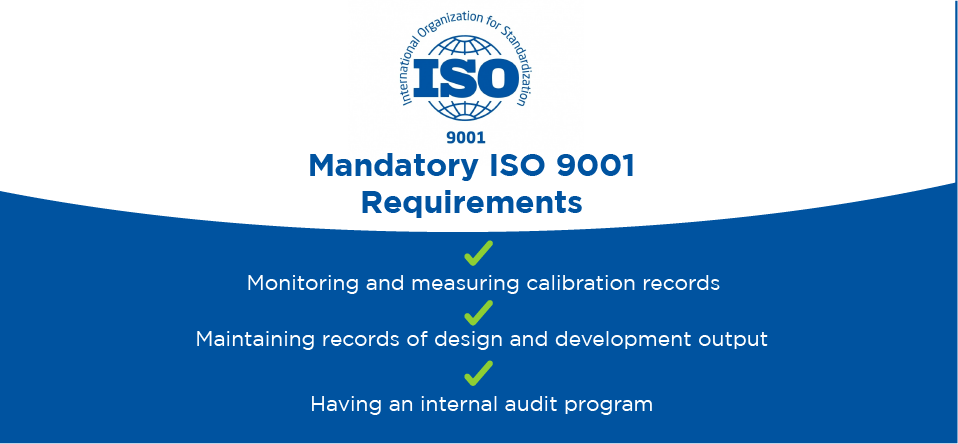
    There are mandatory and non-mandatory ISO 9001 requirements that must be met to be certified, and the mandatory ISO standards include: monitoring and measuring calibration records, maintaining records of design and development output, and having an internal audit program. 

    With its ISO 9001 certification, CarePac has proven that it adheres to all the ISO 9001 requirements, including those listed above. Adhering to ISO 9001 requirements and achieving ISO 9001:2015 certification was a top priority for the CarePac team and has been years in the making. ISO 9001 : 2015 certification demonstrates CarePac’s commitment to the highest quality standards in its day-to-day operations. CarePac’s ability to provide consistent, high-quality packaging while increasing operational efficiencies was confirmed by the certification.

    To obtain this prestigious certification, CarePac underwent a rigorous 3rd party audit conducted by an Intercert ISO-accredited certification body. The third-party company evaluated CarePac’s adherence to the ISO 9001      requirements across the full range of CarePac’s internal processes. By adhering to the ISO 9001 requirements and becoming certified, CarePac demonstrates its a company that can be trusted. We’re proud of our ISO certification and our environmental management standards. 

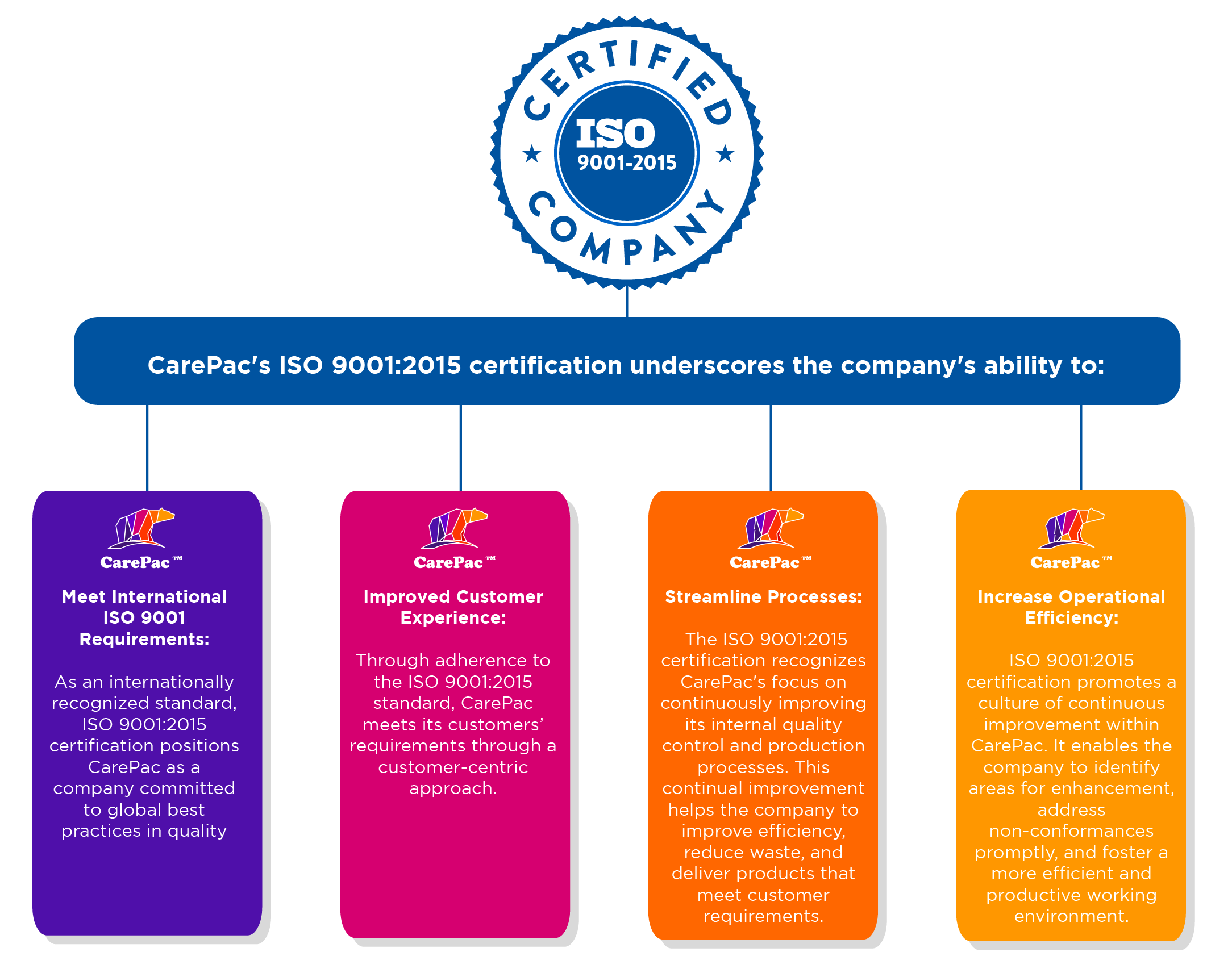
    CarePac’s ISO 9001:2015 certification underscores the organisation’s quality management and ability to:

    • Meet International ISO 9001 Requirements: As an internationally recognized standard, ISO 9001 : 2015 certification positions CarePac as a company committed to global best practices in quality management.
    • Improved Customer Experience: Through adherence to the ISO 9001:2015 standard, CarePac meets its customers’ requirements through a customer-centric approach.
    • Streamline Processes: The ISO 9001 : 2015 certification recognizes CarePac’s focus on continuously improving its internal quality control and production processes. This continual improvement helps the company to improve efficiency, reduce waste, and deliver products that meet customer requirements.
    • Increase Operational Efficiency: ISO 9001 : 2015 certification promotes a culture of continuous improvement within CarePac. It enables the company to identify areas for enhancement, address non-conformances promptly, and foster a more efficient and productive working environment.

    “We are thrilled to meet ISO 9001 requirements and achieve ISO 9001 : 2015 certification, a significant milestone in our journey towards excellence,” said Paul Slaney, managing partner at CarePac. “In conversation with competitors over the years, I have heard many say that ISO certification wasn’t necessary, but I believe this certification reflects our unwavering dedication to delivering the highest quality flexible packaging to our valued customers.”

    About CarePac’s Commitment to Quality:

    CarePac is a San Dimas based company specializing in designing and manufacturing flexible packaging for a wide range of industries. With a relentless focus on customer satisfaction and environmental responsibility, CarePac has become a trusted partner for businesses seeking reliable, sustainable packaging solutions.

  • Packaging Polymers Guide

    Packaging Polymers Guide
    Packaging Polymers Guide

    Packaging Polymers

    The term ‘polymer’ is used to refer to an industrial substance or other materials consisting of very large molecules, called macromolecules. Polymer packaging can be synthetic or natural in origin and can be rigid or flexible in nature. Examples of these molecules in nature include proteins, starches, and cellulose. Synthetic polymers often used by consumers in carry bags and other products include nylon, high density polyethylene, durable rubbers and more.

    Here, we’ll discuss the different types of industrial polymer packaging materials that can be used in flexible packaging solutions, their critical benefits, any known risk, and their composition.

    What Are Polymer Packaging Materials?

    One of the largest industrial applications of plastic polymer packaging is as flexible packaging solutions and materials (35% of polymers are estimated to be used for packaging). Packaging items using polymers have many benefits, including increasing the life of your products on shelves, lower cost, and lighter weight and more attractive than other packaging options like glass bottles. Polymer packaging, especially laminated packaging, is a core type of food packaging, as it is attractive, functional, efficient, improves the shelf life of your products, and has cost effectiveness properties.
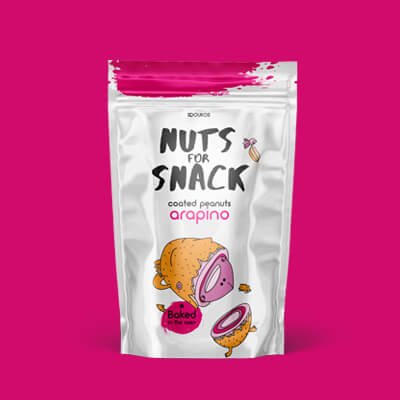
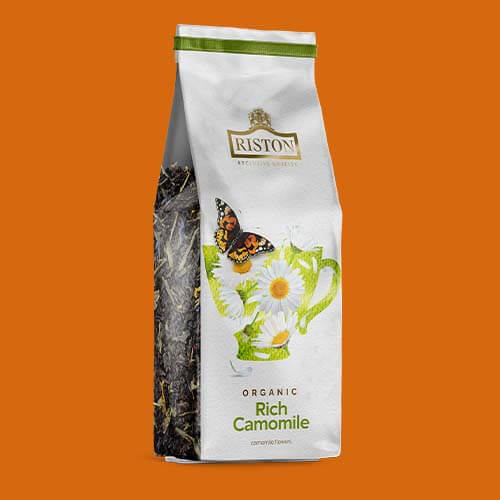
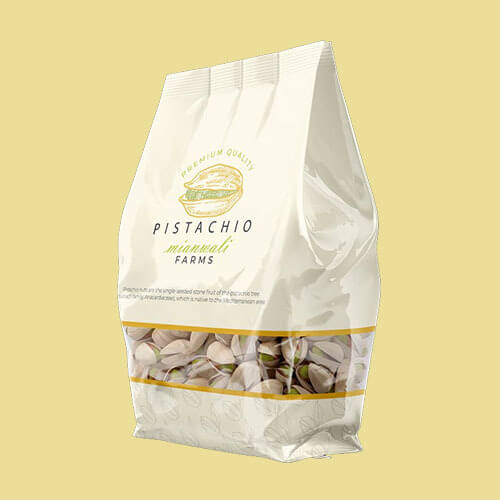
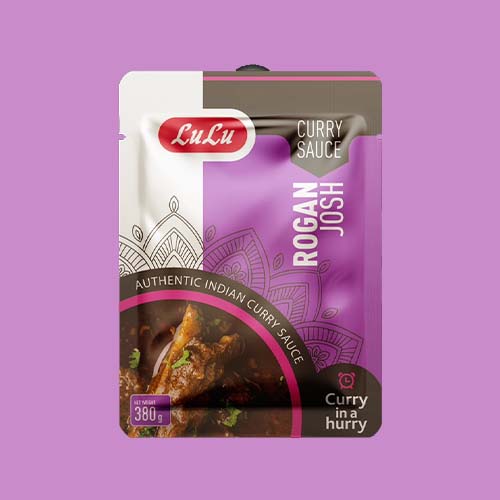
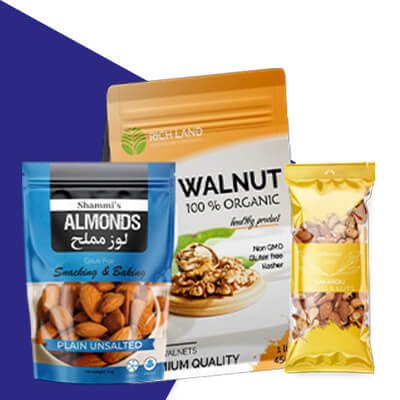
    Custom Food Grade Eco Friendly Reusable Zipper Stand Up Plastic Roasted Mix Pouch Peanut Packing Nuts Packaging Bags Snack BagHeat Seal RCPP 3 Seal Pouch Retort Pouch Food Plastic Packaging Custom Designs Curry Sauce Bag

    Flexible packaging solutions for foods include a range of different durable materials. Polymeric materials by the percentage of packaging include PET, high density polyethylene terephthalate 9%, polypropylene (PP) at 11%, polystyrene (PS) 11%, with other polyolefin plastics including polyvinyl chloride (PVC). These can help increase shelf life, preserve freshness, and is a great flexible packaging option for many applications.

    Next, we’ll discuss the different materials that are classified by the American Chemistry Council as polymer packaging, including polyethylene and polyethylene derived plastics.

    Polyethylene
    abbreviation
    Name
    Density
    g/cm3 
    Common
    Application 

    HMWHDPE

    Ultra high density

    0.93

    Plastic parts

    HDPE

    High density

    >0.941 

    Bottles

    MDPE

    Medium denisty

    0.92 – 0.94

    Closures, and clamshells 

    LDPE

    Low density

     0.91 – 0.94

    Pouches and bags

    LLDPE

    Linear low density

    0.915 – 0.925

    Pouch sealant layers

    VLDPE

    Very low density

    0.88 – 0.915

    Pouch sealant layers

    PVC, minor plastics & their applications
    PVC, which is notoriously difficult to recycle when compared to others on this list, typically winds up in landfills, and is the subject of numerous environmental concerns over the evolved toxic compound, vinyl chloride monomer (VCM), which constitutes only about 5% of plastics. Other minor plastics, for example, acrylonitrile-butadiene-styrene (ABS), polytetrafluorethylene (PTFE), and nylon, constitute only about 3% of usage together.

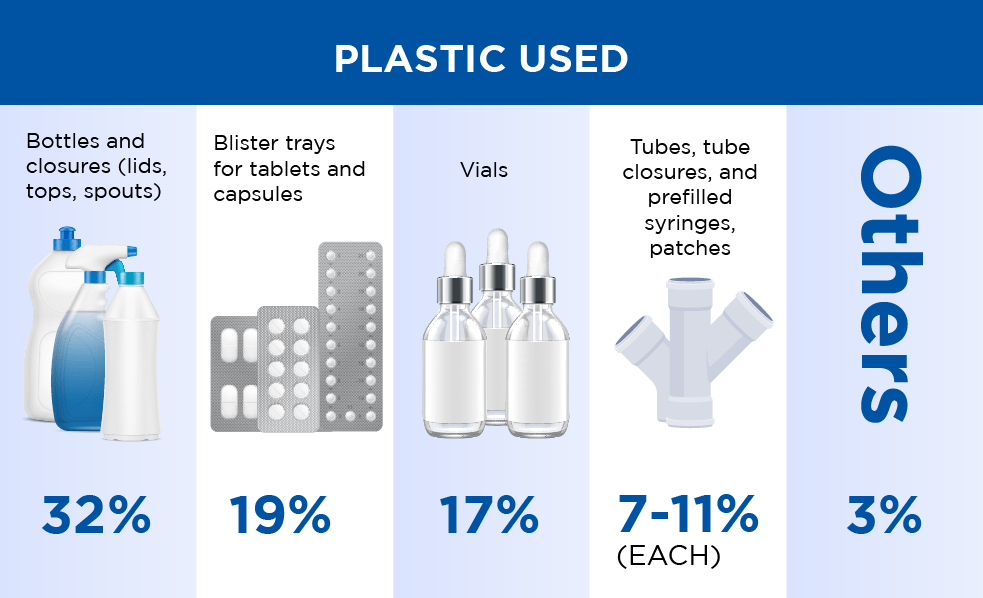
    Bottles and closures (lids, tops, spouts) account for 32% of all plastics used, followed closely by blister trays for tablets and capsules at 19% and vials, which also constitute quite a high proportion at 17%. Tubes, tube closures, and prefilled syringes, as well as patches, account for between 7% and 11% each. All other applications of plastics for packaging constitute about 3% of materials.

    Biodegradable plastics

    Biodegradable plastics are a series of different materials of contemporary interest and include composites of starch or other biomaterials with or without the presence of more environmentally persistent and traditional polyolefin plastics. Examples include poly-caprolactone (PCL), polylactic acid (PLA), polybutylenesuccinate, polylactic-co-glycolic acid (PLGA), nitrocellulose (NC), cellulose acetate (CA), methyl cellulose, polyesteramide, and polyamide (PA).
    Rilsan® is a bioplastic produced from castor beans by Arkema (France), and is among one of the most popular flexible packaging solutions. Polyhydroxyalcanoic acid, polyhydroxybutyrate-co-valerate, poly-B-hydroxybutyrate (PHB), starch-PLA, starch-PCL, and starch-Ecoflex, where this last compound is an aliphatic aromatic polyester (polybutylene adipate-co-terephthalate [PBAT]), and others such as polybutylene succinate terephthalate are new products
    PBAT is production was pioneered by BASF. Glycerol (10-20%)-plasticized chitosan (maize), zein (soybean), protein-keratin (rapeseed meal), protein (wheat gluten)-based water-containing (10-20% plastics, ethylene bioplastics, and those making use of nano-technology such as silicates represent a new array of bioplastics. Hemp oil, soya and other vegetable oils, vegetable starch, and sugarcane give a composite ‘bioplastic’ (Toyota Motor Corporation); PLA and 20% kenaf (hemp) fibre (NEC Corp.) also represent new media.
    NatureFlex is a cellulose film produced by Futamura. It is available in several configurations including a vapor metalized form which is more resistant to mositure and oxygen migration and other contaminants which allows for increased shelf life for food packaging, and has been used in various applications including candy packaging, and other consumer goods that require better barrier.
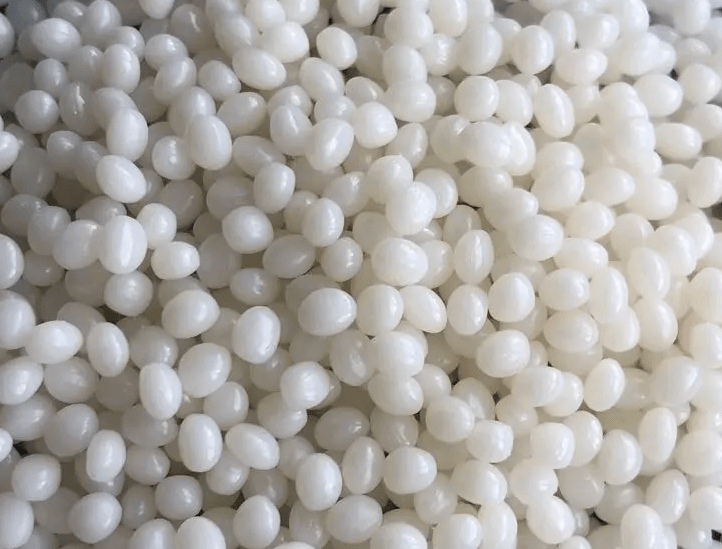
    PBS (Polybutylene succinate) is a sealant layer solution which allows or ambient compostability. PBS has can be efficiently laminated to NKME metalized NatureFlex, and is a food contact grade sealant layer.

    The use of these bioplastics in medical use applications and their overall durability as compared to traditional plastics is a matter of continued exploration, and study by various companies.

    Starch

    Starch is relatively inexpensive, adaptable, and a hugely abundant resource generated from cereal and vegetable processing. Materials such as Mater-Bi from Novamont have poor gas and water exclusion (10 000-100 000 times poorer than most polyolefins), low melting points (60-120 °C), and low mechanical strength, such as tensile strength (15-50 MPa), compared with conventional plastics, which melt at 160-240 °C and have tensile strength values of 20-80 MPa.
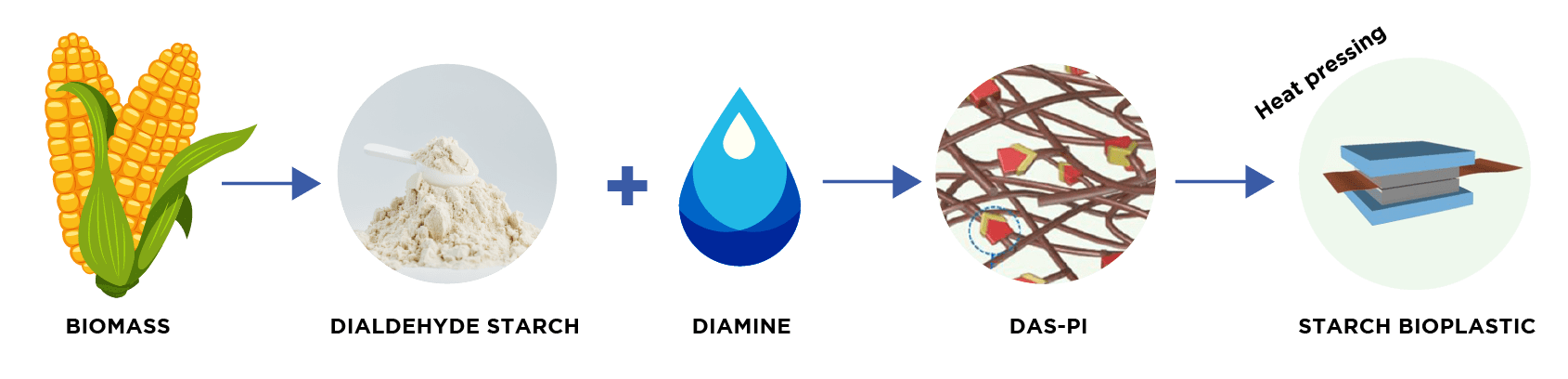
    These deficiencies mean thermoplastic starch-based biomaterials (for thermosetting applications such as trays) may be combined with more biodegradable contemporary plastics such as ethylene vinyl acetate (EVA) or ethylene vinyl alcohol (EVOH) because of the benefits of their gas and water vapor barrier properties, which may be 1.2-2.4 times poorer than PP, which is one of the better barrier materials.

    Experimental plastics

    Conventional synthetic plastics are highly favored in terms of their physical properties but increasingly less so, based on environmental impact post initial use. Consequently, a range of experimental and novel bioplastics are constantly being developed to alleviate environmental injury and accumulation in the ocean systems and the food chain.

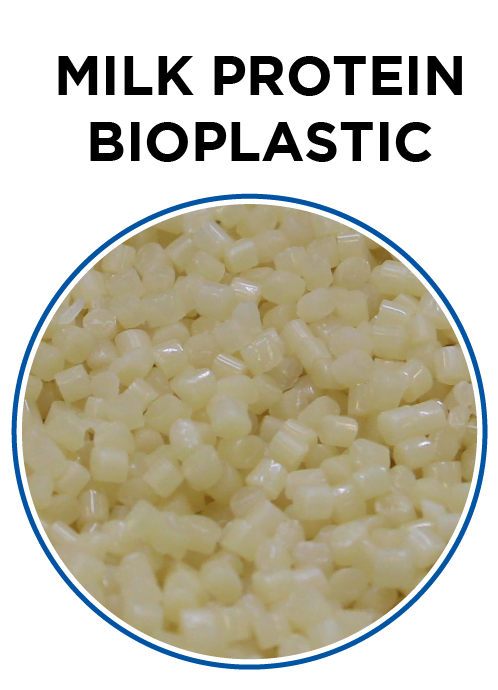
    Past innovations with limited success have included milk protein bioplastic fabricated using the milk protein casein in the presence of 4-5% formaldehyde as a cross-linking agent, the inclusion of TO, as a filler, and 1% clarifying agent such as ethylbenzene aniline or trixylyl phosphate. Zein, a maize protein cross-linked by formaldehyde developed in the past, continues to be of interest since maize growth can be considered to be a sustainable crop. Other less enthusiastically received plastics have included a soya, castor bean, and animal blood-based plastic that, apart from a dark color, was always likely to meet with some societal resistance and thus fail.

    Imperial Chemical Industries (ICI) developed Ardil fibre, which was used some time in the last century (around 1940) and was generated from spun and bonded groundnut proteins. In more recent times, the substance ‘gutta percha’, obtained from the Palaquium oblongifolium leaf, has gained interest for commercial use since it represents a natural form of rubber latex based on trans-1,4-polyisoprene that can be vulcanized with sulfur and molded/cast to a desired form. Other natural materials have included shellac, an exudate of aldehydes and hydroxy acids of lactides and esters of waxes from the female lac insect from Southeast Asia.

    Fabricated films

    Fabricated films for various purposes can be used directly or as part of multi-layered composites known as laminate films. Industrial over-wrap films often use single materials such as PP or laminate films. The over-wrap is made from blown and cut films of a range of plastics such as PVdC, PP, and HDPE, which are often heat-seal bonded to a tray or bottle.
    Fabricated films vary considerably in the sheet thickness obtained in standard production processes. The thickness of sheeting can be modified but the thinner films obtained are HDPE (~12 m), PP (~14-30 m), and PVC (~18 m). Thicker standard films are produced from LDPE (~20-25 pm; referred to as 100 gauge), LDPE-co-PVA heteropolymer (~20 m), cellulose film (~20 um), and coextruded film with multiple layers (~30 um).

    LDPE
    LDPE is also made in a range of sheet thicknesses that can vary from 20 to 150 pm. Films can be plasma treated and metalized to provide light reflectance, or in some cases, plastic film can be bonded to thin aluminum foil and paperboard. Pharmaceutical blister packs often make use of webbing film of a thicker form that can be fabricated from up to four layers of material bonded by an adhesive. In order to ensure uniform welding or heat-seal formation the glass transition and melting point characteristics of film materials need tight control.

    Cellophane

    Cellophane is a convenient industrial biodegradable film used for plastic packaging that has fairly good moisture barrier properties. The polyethylene polymer is also known as regenerated cellulose or viscose and is also used for fabrics just as it is used as a packaging material. The material is formed when substrate is dispersed in an alkaline medium (NaOH) and then mixed with carbon disulfide (CS2) which is a fairly dirty process, and is considered toxic to workers. Alternative processes exist that do not require carbon disulfide, such as the lyocell process. 
    Cellophane is a brittle amorphous material, but the addition of the humectant glycerol gives the film significant flexibility. Regenerated cellulose is a good substitution polymer for synthetic polymers for several use applications since it demonstrates a decently low permeability to water, oil, grease, and air as well as low porosity, thereby showing good exclusion of micro-organisms.

    The polymer packaging film is, therefore, useful and popular for primary wrappings for food packaging applications and those of frozen oily foods. Cellophane is fully biodegradable, being broken down by cellulolytic fungi (Fusarium spp., Penicillium spp., and Aspergillus spp.) and bacteria (Clostridium spp., Actinomycetes spp.). However, toxic CS processes are used in most cellophane production and is a worker health concern and reduces the environmental appeal of its substitution for polyolefins. CA is used mostly for photographic film and fabrics but rarely for plastic packaging as it degrades and liberates acetic acid.

    Cellulose nitrate or NC was used as part of an early plastic called ‘Parkesine’ in the 1860s. It has limited use as a principal packaging material but does find use in terms of lacquers. As in the case of many cellulose-based materials, including pure cellulose fiber, its advantage lies in that it is made from straw or wood pulp and, therefore, is an entirely renewable resource as it can be composted or incinerated.

    Polymeric Packaging Applications

    Polymer packaging materials and other popular materials are both flexible and easily modified but with the advantage of being generated for little cost. Plastics and other polymers occur ubiquitously in food packaging and range from the HDPE milk bottle to PET microwaveable ready-to-eat (RTE) cooked foods trays, cellophane raw-frozen meat wrappings, LDPE salad and confectionary bags, and PS or PP cream or yogurt cartons.

    Common uses in a medical context are for medicinal bottles used to carry tablets and capsules or pharmaceutical blister or ‘push-through-pack’ (PTP) packaging. Pharmaceutical blister packs or blisters make use of a webbing film that can be thermoformed into a mold or die of a specific shape.

    Valued characteristics can include gas or water vapor impenetrability, clarity or opacity, low or high melting temperatures, non-toxic components, recyclability, and mechanical robustness. A complex formulation of blends of different types of homopolymer plastics in combination produces copolymers with unique properties.
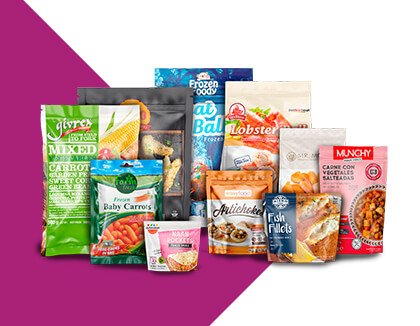
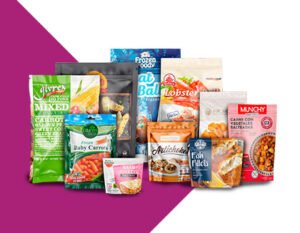
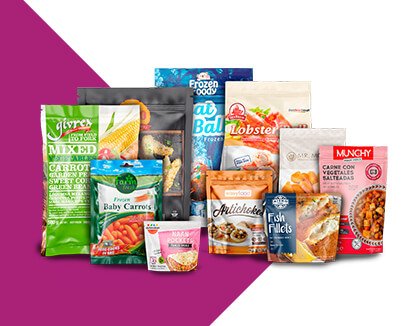
    A family group shot of all the different types of custom frozen food packaging Carepac offers in keeping Frozen Food Fresh Best Packaging for Frozen Meals

    Semi-crystalline vs amorphous polymer packaging

    Depending on its molecular structure and functionalization polymers are either semi-crystalline polymers or amorphous polymers. Unlike amorphous-structured solids, semi-crystalline polymer solids demonstrate clear crystallization and melting point transitions. Polymeric materials exhibit a component structure similar to that observed in the supercooled liquid phase but display the typical mechanical properties of a solid.

    Amorphous structured syndiotactic and isotactic plastics, on the other hand, exist in a ‘metastable state’ with respect to any crystalline form.

    Polymers used for packaging by percentage

    PET

    polystyrene

    POLYPROPYLENE 

    LDPE + HDPE

    Other Plastics

    Flexible packaging and bottles

    Packing Foam

    Trays and lidding

    Pouches, bags, and  bottles

    PTFE, ABS, Nylon PVC

    Polymer Packaging Ingredients

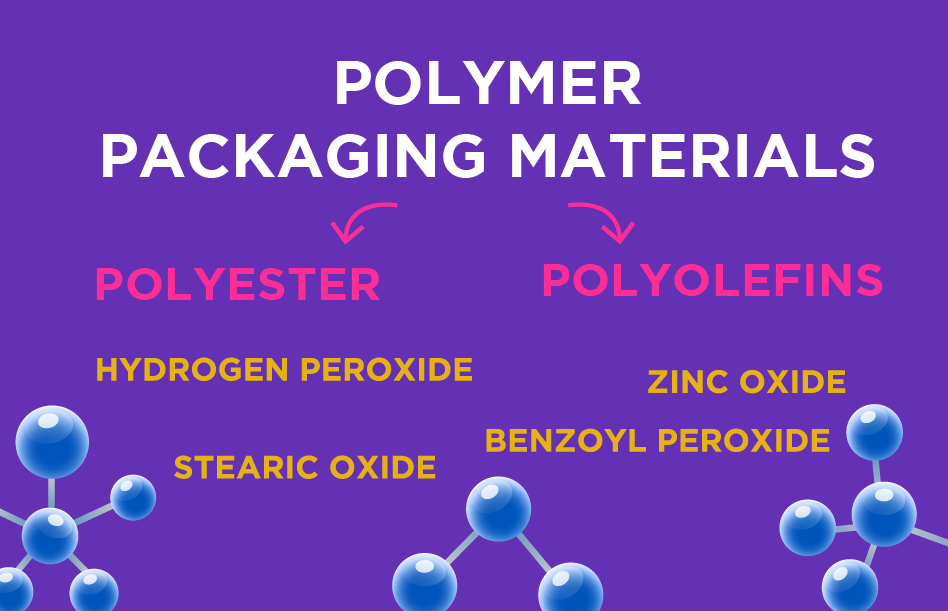
    Polymer packaging materials such as polyester and polyolefins routinely include between 10 and 50 ingredients, which are designed to preserve or improve the safety, performance, and longevity or shelf life of the contents. Conventionally, the biggest component in such packaging materials is the polymer packaging itself, with between 1% and 10% of included additives.

    Polymerization agents, accelerators, activators, and catalysts such as hydrogen peroxide, benzoyl peroxide, zinc oxide, and stearic oxide are standard monomer function-alisers and cross-linking agents. However, small amounts of unreacted materials might be expected to remain in the plastic, and this has formed the basis of material quality control and choice or selection of the material.

    Society is moving towards bioplastics

    Recent trends suggest a movement by supermarkets to remove plastic from packaged products in certain jurisdictions with the top five supermarkets working towards replacement of traditional polyolefins with compostable paper or bioplastics fabricated from sustainable sources of starch, corn, or other polylactates in an attempt to further sustainability goals and reduce the amount of single-use plastic packaging. This shows that the packaging market is changing and brands need to prepare to pivot.
    Bioplastics find use as fillers and foams, films, wraps, trays and containers for fruit, egg boxes, meat trays, soft drinks bottles (a recent initiative by Coca-Cola involves monoethylene glycol-PET called PlantBottle), and cartons. Poly(vinyl alcohol), or PVOH (PVA), is a synthetic water-soluble polymer packaging with the general formula [CH CH(OH)]n that has been traditionally used as an emulsifier, adhesive, in paper manufacture as a release lining, as a’textile’ sizing agent, as a carbon dioxide barrier in PET carbonated drink bottles packaging, and as a biodegradable plastic sheet for covering sanitary products.

    The Environmental Impact of Plastics

    Plastics have been ‘around’ in their present form for 80 years or so up until present times, and are considered, if not recycled, to be an environmental threat thought to be able to persist for 400-1000 years. Since a calculated 6.3-8.3 billion tones have been made to date, with a mere 9% recycled, 12% incinerated, and 79% placed in landfill or accumulated in the environment, this points at very inefficient strategies for coping with such a persistent material
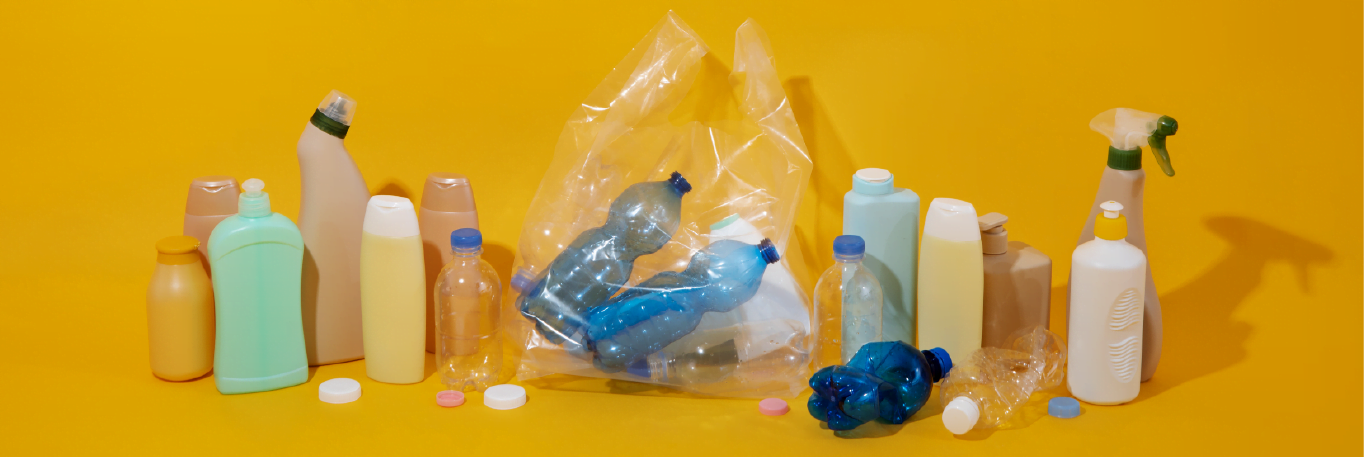
    Plastics have been ‘around’ in their present form for 80 years or so up until present times, and are considered, if not recycled, to be an environmental threat thought to be able to persist for 400-1000 years. Since a calculated 6.3-8.3 billion tones have been made to date, with a mere 9% recycled, 12% incinerated, and 79% placed in landfill or accumulated in the environment, this points at very inefficient strategies for coping with such a persistent material.

    In the 45 year period from 1960 to 2005 there was a 1,000% increase in the amount of plastics in municipal waste to the near-present value of 10% by weight (about 40% of plastics are used solely for product packaging). The EU is at present the leading recycling regions at 25-30%. However, many of the G20’s most economically powerful ‘top table’ countries have a poorer record on the recycling front.

    For example, the USA recycles an average of approximately 10% of plastics. Germany recently had the best statistics for recycling, with greater than 60%, and both Turkey and Chile sit at the bottom of the recycling ‘league table’ with a mere 1-2%. The UK recycled about 37% of its plastics in 2010, some way back from Germany. Notably, Poland has been seen making the most significant improvement of approximately 900% in recycling policy and practice in the last 20 years.

    At the current rate of production, as much as 12 billion tons may by ‘syphoned off from landfill or generally in the environment by 2050. PE and PET are about the ‘best’ plastics for consumers in general and routine use as these are the most recycled; however, the usage statistics contradict this notion at present with 36% PE, 21% PP, 12% PVC, and 10% each for PET, PS, and polyurethane (PUR).

    Such use means a change in global manufacturing culture is needed as a matter of some urgency as PUR, PVC, and PS represent a major inconvenience since they are not routinely recycled
  • Six Tips when buying flexible packaging

    Six Tips when buying flexible packaging

    Buyer Tips When Buying Flexible Packaging: A Flexible Packaging Buyers Guide

    Looking for printed pouches and packaging that will build your business?

    Discovering that buying flexible packaging harder than you thought? This buyer guide can help! 

    Retort Pouch Ready To Eat Flexible Food Packaging

    With so many different kinds of pouches from so many different package suppliers at so many different prices… how do you even begin to choose the right packaging solution for your product, one that attracts and retains customers and maximizes your return?

    So we’ve assembled our top tips to make getting the right pouches easier and added them to this buyers guide. Spoiler alert: we’ve saved the most important tip for last.
    You’re probably looking for pouches because you know they look terrific on the shelf, they’re cheaper than traditional packaging and they’re better at keeping your product in top condition. The only thing left to decide is… what material, what pouch format, what printing process, what closure type, what quantity… and many factors you may not have considered…

    Without further ado, here is our flexible packaging buyer’s guide, written just for you! Your search for the perfect stand up packaging ends here! 

    At CarePac, we help customers navigate the dozens of variables that go in to choosing the right printed pouch. So – whether you’re looking for a new printed pouch partner, or transitioning from labelling to pre-printed, from hard sided containers to flexible pouches – we’ve put together some top tips to help you take control.

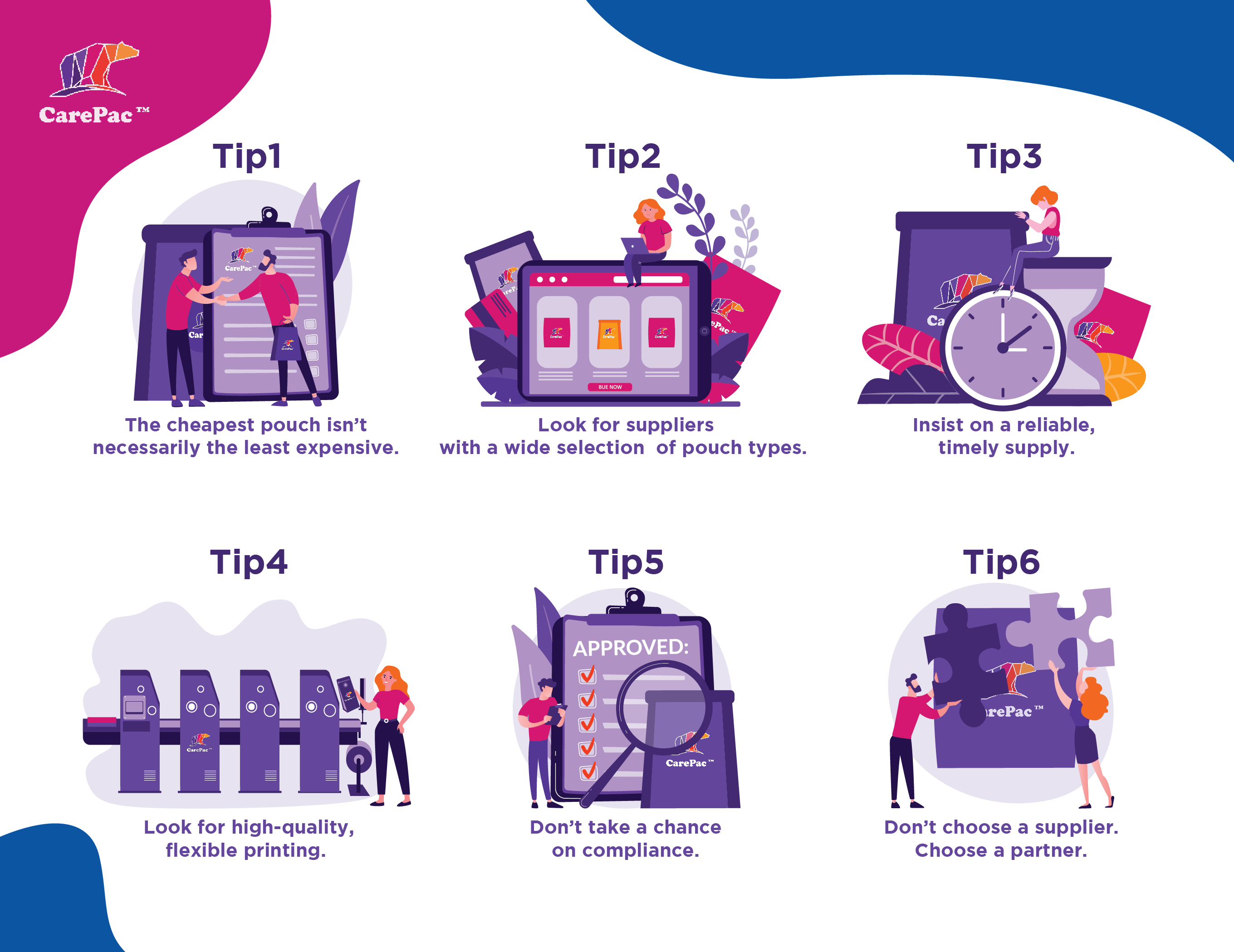
     Tip #1: The cheapest pouches aren’t necessarily the least expensive product

    If you’ve bought pouches, you may have discovered that the cheapest bag won’t necessarily save you money. Every day, we work with customers who are trying for the second or third time to find good quality containers. Maybe they’ve bought cheap pouches sourced from overseas or click-and-print websites that offer no support… and they’ve learned that pouches made with inferior or inappropriate materials won’t attract customers or keep your product fresh. But they will damage your brand. Always work with a supplier who’s ready and able to help you consider your options and takes as much pride in your success as you do.

    Tip #2: Look for suppliers with a wide selection of stand up pouch types

    How do you know which suppliers to trust? Look for the variety of options they offer. One size does not fit all! Different products need pouches of different sizes, made of different base materials to keep the product fresh, safe, and looking great. Stick frozen food in a pouch designed for trail mix and you’re going to have a lot of unhappy customers. At CarePac, our website offers a detailed industry-by-industry guide to applications – from baby food to pasta, from bath salts to vitamins – with options for nearly fifty different product types. Whatever you distribute, we can tailor pouches to suit your needs, including the latest in eco-friendly packaging. We have the machinery and packaging materials necessary to do so. 

    Tip #3: Insist on a reliable, timely supply

    Don’t wait for a surge of sales to discover that your packaging supplier can’t deliver in quantity and on time. You can’t afford to work with firms that are desperately trying to keep up with demand or who won’t work with you because of smaller order sizes. At CarePac, we offer flexible lead times to meet different customer budgets and deadlines, with shipping in as little as four weeks for custom prints and two to three weeks for stock pouches, with orders as low as small as 1000 pieces.

    Tip #4: Look for high-quality, flexible printing

    Your packaging is your calling card. It deserves better than washed-out inkjet labels, and you deserve professional printing services that can match your vision. At CarePac, we offer three printing methods – digital, flexographic, and rotogravure – so you can pick the type of printing, materials, and films that best fits your project. You can even add a logo to your specialty packaging in one simple step.

    Tip #5: Don’t take a chance on compliance

    FDA food contact, BPA and Phthalates free, REACH, and PFAS: there are a lot of compliance and sustainability requirements in the marketplace… and a lot of unreliable claims that materials are compliant. Your chosen supplier must be able to verify to your satisfaction that your pouches will pass muster.

    Tip #6: Don’t add a supplier. Choose a partner.

    Anyone can sell you packaging, but not everyone cares about your success.

    At CarePac we truly believe that we succeed when our customers succeed. We’ve worked hard to build a premium service that’s accessible for business of all sizes. Whether you’re a startup or an established brand, we’re here to anticipate your needs and make the printing process easy, to help ensure your pouches turn out just the way you want. Not sure what you want? We’re always here to help you navigate the process. Looking for something special? We’re your industry experts.

    And… we always pick up the phone when you call.

    We’re not CarePac because we only care about packaging.
    We’re CarePac because we care about you. 
  • Types of Poly Bag Zippers

    Types of Poly Bag Zippers

    Types of Poly Bag Zippers

    Types of Poly Bag Zippers — Plastic Bags with Zippers

    The term Poly bags most specifically refers to mono-layer polyethylene bags which are the most used type of plastic bags globally for many applications. But the term has also come to refer more generally to any plastic bag even multi-ply laminated bags. Poly bags are flexible and inexpensive, proving to be great alternatives to cardboard boxes and other rigid space-consuming packaging.

    The easiest items to find are the flat poly wholesale bags. These types of plastic bags are everywhere: storing food, electronic parts, hospital materials. They are those tiny zipper bag that are flat, reclosable poly bags, and hold the nuts and bolts and other pieces of the desk you bought to assemble at home. You can even see them on a roll when grocery shopping.

    Secondly as opposed to the flat bags, there are poly bags that stand up on shelves and are easier to handle. The gusseted poly bags can be found packing several products as hard candy, bread, and more.

    The the flexibility of re-closable poly bags have lead to their solid presence in the food industry. Flexible packaging is becoming more popular due to its versatility and customization.

    One feature that is trendy among consumers is re-closable packaging, achieved with the addition of a zipper. Meaning that an open, flat package can be easily seals again, and the items in the plastic bags will be fresh for a long time.

    Why add a zip to your bag?

    Flexible Packaging is typically heat-sealed in the loading and filling process. The barrier film keeps oxygen and moisture out while maintaining the original aroma, flavor, and texture as long as the bag is sealed. Adding a zipper will transform a regular bag into a reclosable one. These are the main benefits you will get with that change:

    Extended shelf life

    A zip lock reseals the package preventing gases and vapor from getting in contact with the food and other items inside and can be used for a variety of applications. A bag folded or closed with clips or tape is not tightly sealed, and you will most likely end up chewing a mushy cookie. A zipper adds more comfort to the consumer since he knows the product will last, and there is no need to hurry and consume everything in the wholesale bag at once.

    Makes it easier for your customer to store unused product. 

    Since the package can be safely closed again, the customer can store their items inside cabinets or drawers worry-free about spilled products. And without the need to have a stash of clips or twist-ties. It also saves room and money because you don’t have to keep tons of jars and containers for every package you open every day. Plus, they are tamper evident.

    Perceived value to your brand.

    study evaluated the impressions of consumers and brand owners through surveys about plastic bags and packaging. The results showed that 80% of brand owners said that packaging positively impacts brand value. And that customers are willing to pay more for flexible packaging with enhanced features. They even pointed resealable, easy to open, and extended product life among the top five must-have packaging features meaning they can be used for many different applications.

    So now that you know all the benefits of having reclosable zippers, which zipper should you pick? 

    Types of Zippers for your poly bags

    Just like barrier films, there are many options to choose from according to your needs, products, and packaging styles. Here are some of the options we provide:

    Standard Flange Zippers

    The most common and popular type of zipper. They have interlocking tracks on each side of the plastic bags that your press together to seal the pouch. They are also FDA-approved and very easy to proof and handle.

    Wide Flange Zippers

    This style has a longer lip above the zipper, providing more room for the customer to tear the pouch open without ruining the zipper while adding a nicer look to the bag

    String Zippers

    These are a no-flange zipper design, so it can’t really be called a barrier-type zipper. It’s the most economical option and can be produced faster since it requires less material than the other styles.

    EZ Pull or Pull Tab Zippers

    These are a newer zipper style, considered more convenient. In this type, the pouch can be opened by pulling a tear strip added in the front of the package without ripping the material or using scissors. To reseal the bag, all you have to do is press the top zipper together.

    Dual Track/ Heavy Duty Flange Zippers

    Similar to the standard zipper but with double vinyl tracks. They provide high resistance to the seal and prevent accidents due to this double safety. It is designed to handle heavy products, larger bags, and more opening-closing operations.

    Powder Zippers

    These are designed to prevent particles and crumbs from getting stuck in the zipper’s tracks, which can reduce the seal’s efficacy. These are used for fine powders and granulated products like flour and protein powders. Add them to your adhesive poly bag today. 

    Child Resistant Zippers

    It is a particular zipper style developed in a way that only adults can open it. Products that can be harmful to children as pharmaceuticals and medicinal cannabis, must meet government regulations towards their packaging. This zipper type is tested to ASTM standards and comply CFR 1600:20 requirements of child safety.

    Honorable Mentions: Tin Tie’s and lip and seal tape for plastic.

    Tin Ties

    Tin Ties are not zippers, but they server a similar function. A tin tie is a laminated metal strip coated in plastic that is attached to one side of the bag near its opening. To close the pouch top, the top is folded downwards, and each side of the strip is pressed against the packaging. As if the strip is “hugging” the bag and keeping it shut. It’s a very traditional seal, largely used in the coffee industry.

    Lip and Seal Tape

    Seal tape is another example of a non-zipper, performing a similar function. Seal tape is typically designed as either the initial low barrier closer (think poly mailer plastic bags), or as a single use re-closure. You might ask: Who would want to have a bag that can only be reused one time? The answer is typically specimen containers, or send back bags, where you want to ensure the consumer has fully and tightly closed the bag. 

    Types of Zippers

    Child Resistant

    Powders Zipper

    Velcro Style Zipper

    Dual Flange Zipper

    Standard Zipper

    Wide Flang Zipper #1

    EZ-Pull Zipper

    String Zipper

    Wide Flang Zipper #2

    How to Choose the Right Zipper?

    As you can see, picking one seal types is not a simple task. It depends on your product, its requirements, your brand, and your design. Our packaging experts are always one call away to help you find what is best for your business. Feel free to contact us anytime.

    One of the most frequent questions we receive is how to choose between Tin Tie and EZ Pull Zippers. We will go through each one’s pros and cons to try to make your decision easier.

    Tin Tie

    Pros:

    • Tin Tie adds a traditional and fancy look to your bag while hiding the heat-sealed area.
    • It’s easy to use in the top loading process and by the end consumer. 
    • It also provides extra convenience by letting the customer know how much product is left when looking at how low is the folded tin tie.

    Cons:

    • This sealing style adds a few extra steps in manufacturing. After the bag is filled and heat-sealed, the tin tie is applied, the pouch is folded down, and tape shut so it won’t fall apart in transit. This increases production costs and time.
    • Another disadvantage is the reduced barrier when the bag is reclosed. A folded bag doesn’t entirely prevent contact with oxygen and moisture, 
    •  Also, if you want your customer to open the bag more easily without tearing it or using scissors, you will need to incorporate an EZ peel material, which is more costly than a regular heat seal material.

    EZ Pull

    Pros:

    • Its greatest advantage is already in the name. It’s easy to load it – the bag is loaded through the top and sealed, without any extra step. It’s easy for the customer to open and close it without any tool.
    • The press-to-close zipper provides a higher barrier after resealed, increasing shelf life. Since there is no tearing, the header’s design is untouched, and there isn’t a waste of material after the bag is open.
    • Plus, being about 3-5 cents cheaper per unit is a higher economic advantage.

    Cons:

    • Since this is a newer style types, more traditional customers may not like it. Some may even find it a little harder to scoop out the product through the zipper since the top of the wrap bag is sealed.
    • Also, the zipper takes some space of the header, getting in the way of the design, and the pouch might look less tidy when it the strapping is open. 

    Customize your Reclosable Poly Bags

    Although polyethylene plastic bags are everywhere, they don’t provide the high barrier most products need. In these types of cases, flexible packaging can be fully customized: manufactured in several types of films, designed in any shape with any zipper or feature you want, and printed the way you imagined it. Contact our design team for more information.

    Are you ready to find your new supplier?

    At CarePac, we have many years of knowledge about packaging materials, and we have great experience in providing top service. You can count on us to deliver the items you need for your business to thrive.

    Contact us for more information.

  • The Best Food Packaging to Keep Your Brand’s Products Fresh

    The Best Food Packaging to Keep Your Brand’s Products Fresh

    The Best Food Packaging to 

    Keep Your Brand’s Products Fresh

    Custom Aluminum Foil Moisture Proof Ziplock Plastic Packets Dried Fruit Pouch For Snack Food Dried Pineapple Packaging Bag

    When taking an eye catching sealed bag from the store shelves, consumers may assume that the content’s freshness is assured by its packaging. The cookiesfruit, or candy will only be at risk of getting stale after the food packaging is opened once they leave the single store. This directly impacts the food industry, food brands, and target market.

    Good qualities like freshness, crispness, and taste and something that extends shelf life are high-priority functions of both consumers and the food packaging industry. But in reality, the food packaging’s protection of the contents of a bag is limited to an extent. And that depends upon the design and quality of the food packaging.

    This is a good example of why new packaging designs you create need to take shelf life and package design testing into consideration. If your food products have the unexpected twist of being stale, your packaging design process, and perhaps the containers themselves, need to improve.

    A teeth-cracking hard protein bar with natural ingredients, a soggy cookie in different flavors, or pet food that has gone bad can create attention in the wrong way and scare away consumers from brands, no matter how good the food packaging design is.

    There are two great villains that cause a food product to deteriorate inside the packaging: poor food package design and packaging materials. Both are no-nos for your customers. 

    A family group shot of all the different types of Custom Coffee Bags Carepac offers Plastic Printed Tea & Coffee Packaging PouchSustainable Material for Flexible Packaging Flexible Plastic Packaging

    MVTR and OTR for Food Packaging

    Moisture Vapor Transmission Rate

    The Moisture Vapor Transmission Rate (MVTR)—also called the Water Vapor Penetration Rate (WVPR) – is a measure of how much moisture gets into food packaging over a certain time interval. Depending upon the content and how long it is exposed, the results can vary greatly.

    Oxygen Transmission Rate

    The Oxygen Transmission Rate (OTR) is a measure of the product’s exposure inside the food packaging to oxygen. Oxidation of the product in the bag is the chief contributor to what we called staleness—a diminution of the qualities of texture and taste.

    If these problems are not anticipated during the planning stages, then unfortunately the customer experience with your packaged products, even sustainable packaging, may be negatively impacted. Consumers may or may not check for a use-by date on the bag—and the reliability of the freshness date, of course, is limited by appropriate packaging.

    At Carepac, we are dedicated to food product safety and go to great lengths to ensure your product packaging design is up to date with the highest standards. Fortunately, there are reliable standards for measuring MVTR and OTR and, in addition, accurate instruments for making those measurements.

    International Standards, Food Trends and

    Accurate Packaging Testing

    Both the vapor and gas that get into food packaging are measured using tests defined by two standards:

    ASTM International

    The International Organization
    for Standardization

    ASTM International, as the name implies, is an international standards organization. It works out and publishes voluntary consensus technical standards for many products and services. (Formerly it was called the American Society for Testing and Materials.)

    The International Organization for Standardization performs the same functions, bringing together representatives from national standards organizations to develop and publish worldwide technical, industrial, and commercial standards.

    Calculating Packaging’s Barrier Materials

    Against Penetration

    One useful and reliable calculator of the food packaging barrier against moisture or oxygen provided by a given packaging is the Norner Barrier Calculator (a free version can be accessed here: https://barrier.norner.no/.

    NornerBarrier Calculator

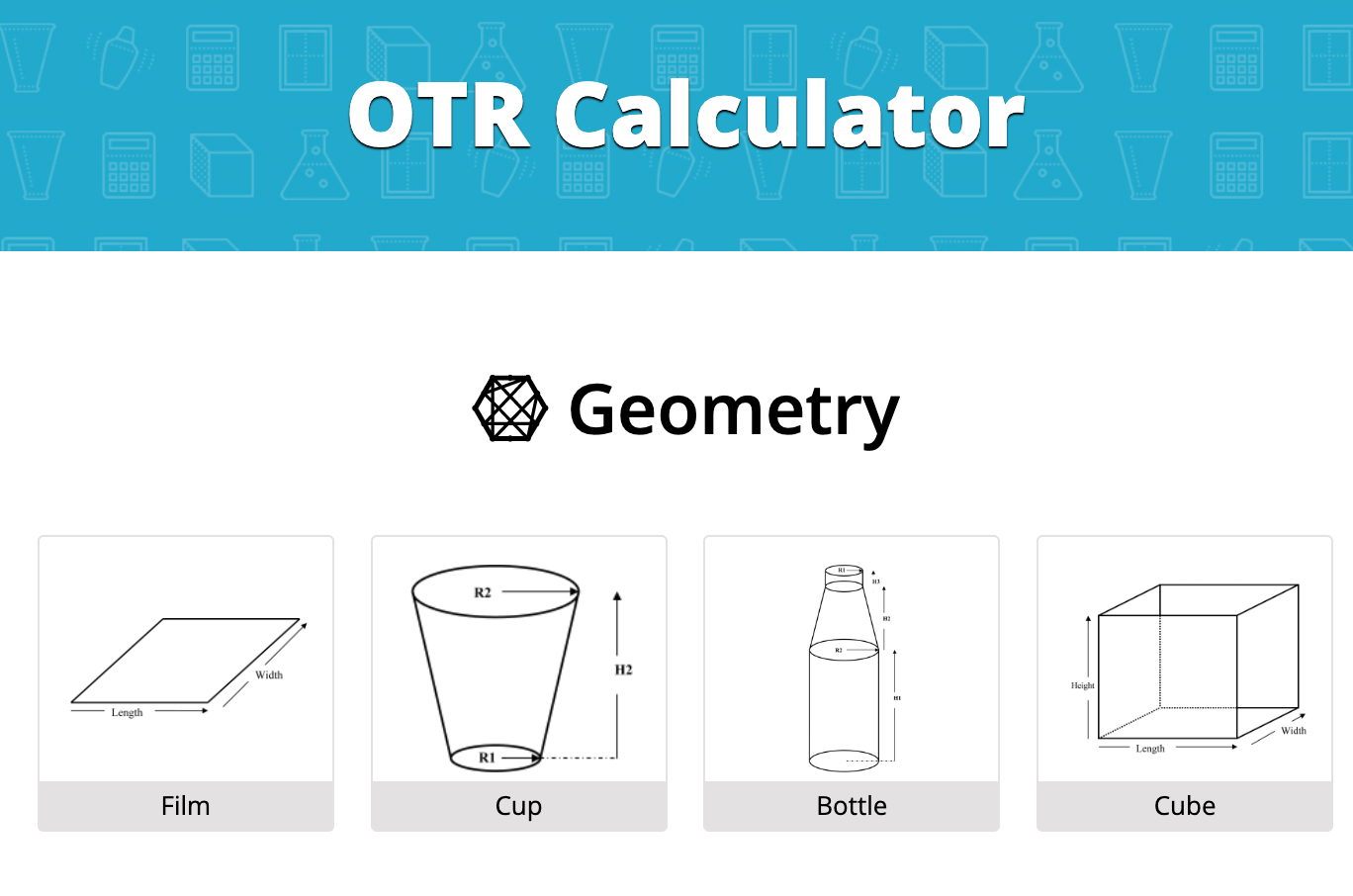
    The calculator allows you to select different packaging geometries such as film, cup, bottle, and cuboid. This simulates your target packaging design. The calculating models then put out an estimate of the water vapor or oxygen transmission rate through various plastics, including, of course, packaging material. This way, you know how it will impact the quality of your consumers product.

    Barrier properties of limited types of food packaging can be best studied by this means and changes in layers, geometry, and in-mold label can be tested and compared.  The results make the calculator a highly useful tool for designing and developing packaging with reliable performance in protecting different products in different conditions of storage and exposure.

    Typically, the tests measure the number of grams that are lost or gained through a barrier over a given period, such as 24 hours. Since transmission through a package (or its penetration) is to be controlled, the lower the readout, the better. A number lower than 1 gram is considered a high barrier material.

    The challenges:

    finding the barrier level required by a product

    Putting this in context is a top priority since it’s a common misconception among most brands. Not every food packaging product needs the highest achievable material barrier.

    Here are some data to exemplify this food packaging myth:

    A foil barrier is “highest”

    .0006

    Polyethylene (PE) (for example, bread bags)

    14-20

    Polyethylene terephthalate/polyethylene (PET/PE)

    3

    Because creating food packaging with a higher barrier sometimes increases manufacturers’ costs, the good package for you is the one that protects your specific product under conditions it will face for the time required. The end goal, of course, is that in every package that is purchased and opened, a consumer finds a fresh and tasty product that says the best about your brand.

    Finding a good brand design

    When you work with an establish brand, like Carepac, on eye catching packaging for your product, our graphics design team and manufacturers are experts and begin by understanding your business, what your product says about your food brand, how it is prepared for food packaging, how the food packages are best shipped and stored, how to help your products stand out on the shelves, and for what period of time it should be able to remain fresh at the point of purchase by your customers.

    During our packaging design process, we also make sure your great food packaging design is visually appealing, has a strong food brand identity, reduces plastic waste, and incorporates the minimalistic design, environmentally friendly, branding aspects, pastel colors, or color scheme you’re interested in. These important considerations and winning design elements will help your food package and brand personality stand out to your target audience, especially when compared to the brand identity of other brands in the food industry. Great packaging is what our brand and company is all about! We can help your product stand out!

    Part of that process for consumable products is testing them inside bags of different materials and manufacturing. That should direct the selection of materials used with the required barrier properties but not redundantly high, which increases your budget. When there is a selection of comparable quality materials and designs, then budget considerations (and possibly your manufacturing deadline) become paramount.

    At the same time, the Carepac teams addresses every aspect of your flexible packaging, such as the shape for different types of display and the crucial decision on appearance of the label. We make sure your food packaging is set in top notch condition in front of your potential customers.  That is because the package and its appealing graphics are the prime point-of-purchase marketing features to close the sale. And naturally, your product’s reputation with consumers for freshness is indispensable for repeat sales and word-of-mouth advertising.

    Starting your Supply Chain

    The first step for your business or company is as easy as visiting our website for information for your business about every phase of creating food packaging that protects the product, helps to sell it to consumers at the top point of sale, and fits your budget. Our online estimator can give you an instant price estimate for your bag as you now conceive it. The choices you will make in consultation with us, the company responsible for your design food packaging, are explained in the relevant sections of the site, with many examples to clarify your choice for your supply chain and give you a picture of what your product will look like in the store—be it brick-and-mortar or online.

    When your company is ready to discuss a specific order, or ready to create one, which can begin with a planning and design session with our range of experts, just get in touch with us. And check back here to see our regular blogs where you can do some reading about consumers, challenges, opportunities, and solutions in the food packaging market.

    You can visit us daily on Twitter for information, insights, and updates on what we are discussing with our customers.