Category: Food Industry Packaging

  • Doypack Configurations: What They Are & When to Use

    Doypack Configurations: What They Are & When to Use

    Doypack Configurations: What They Are & When to Use Them

    Intro to Doypack Plastic Packaging

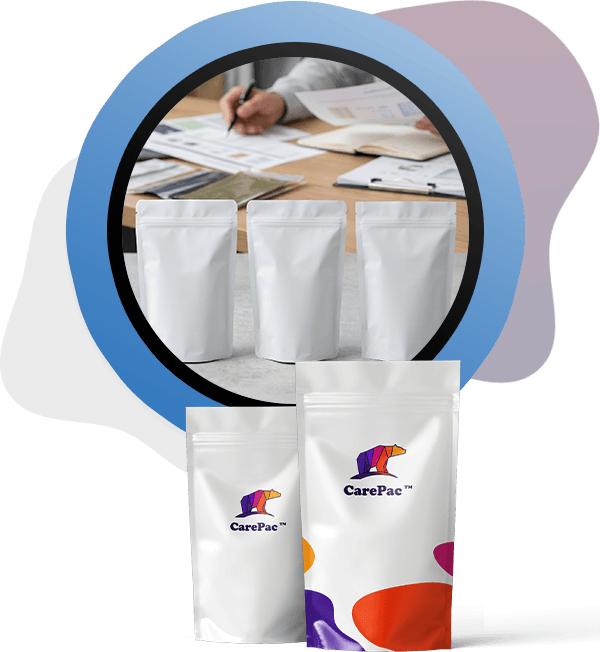
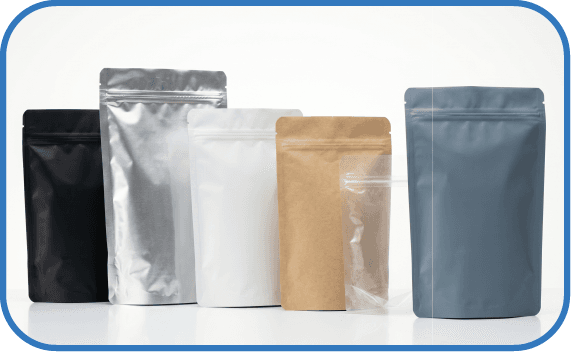
    A doypack stand up pouch is one of the most widely used flexible packaging formats in the world. Known for its curved bottom gusset and ability to stand erect on store shelves, this pouch style is popular for products ranging from snacks and coffee to pet food and supplements.

    Doypacks are one of several stand up pouch configurations used in flexible packaging. Understanding how they compare to alternatives like plow bottom pouches and K-Seal pouches can help brands choose the right format for their product, filling process, and shelf display needs.

    Originally developed in 1963 by French inventor Louis Doyen, the doypack design consists of two flat sheets sealed along the sides with a rounded gusset at the bottom. Today, billions of doypacks are used globally each year because they provide an excellent balance of cost efficiency, shelf presence, and packaging performance.

    In this article, we’ll explain how doypack packaging works, when they’re the best option, and how they compare with other common standing pouch structures.
    Key Features of Doypack Flexible Packaging

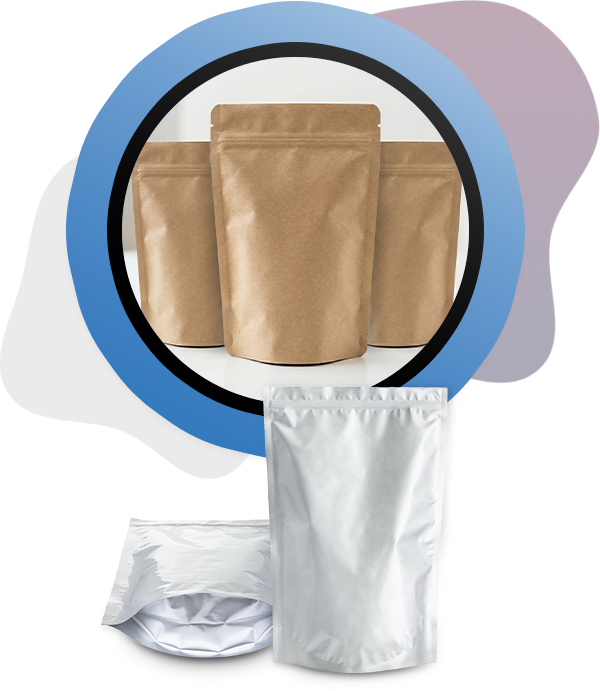
    One of the key advantages of a doypack pouch is its flexibility in design and functionality. Manufacturers can customize these pouches to match specific packaging needs and branding goals. They can be manufactured in different shapes and various sizes and can also be made from eco friendly materials.

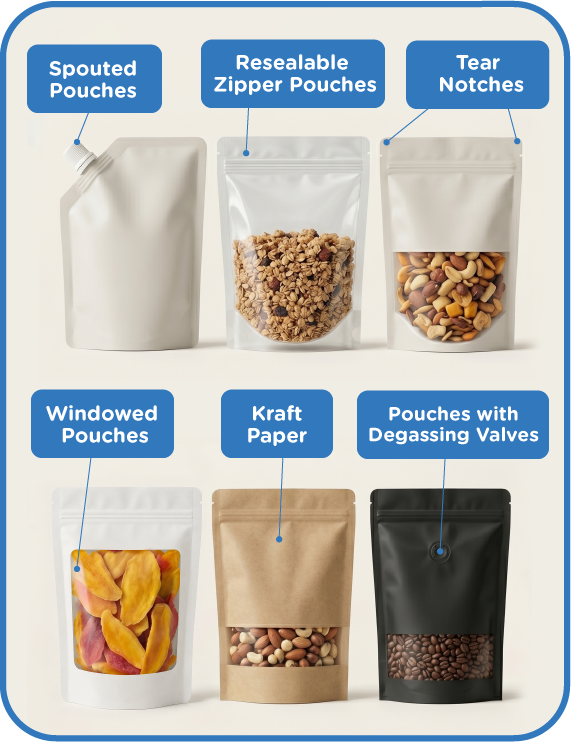
    Common doypack configurations include:

    Because the structure of these packaging solutions are relatively simple compared to other stand up pouch designs, doypacks work well across a wide range of industries while remaining cost-effective to manufacture and fill.

    Common Applications of Doypack Packaging Solutions

    Doypack pouches appear in nearly every business and retail category because they offer a good balance between protection, presentation, and cost. They also have a lesser environmental impact than some other packaging solutions.
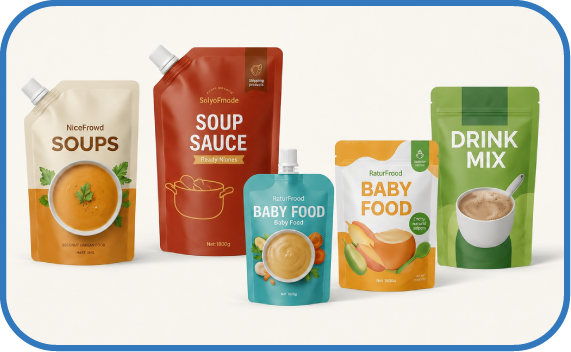
    Liquids

    Spouted doypacks are commonly used for products like soups, sauces, baby food, and drink mixes. Compared to rigid containers, flexible pouches reduce shipping weight and storage space.

    Pet Food

    Fresh pet food brands frequently use doypack pouches because the sealed barrier films help protect against moisture and oxygen exposure.
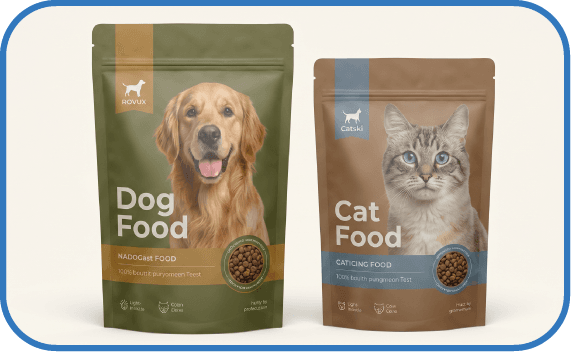
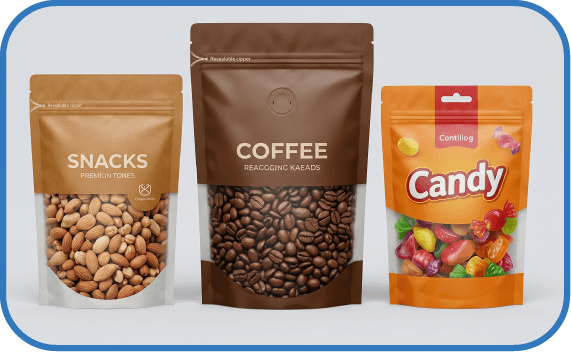
    Snacks, Coffee, and Confectionery

    Many snack brands choose doypacks because the resealable zipper keeps nuts, supplements, and other products fresh after opening. Coffee brands also use doypacks with degassing valves to release CO₂ produced by freshly roasted beans.

    Doypack Pouches vs Other Stand Up Pouch Configurations
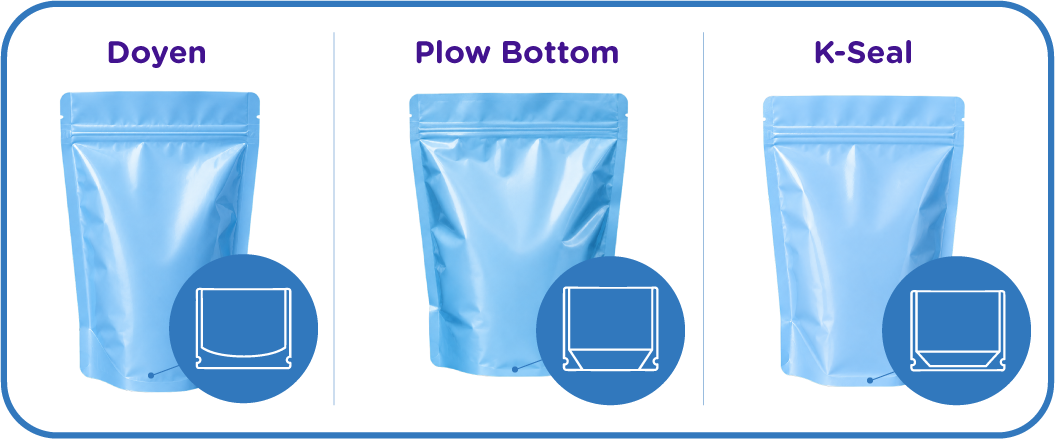
    While doypacks are extremely common, they are not the only stand up pouch option available. Other popular configurations include plow bottom pouches and K-Seal pouches.

    Each structure has advantages depending on the product weight, filling method, and retail presentation.

    Feature

    Doypack (Doyen Seal)

    Plow Bottom Pouch

    K-Seal Stand Up Pouch

    Bottom Construction

    Rounded bottom gusset (U-shaped seal)

    Fold-over bottom with simple cinches forming a gusset

    Angled bottom created by angled seals

    Stands on Shelf?

    Yes, generally acceptable

    Only with powder or granular products

    Yes – most stable

    Shelf Stability

    Good for most products

    Depends on product density

    Excellent (most stable)

    Visual Shape

    Soft, rounded base

    Pillow-like

    lat base with angled corners

    Blow Outs

    Balanced performance

    Usually lowest with powder products

    Heavy products may experience blow outs due to gusset complexity

    Premium Look

    Moderate

    Lower

    High / premium

    Common Use Cases

    Coffee, tea, snacks, pet food

    Powder products, granular snacks

    Snacks, supplements, premium food

    Wrinkle Resistance

    Moderate

    Moderate to low depending on fill

    Highest

    Fill Tolerance

    4 star

    5 star

    3 star

    Cost (Relative)

    $$

    $

    $$$

    Best For

    General use stand-up packaging

    Heavy powder products

    Premium shelf presentation

    Alternate Names

    Doyen pouch, doypack

    Square bottom pouch, flat bottom pouch

    K-Seal pouch

    Benefits of a Doypack Bags

    Doypack pouches are popular because they strike a balance between cost, performance, and shelf display in the market. When compared to other stand up pouch structures, several advantages stand out for both consumers and businesses.
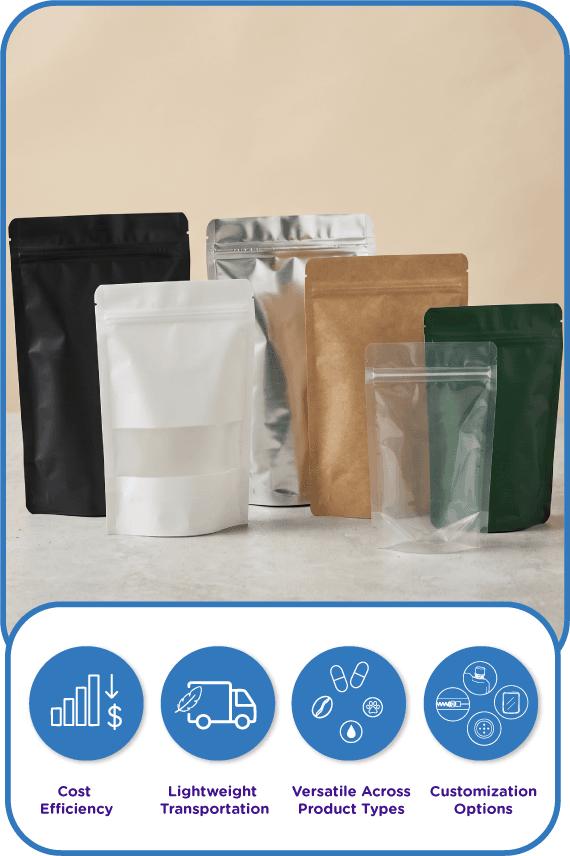
    Cost Efficiency

    Compared to K-Seal pouches, doypacks typically use less material and require simpler sealing patterns. This often makes them more economical for brands scaling production.

    Lightweight Transportation

    Like most flexible packaging formats, doypacks are extremely lightweight. Compared to rigid containers, they reduce shipping costs and warehouse storage space.

    Versatile Across Product Types

    Compared to plow bottom pouches, doypacks perform better across a wider range of products. While plow bottom structures work best for powders or granular fills, doypacks can handle liquids, snacks, coffee, supplements, and pet food.

    Customization Options

    Doypack pouches can include a wide variety of features, including:

    • Zippers
    • Tear notches
    • Degassing valves
    • Windows
    • Spouts
    • Hang holes

    This makes them adaptable for both retail and e-commerce packaging.

    How to Choose the Right

    Stand Up Pouch for Your Product

    Choosing the right pouch configuration depends on several factors including product weight, fill method, and how the product will appear on the shelf.
    Choose a Doypack if:

    • You need versatile packaging for multiple product types
    • You want a cost-effective stand up pouch
    • Your product ranges from light to moderately heavy
    • You want a balance of performance and shelf presence

    Choose a Plow Bottom Pouch if:

    • Your product is powder, granules, or loose fill
    • You want maximum fill tolerance
    • Cost efficiency is the primary concern
    • Shelf presentation is less important

    Choose a Doypack if:

    • Shelf stability is critical
    • You want a premium retail appearance
    • Your product requires a flat base display
    • Packaging aesthetics are a major part of branding

    CarePac: Your Stand Up Pouch Packaging Partner

    Choosing the right pouch configuration can significantly impact product protection, shelf presentation, and packaging costs.

    If you’re unsure which stand up pouch style is right for your product, our team can help you evaluate the best option based on your product type, filling method, and retail goals.

    Not sure which stand up pouch configuration is right for your product?

    Our packaging experts can help you compare doypack, plow bottom, and K-Seal pouch options before you commit.

    Get started with a quote today.
    FAQ: Doypack Stand Up Pouches

    Lets Get Started

    Made In The USA

    Full PouchCustomization

    Scalable Printing Digital & Plate

  • What Is HACCP and Why It Matters for Food Packaging Safety

    What Is HACCP and Why It Matters for Food Packaging Safety

    What Is HACCP and Why It Matters for Food Packaging Safety

    What Is HACCP Food Safety?

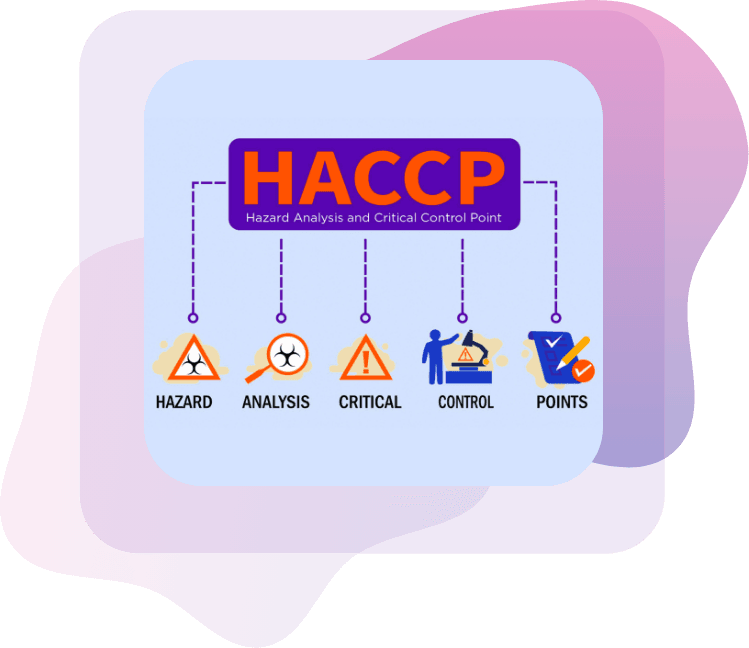
    The Hazard Analysis and Critical Control Points (HACCP) program is a risk-based food safety management system that’s designed to identify, evaluate, and control hazards in the food production process, including packaging. The HACCP food safety plan forms the foundation of modern preventive controls for the food supply chain and aligns closely with the Food Safety Modernization Act (FSMA). The HACCP food safety plan is a requirement for many businesses in the food supply chain, including food manufacturers, schools, and the companies and personnel involved in the retail and food industries.

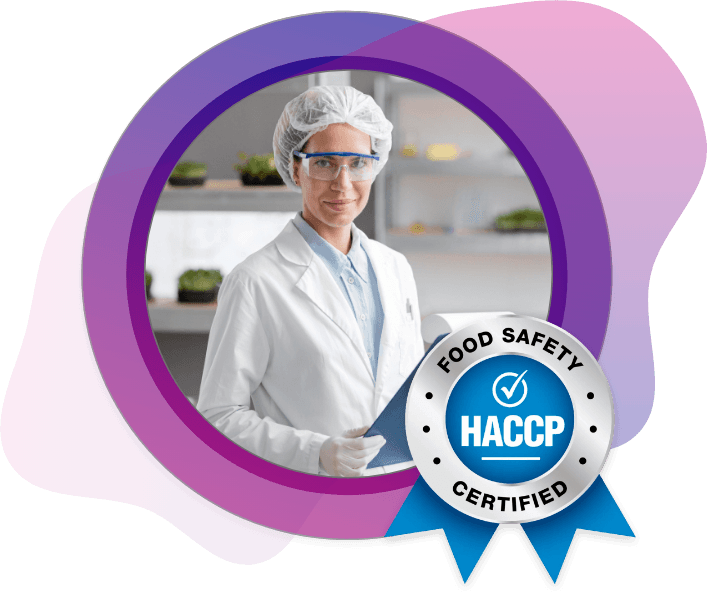
    Food safety professional wearing protective gear with HACCP certification badge, representing compliance with hazard analysis and critical control points standards in food production and packaging.

    Why the HACCP Food Safety Program & Critical Control Points Are Important for Food Packaging

    The HACCP food safety plan is important for food packaging because the packaging and packaging materials itself can introduce hazards and food safety risks, including chemical residues, physical contaminants, and improper sealing. By establishing quality assurance protocols, preventive measures, and identifying potential hazards before they become issues, the HACCP food safety plan can help food packaging companies prevent issues before they occur and establish corrective actions when they do. This is a vital component of CarePac’s preventive quality control systems and VOC testing, ensuring our raw materials and packaging remains compliant with the HACCP, FSMA, and PCQI.

    The 7 Principles of HACCP Implementation

    When it comes to the HACCP food safety plan and becoming HACCP certified, there are seven principles that have been established that can help determine critical control points and support controlling food safety hazards. These are:

    1. Conducing a hazard analysis (i.e., identifying hazards, including biological hazards)

    2. Identifying critical control points (CCPs)

    3. Establishing critical limits

    4. Establishing monitoring procedures for manufacturing and processing equipment

    5. Establishing corrective actions

    6. Establish verification procedures

    7. Establishing record keeping and documentation procedures

    At CarePac, we take food safety hazards seriously and incorporate all of the above into our safety plan and quality management systems. We identify potentially hazardous products ahead of time all in an effort to safeguard public health. From our production equipment to the raw material we use, we adhere to all federal, state, and local regulations, including those outlined in the HACCP framework.

    Food production team working in a hygienic facility alongside a diagram of the seven principles of HACCP, including hazard analysis, critical limits, monitoring, verification, and record keeping.Automated food manufacturing line producing baked goods under HACCP guidelines, demonstrating critical control points, contamination prevention, and food safety monitoring in industrial processing.

    How an HACCP Plan Differs from FSMA and PCQI

    You might be wondering how an effective HACCP plan is different from FSMA or PCQI. You can think of it this way: HACCP is the system that outlines good manufacturing practices and standard operating procedures, FSMA is the law, and PCQI is the person responsible for implementing and maintaining food safety systems. The FSMA’s preventive controls and hazard identification methodology evolved from HACCP principles and and expanded them into more facilities, including food packaging and facilities that produce animal food. CarePac aligns with all three – we’re a PCQI-certified team that manages HACCP-based safety systems under FSMA compliance.

    HACCP in Action at CarePac

    CarePac integrates HACCP methodology directly into our quality control process to ensure every packaging product is safe, compliant, and consistent. We evaluate each material and process step for potential contamination or quality risks that could lead to food safety risks, and the key production stages where the risk of contamination or failure are tightly managed. Additionally, we leverage VOC testing, in-line inspections, and per-batch sample checks to verify that CPPs remain within acceptable limits. All quality checks and test results are formally documented.

    By applying the seven core principles of HACCP end-to-end, we can help minimize contamination risks within the food industry, verify structural integrity at critical control points, and ensure repeatable quality across every production run.

    What HACCP Means for the Food Industry & CarePac Customers

    Our HACCP-based quality system gives customers confidence that every pouch, film, and packaging component is produced with food safety and regulatory compliance at the forefront. By applying preventive controls throughout material selection, lamination, sealing, and final conversion, CarePac minimizes contamination risks long before they can impact your product, regardless of where your product falls on the food supply chain.

    This approach not only strengthens safety, but also supports your internal QA programs. During audits or inspections, customers can rely on CarePac’s documented controls, VOC test data, and calibration records to demonstrate that packaging materials meet FSMA-aligned expectations and industry standards.

    Transparency is built into the process: CarePac maintains lot-level traceability, detailed quality records, and material safety documentation — all available upon request. Whether you need VOC results, COAs, or manufacturing traceability, CarePac provides clear, verifiable data to support your food safety plan and reinforce confidence in your supply chain.

    Partner With a HACCP-Based Packaging Company

    CarePac’s HACCP-driven quality system, PCQI oversight, and FSMA-aligned preventive controls ensure your packaging materials are manufactured with safety and regulatory compliance built in. If you need VOC data, COAs, traceability records, or support for an upcoming audit, our QA team is ready to help.

    Request documentation or connect with our quality specialists today to verify compliance and strengthen your food safety program.

    HACCP diagram illustrating hazard analysis and critical control points, showing the core food safety system used to identify, evaluate, and control biological, chemical, and physical food safety hazards.

    FAQs About HACCP and Food Safety

    Lets Get Started

    Made In The USA

    Full PouchCustomization
    Scalable Printing Digital & Plate

  • Food Safety Modernization Act and Why It Matters

    Food Safety Modernization Act and Why It Matters

    What Is the Food Safety Modernization Act (FSMA) and Why It Matters

    Overview of the Food Safety Modernization Act

    The Food Safety Modernization Act (FSMA) was enacted by Congress in 2011 in response to a growing number of foodborne illness outbreaks and the increasing complexity of the global food supply system. The Food Safety Modernization Act gives the Food and Drug Administration the authority to regulate the food industry and implement preventing controls, including controls for preventing intentional adulteration of food products.

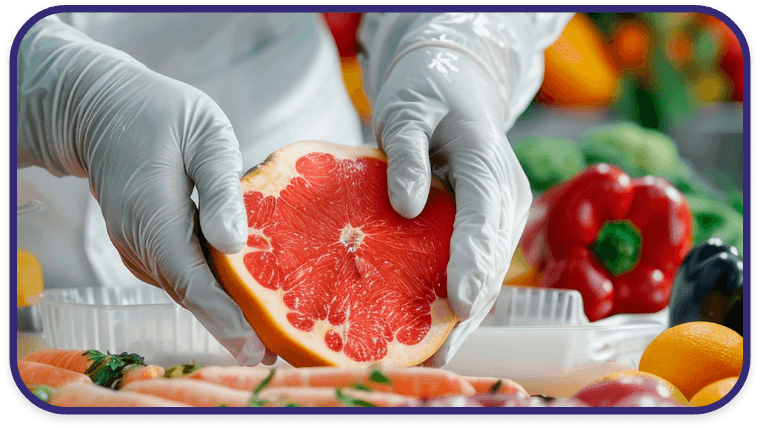
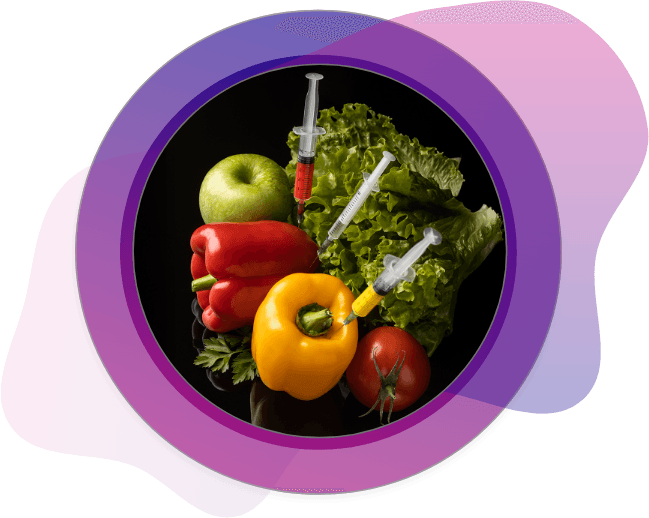
    Colored bell peppers with syringes and food additive labels such as E230 and E510 representing food safety testing and FDA oversight under the Food Safety Modernization Act (FSMA).Scientist wearing gloves inspecting a grapefruit and fresh produce, symbolizing preventive controls and food contamination testing required by FSMA regulations.

    The goal of these federal regulations is to improve food safety, prevent contamination, and make the food system safer for both humans and animals. One of the biggest impacts the FSMA had on food safety standards at the time is that it focused on preventing contamination instead of simply reacting to it, effectively enhancing public health protection. Through the act, the FDA has expanded authority over food facilities, farms, and imported foods, including food producers, food production facilities, and food businesses of all sizes throughout the United States.

    Why the FSMA Is Important for Food Safety Standards

    The Food Safety Modernization Act is important for food safety standards because it shifts the focus from reacting to foodborne illness to preventing it through a proactive approach and a specific set of safety regulations. It focuses on prevention over reaction, proactive risk management, stronger regulatory oversight, accountability across the supply chain, implementing standards for imported foods, and also focuses on food defense. In the next section we’ll go over each of the seven key rules / focus areas of the FSMA that businesses in the food industry must comply with.

    Key FSMA Rules and Their Focus Areas

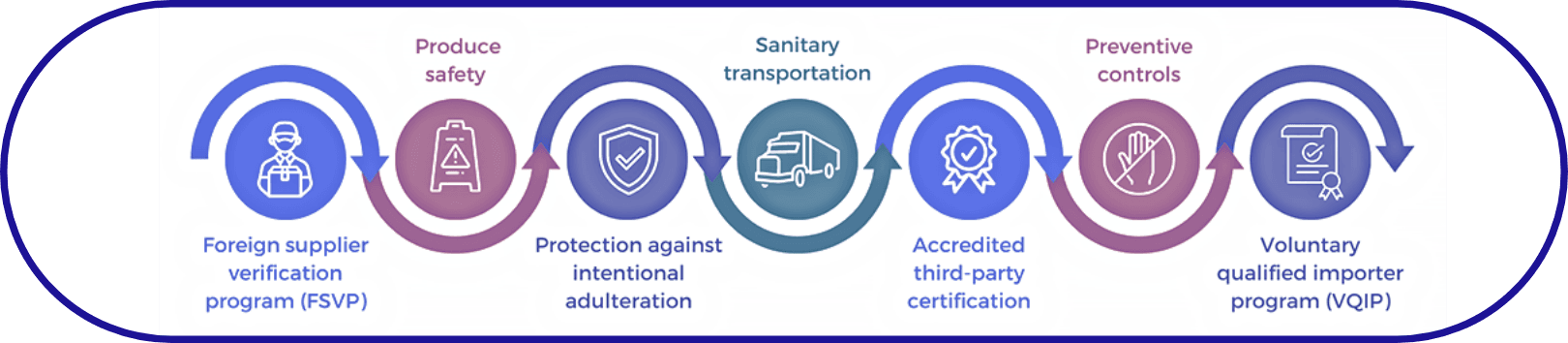
    Infographic outlining FSMA compliance steps including foreign supplier verification, preventive controls, and third-party certification for food safety modernization.

    Under the Food Safety Modernization Act, there are seven key rules that food safety agencies expect food facilities to meet, most of which are preventive control standards. Here are the key FSMA food safety standards:

    Preventative Controls for Human Food– Food facilities registered with the FDA must implement a written plan that outlines hazards and appropriate preventative controls they will take.

    Foreign Supplier Verification Program– Importers must verify that the vendors that are part of their global supply chain comply with FDA regulations, even if they are foreign food facilities. Imported foods are not exempt from these preventive controls.

    Preventative Controls for Animal Food– Animal food companies registered with the FDA must do the same as above, except tailored to the animal food they produce.

    Third-Party Certification– Accredited third party certification bodies administer voluntary consultations and regulatory audits to help companies prepare for audits or achieve certifications.

    Produce Safety– This establishes minimum standards for growing, harvesting, packing, and storing produce, including at farmers markets.

    Food Defense– This aims to avoid intentional adulteration of food. Food facilities must assess their contamination vulnerabilities, put together a hazard analysis, and document a mitigation strategy for each vulnerability outlined in the hazard analysis.

    Sanitary Transportation– Requires food businesses that transport food, including shippers, receivers, loaders, and carriers to comply with specific requirements outlined by the Food and Drug Administration and other government agencies.

    Preventive Controls for Human and Animal Food

    Preventative controls for human and animal food involve monitoring, keeping records, and performing hazard analysis in reference to both human and animal food. For human food, this means food facilities must implement comprehensive food safety plans that address hazards specific to their operation. This includes implementing specific controls that focus on allergen and sanitation controls, as required by the FDA’s rule for Preventive Controls for Human Food. 

    For animal food, the specific rules and requirements differ from those for human food. The underlying principle of preventing hazards for animal food remains the same, but the detailed regulatory requirements are tailored to animal food.

    Scientists performing food safety testing with lab equipment and inspecting fresh produce in grocery settings to ensure FSMA standards for safe food supply chains.Fresh produce including peppers, apples, and lettuce injected with syringes symbolizing testing for contaminants and chemical safety under FSMA food protection standards.

    Produce Safety Rule and Farm-Level Practices

    Through the Produce Safety Rule, the FSMA extends to farms throughout the United States. The FSMA conducts food safety audits to verify that farms have appropriate preventive controls in place. The goal of conducting food safety audits is to ensure that agricultural and food processing facilities focus on training, water testing, hygiene, and safe agricultural practices that will help protect the food supply chain. This focus on farm-level practices impacts both small and large producers and aims to significantly minimize foodborne illness and food safety risks that may occur at the growing and production level.

    The Foreign Supplier Verification Program (FSVP)

    Some mistakenly believe that the FSMA only focuses on food grown or produced in the United States, but foreign food facilities comply with it as well. Under the Foreign Supplier Verification Program, all qualified importers must verify that their suppliers meet FSMA rules. The importer is responsible for inspections, record keeping, and certification, and the goal of the FSVP is to ensure that all food imported into the United States meets the qualifications and regulations outlined by the FSMA.

    World map carved on a wooden surface surrounded by fresh vegetables, representing global food trade, FSMA import safety programs, and international compliance efforts.

    How This Food Safety Law Impacts the Packaging Industry

    Packaging plays a critical role in the food safety ecosystem—a fact recognized within FSMA’s preventive approach to keeping food safe from contamination. At CarePac, we design and manufacture packaging that supports these same goals. Our food-grade materials, controlled manufacturing environment, and robust QC processes—including VOC testing—help ensure every pouch, roll, or film aligns with FDA and FSMA expectations for safety and compliance.

    Whether you’re building a preventive control program or preparing for an audit, CarePac’s regulatory understanding and quick turnaround make it easy to stay compliant without slowing your operations. Contact us today to discuss FSMA-aligned packaging or request QA documentation to support your food safety program.

    Staying Ahead with FSMA Guidance and Updates

    FSMA guidance continues to evolve as the FDA refines its approach to preventive controls, traceability, and food-contact safety. Manufacturers and food facilities should stay informed by following the latest updates, training programs, and best practices published by the FDA and industry partners. For ongoing reference, consider bookmarking the FDA’s official FSMA resource page.

    Image of the FDA Food Safety Modernization Act logo over fresh food products, highlighting the importance of FSMA in protecting public health and ensuring food safety.

    Talk to Our Packaging Experts

    At CarePac, we understand the importance of packaging that not only protects your food product but also aligns with FSMA and retailer quality standards. Our team combines deep regulatory knowledge with fast, reliable turnaround times—helping you stay compliant with accredited third party certification bodies without slowing production. Whether you need QA documentation, VOC data, or packaging materials that are fully compliant with federal regulations, we’re ready to support your food safety program.

    Contact us today to discuss your compliance needs or request supporting documentation.

    FAQs About the Food Safety Modernization Act

    Here are some common questions we receive about the Food Safety Modernization Act.

    Lets Get Started

    Made In The USA

    Full PouchCustomization
    Scalable Printing Digital & Plate

  • PCQI Certified and Why It Matters for Food Packaging Safety

    PCQI Certified and Why It Matters for Food Packaging Safety

    What Is PCQI and Why It Matters for Food Packaging Safety

    What Is PCQI (Preventive Controls Qualified Individual)?

    PCQI stands for Preventive Controls Qualified Individual, and is a designation given to someone trained under the FDA’s standardized curriculum. This certification aligns with the Food Safety Modernization Act (FSMA) food rule and risk-based preventive controls, which aim to provide safe, quality food for all Americans. PCQIs ensure that a food manufacturer’s written food safety plan is properly developed, implemented, and maintained. Preventive Controls Qualified Individuals are a good indication that food companies and food manufacturers have food safety procedures in place, including having a knowledge of hazard analysis, preventive controls for human food, supply-chain programs, and recall plans in place in the event of identified hazards.

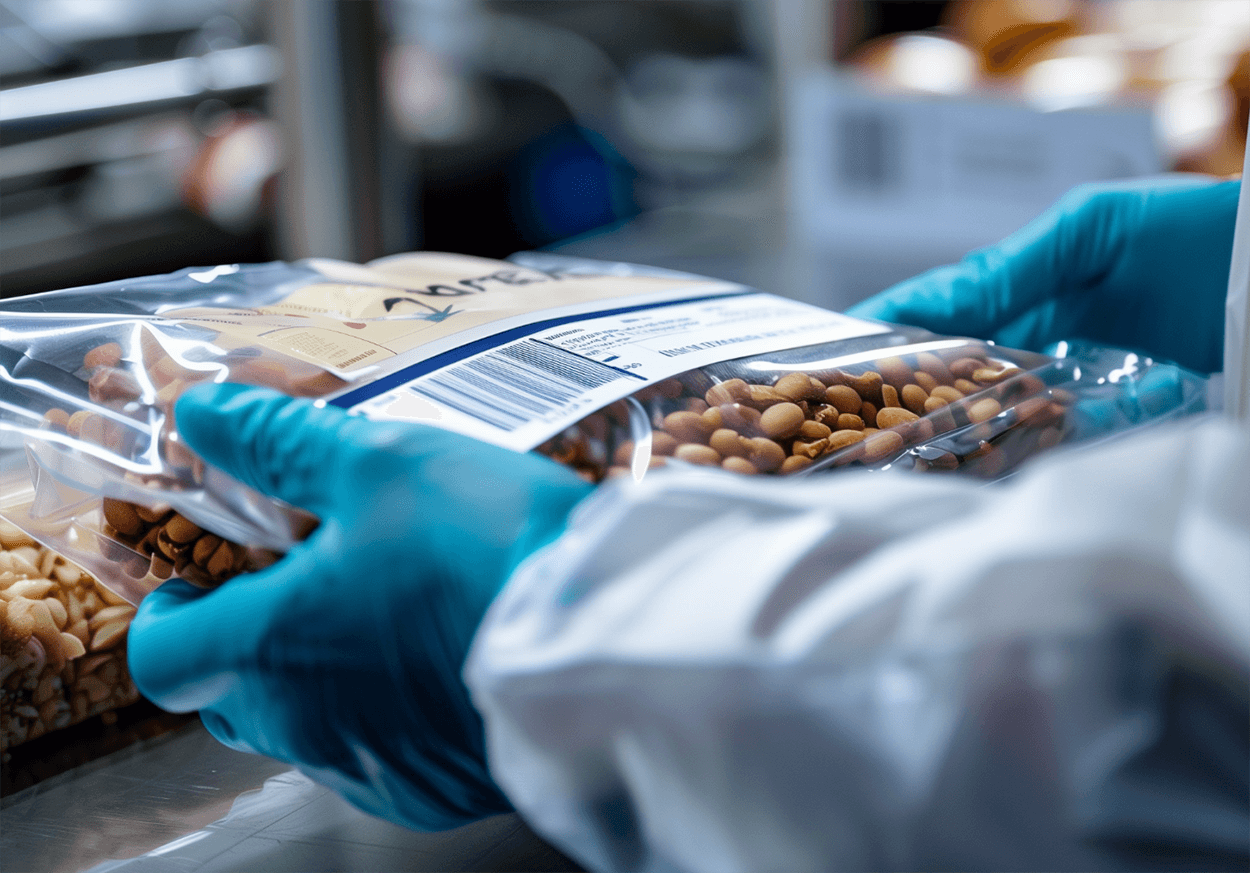
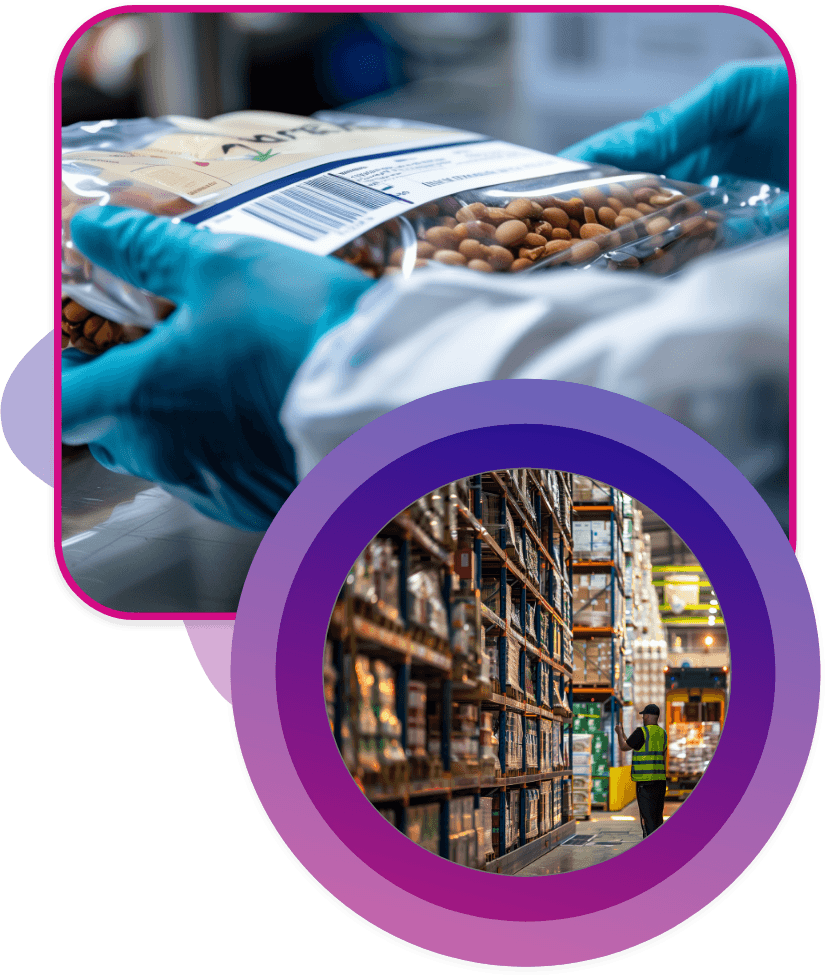
    Preventive Controls Qualified Individual inspecting flexible packaging film on manufacturing equipment, ensuring packaging materials meet FSMA preventive control and food safety standards.Preventive Controls Qualified Individual holding a tablet while reviewing food safety practices alongside packaged food ingredients, highlighting hazard analysis and preventive controls under FSMA regulations.

    What Does a PCQI Do?

    Key duties of a PCQI certified individual include writing the food safety plan, validating and reanalyzing it, verifying preventive controls, and reviewing records to ensure compliance and prevent recalls. All of these combined ensure food safety and that food products are safe for human consumption.

    Here are some practical examples about what a Preventive Controls Qualified Individual would do day-to-day:

    • Conduct hazard analysis and develop risk-based preventive controls for their food production processes
    • Validate that the preventive controls are adequate and reanalyze the food safety plan when significant changes occur or a trigger event happens, like a food recall 
    • Maintain and update the written food safety plan and safety assurance documentation
    • Ensure that appropriate corrective actions are taken when a deviation from the plan occurs at any point during the food production process 
    • Oversee training, recordkeeping, and internal audits for compliance with federal regulations
    • Lead responses to FDA inspections and corrective actions necessary to maintain compliance

    Why Having a PCQI Matters for Food Packaging Manufacturers

    Packaging manufacturers benefit from having a PCQI-certified professional on staff, even though it’s not technically required, because that expertise of federal regulations brings an added layer of accountability and assurance that food safety hazards can be avoided. A PCQI helps ensure packaging materials and processes align with food safety plans, supplier verification programs, and quality assurance expectations from food processors and major brands. Their oversight supports proactive risk management—identifying potential contamination points or compliance gaps before they become issues. 

    At CarePac, our commitment to preventive controls, documented training, and robust safety plans reflects our ongoing promise to customers and food safety compliance: delivering packaging that not only protects products but also upholds the highest standards of food safety, regulatory integrity, and meets federal regulations.

    Close-up of a quality control professional documenting inspections on food packaging equipment, representing PCQI responsibilities in preventive controls, recordkeeping, and food safety compliance.

    How CarePac’s PCQI Strengthens Our Quality and Compliance

    Our PCQI certified staff and food safety experts maintain and audit the company’s food safety plan and quality systems. They oversee several different areas to help maintain compliance, including VOC testing, production monitoring, and documentation that supports compliance. Our alignment with FDA preventing controls for human food and food contact companies means we take human food regulation seriously and work internally to avoid food safety hazards as they relate to packaging. From the beginning to the end of our production runs, our PCQI ensures consistent safety assurance.

    Preventive Controls Qualified Individuals (PCQI) walking through a food processing facility while reviewing safety procedures, demonstrating FSMA compliance and proactive food packaging safety oversight.

    What These Food Safety Certifications Mean for CarePac Customers

    CarePac’s customers benefit directly from this PCQI certified oversight. By having a qualified individual dedicated to safety assurance and preventive controls, each packaging product is evaluated through the same rigorous standards that food processors themselves follow. This means every pouch, rollstock, or film CarePac produces is part of a documented and verified food safety plan, not just a manufacturing process. We work to identify hazards and ensure food safety.

    This approach gives customers confidence that their packaging is not only compliant but also consistent and high quality across every order. It’s part of CarePac’s broader commitment to reliability, transparency, and trust—ensuring the materials that protect your products are held to the same high standards as the food itself.

    Partner With a PCQI-Certified Packaging Company

    CarePac’s Food Safety Modernization Act-aligned preventive controls serve as proof of reliability and dedication to food safety across all food facilities. From raw material sourcing to final inspection, every step in our process is built around compliance, consistency, and customer confidence.

    If you need documentation, VOC testing details, or want to review how our packaging supports your food safety plan requirements, our team is ready to help. Reach out today to speak with a CarePac packaging expert and ensure your materials meet the highest preventive control standards.

    FAQs About PCQI Certification and Food Safety and Quality

    Lets Get Started

    Made In The USA

    Full PouchCustomization

    Scalable Printing Digital & Plate

  • Tin Tie Machines

    Tin Tie Machines

    Introducing CarePac’s Tin Tie Machine for Coffee Packaging

    Why Tin Tie Closures Are Essential in Coffee Packaging

    Ground coffee and coffee beans are just as delicate as most foods. They need to be stored at the appropriate temperature and exposure to oxygen and moisture can impact its aroma and taste. While instructing customers to store their coffee in a cool, dry place is a great place to start, the best way to ensure your customers enjoy fresh and aromatic coffee beans is to use resealable coffee bags, and ideally not bags that use clear tape. This is where tin tie reclosures enter the conversation. 

    If your existing coffee packaging isn’t resealable, your best option is to add high-quality tin-ties to your coffee bags. Tin tie applicators will protect the coffee inside as intended without having to introduce extra stress or equipment into your customer’s life. Fortunately, CarePac’s tin tie machines can take the guesswork out of the entire process.

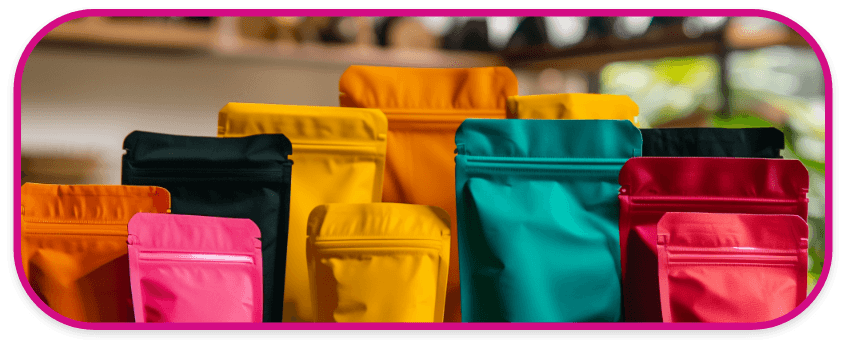
    Colorful custom printed coffee bags lined up on a counter with roasted coffee beans and green leaves in the foreground, showcasing premium specialty coffee packaging designs.

    Technical Overview of CarePac’s Tin Tie Applicator Machine

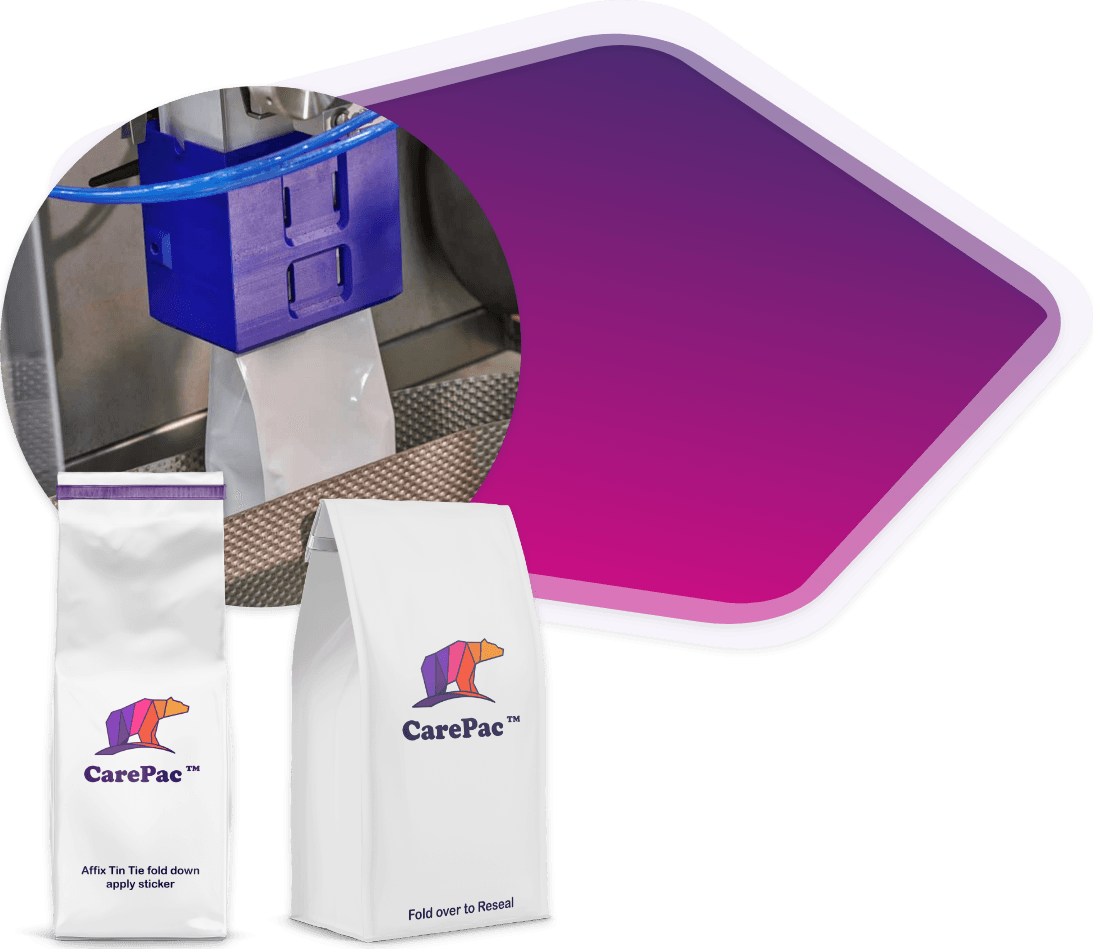
    CarePac uses the Bedford Industries peel and stick applicator machine for our most rigorous tin-tie applications. This tin tying machine is incredibly precise and uses a high-quality adhesive that can easily apply the adhesive tape to most materials, regardless of its weight. 

    Each Bedford tin tying machine is capable of applying about 1,500 tin ties per hour. With these state-of-the-art tin tying machines, you won’t need to deal with the headache of hot melt adhesive and you’ll save time and labor on fast product application. 

    With our model machinery, your desired length bag enters the machine and the tin-tie is applied in one continuous motion. You won’t need to spend time training a variety of staff on how to apply tin-ties or address common issues that pop up due to user error. Using an automated machine can improve your time-to-market, allowing you to get your items into the hands of your target market more quickly.

    White CarePac coffee bags shown in a packaging machine with resealable tin tie closure, demonstrating coffee bag manufacturing, branding, and custom food-safe packaging.

    Performance Benefits for Coffee Roasters

    There are several reasons why our tin tying machines can dramatically improve packaging workflows for small-to-medium coffee roasters just like you. Whether you’re scaling up production or simply trying to streamline repetitive tasks, investing in impressive and automated packaging equipment is one of the fastest ways to boost efficiency without sacrificing quality. 

    Our tin tying solutions are built with the everyday challenges of independent roasters in mind—and they’re designed to make an immediate impact where it matters most. Here are just a few of the areas where your business will notice the difference after leveraging this unique innovation:

    Labor savings and automation ROI

    Automating your tin tie application can significantly reduce the time and manual labor costs associated with manual packaging. What used to take a team member several minutes per bag can now be done in seconds, allowing your staff to focus on higher-value tasks. Over time, this kind of efficiency adds up to a measurable return on investment.

    Consistency of application

    A key advantage of using automation machinery is the uniformity it brings to your final product. Our machines apply tin ties with the same precision every time and without hot melt adhesive, ensuring a clean, consistent seal that reflects the quality of your brand. No more crooked ties or uneven folds—just professional packaging that your customers will notice.

    Minimal downtime or maintenance expectations

    We understand that small roasters can’t afford things like frequent interruptions, which is why our machines are built for durability and long-term performance. With minimal maintenance requirements and quick-change parts, you can count on efficient and reliable uptime and fewer production headaches.

    Operator ease of use

    No need to be a mechanical expert to use the machinery. Our tin tying machines are user-friendly, intuitive, and easy to train on, so our team can get up and running with minimal ramp-up time—making it easier than ever to integrate automation into our existing workflow.

    Freshness, Appearance, and Brand Value

    Automating your tin tie application can help improve shelf presentation. If you take the time to compare hand-applied vs machine-applied tin-ties, you’ll notice the difference right away. Not only do tin-ties adhered via machine application look better, but they often are more durable and create a stronger seal. This type of application can save you money in the long run, as your coffee will remain fresh and your customer service team won’t be dealing with as many unhappy customers. 

    Modern coffee packaging bag with botanical design labeled "MRÓVESN," displayed alongside a steaming cup of black coffee in a yellow saucer and wooden scoop of roasted coffee beans.

    How CarePac Supports Coffee Producers Beyond Our Packaging Equipment

    At CarePac, our packaging equipment is state-of-the-art, but the benefits of working with us extend beyond our equipment. If you’re looking for a coffee packaging partner that understands your brand and will help you thrive, you’ve come to the right place. By partnering with a coffee packaging company that understands coffee, like us, here’s what you can expect:

    Customization capabilities – We’re proud to offer customization options that span the entire bag. From the look and feel of the bag to what’s written on it, we can customize every square inch and will keep you up-to-date with our progress every step of the way.

    Sustainable material options – As climate change continues to have a negative impact on the world around us, we’ve created more sustainable materials and have incorporated more green practices into our entire manufacturing process.

    Flexible lead times – If you need your order fast, we offer a flexible lead time menu so you have the ability to choose the items that make sense for you.

    Low MOQs – We understand that you likely aren’t ready to buy 100,000 coffee bags today, and we’re proud to offer low minimum order quantities for our smaller customers. As you grow we can adjust our sizing and product volume to match.

    Excellent customer service – Our customer service team will be with you every step of the way. Whether you need an issue resolved or simply need someone to walk you through the process, our support team is here to help.

    Get a Sample or Packaging Consultation

    Ready to partner with CarePac to elevate your coffee packaging? Have questions about our equipment or machines? Talk to a packaging expert today to discuss your specific needs, troubleshoot any issues you’ve experienced with past suppliers, and find the perfect tin-tie packaging solution for your coffee. Contact us today to get started.

    Let’s Get Started

    Made In The USA

    Full PouchCustomization

    Scalable Printing Digital & Plate

  • Navigating FDA & USDA Regulations for Frozen Food Packaging

    Navigating FDA & USDA Regulations for Frozen Food Packaging

    Navigating FDA & USDA Regulations for Frozen Food Packaging

    Why Compliance Matters for Frozen Food Packaging

    Ensuring your frozen food packaging materials meet regulatory standards for food contact substances is important because, at its core, these global and FDA regulations protect the consumer from harm. Since the USDA and FDA regulations for frozen food packaging prevent harmful substances from contaminating food, the food won’t pose a health risk to consumers. These food safety regulations ensure frozen fruits and foods are safe to eat and that the quality of the food doesn’t degrade during storage regardless of its shelf life.

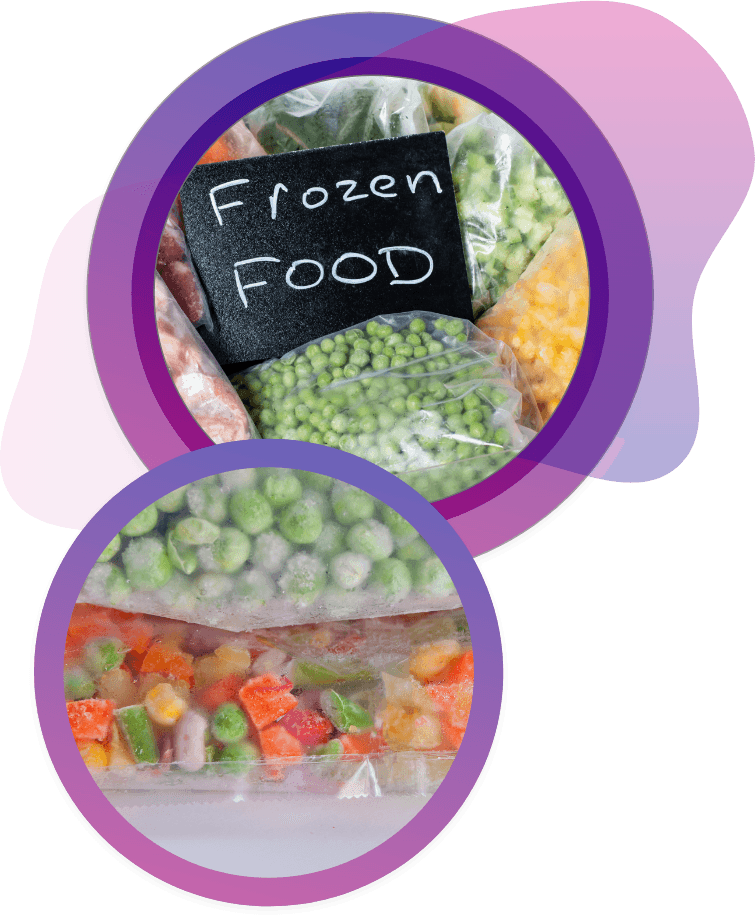
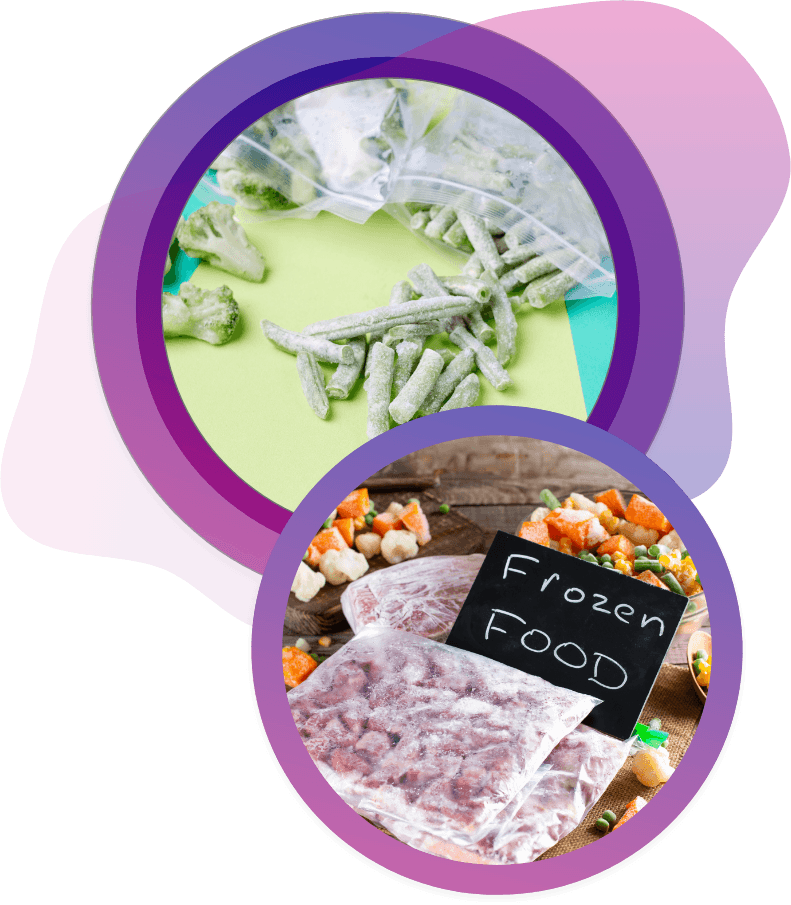
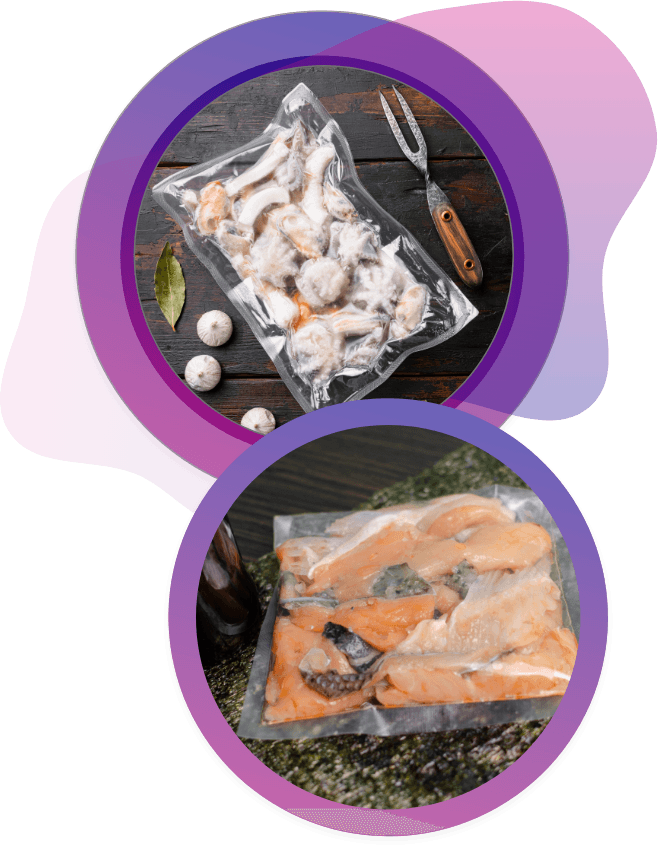
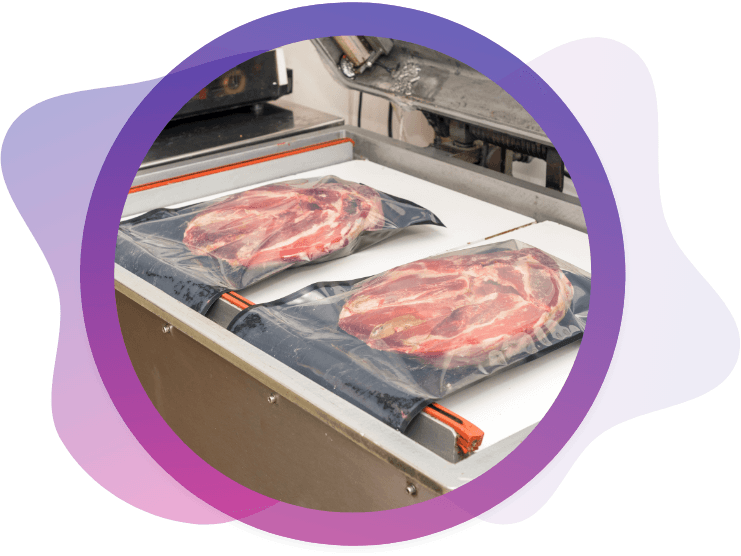
    Frozen cubes of carrots, corn, green beans, and peas stackedVacuum-sealed beef cuts in clear chamber vacuum pouches during industrial food packaging process.

    By complying with the food labeling requirements and other regulations set forth for the food industry, not only are you effectively avoiding litigation due to non-compliance, but you’re helping build trust with your customers. Yes, the Food and Drug Administration sets proper packaging standards to protect the health of consumers, but adhering to these strict regulations plays a crucial role in your brand’s reputation in the market.

    If you’re able to avoid giving your customers foodborne illnesses by ensuring compliance and therefore preventing contamination during the transportation, cooking, or freezing process, this is a well known example of the crucial role packaging plays in customer satisfaction.

    Global Regulations for Food Contact Materials

    Although this blog focuses primarily on the federal food regulations of the USDA and FDA, it’s important to note that several food safety standards for food manufacturing and storage exist globally. From the European Union to South American regulations, here are some of the more popular regulations set for packaging manufacturers on a global scale. These apply to manufacturers of all sizes in these markets, including those that supply and package frozen food for consumers.

    European Union No 10/2011

    Commonly referred to as the Plastics Regulation, this piece of EU legislation establishes safety standards for plastic packaging materials that come in contact with food. These food contact substances have specific requirements for composition, migration limits, and compliance testing. The regulation defines which monomers, additives, and other substances can be used in the plastic materials and has been amended three times to reflect new scientific assessments. Ultimately, it protects consumers from plastic contamination in their food.

    MERCOSUR GMC n 3/92

    This consumer safety regulation establishes protocols for food packaging manufacturers within MERCOSUR (Southern Common Market) countries, including Argentina, Brazil, Paraguay, and Uruguay. Like other safety regulations, this standard defines approved materials, additives, and monomers used in food packaging and requires mitigation testing and harmonization with other standards. MERCOSUR is updated regularly to reflect the latest advancements in food science, and always puts the safety of consumers first.

    Brazil RDC n 91/2001

    Brazil RDC Resolution No. 90/2001 is a regulation issues by ANVISA, and it establishes requirements for food contact substances within Brazil. Like the others, it sets specific migration limits, outlines testing and compliance requirements, and ensures that plastic materials do not alter the taste, odor, or composition of food products. If your company produces or sells food products in Brazil, you’ll need to familiarize yourself with these food packaging requirements.

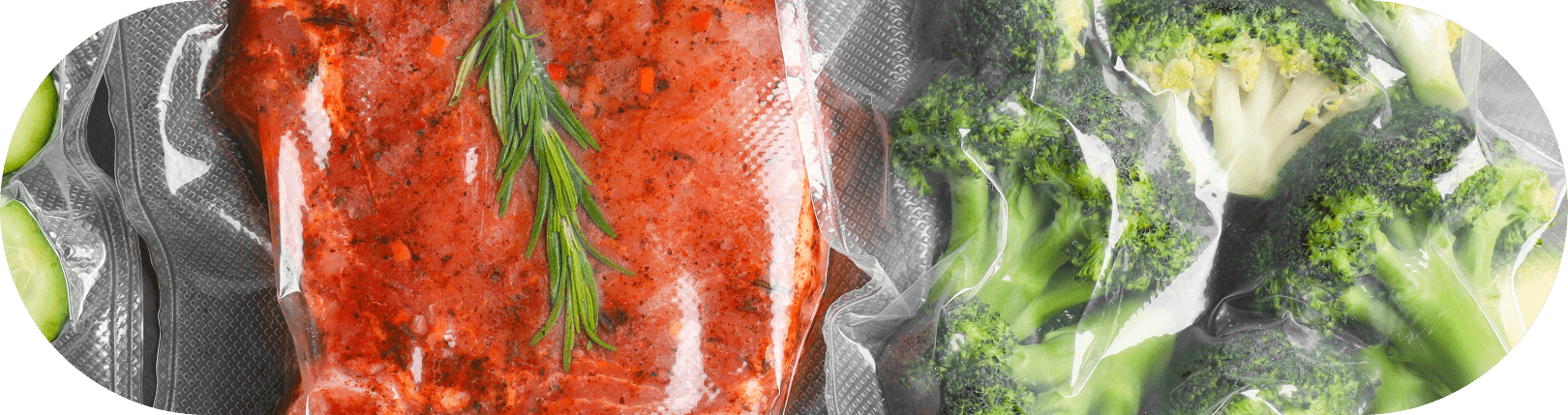
    Vacuum-sealed packaging containing seasoned meat and fresh broccoli in textured high-barrier pouches.

    21 CFR: Understanding FDA Regulations for Frozen Food Packaging

    In the United States, specifically, the FDA maintains Title 21 of the Code of Federal Regulations (21 CFR), which governs food and drug safety, and includes regulations for food contact materials. It is enforced by the FDA. Here, we’ll discuss the key food safety sections relevant to food contact materials.

    Key Sections Relevant to Food Contact Substances

    21 CFR Part 174 – General provisions for indirect food additives, including basic safety requirements. It outlines Good Manufacturing Practices (GMPs) and if a material complies with an existing CFR regulation it doesn’t require further FDA approval. 

    21 CFR Part 179 – This part of the FDA standard regulates the use of ionizing radiation (irradiation) during the production, processing, and handling of food-contact materials. Though it’s not super applicable to packaging materials that come in contact with food, it is still worth mentioning. 

    21 CFR Part 175 – Establishes FDA regulations for adhesives and coatings used in most food packaging (e.g., can coatings, paper coatings). These regulations ensure that these packaging materials do not transfer harmful chemicals to food under normal conditions and during intended use. 

    21 CFR Part 180– Establishes regulations for food additives that are permitted for use by manufacturers in food processing. These substances are sometimes added to fresh and frozen food items, like canned food, to preserve freshness, improve flavor, and extend shelf life. 

    21 CFR Part 176 – Provides safety regulations for paper and paperboard that comes in contact with food. This includes paper-based packaging materials such as boxes, wrappers, bags, and takeout containers that come in direct or indirect contact with food. 

    21 CFR Part 181– Outlines the regulations for substances that are classified as Generally Recognized as Safe (GRAS) when used in food. This part provides the criteria for determining whether a substances qualifies as Generally Recognized as Safe or if it needs to go through the FDA approval process. 

    21 CFR Part 177 – This FDA safety regulation applies to plastic materials and resins. It establishes the requirements for the safety and suitability of polymers used in food-contact applications and lists approved substances and conditions for their use.

    21 CFR Part 186 – Governs the use of polymers and other similar substances as indirect food additives in food packaging, processing, and handling. It ensures that polymers used in food-contact applications are safe and comply with FDA standards for migration limits and material safety. 

    21 CFR Part 178 – Lists food-contact additives, such as antioxidants and stabilizers for packaging, and provides regulations for them. Part 178 includes substances used in the production of food-contact materials such as plastics, coatings, adhesives, and paperboard, and ultimately focuses on preventing contamination. 

    21 CFR Part 189– This outlines a comprehensive list of food ingredients that are prohibited from being used in human food because of their potential to harm human health. This is part of the FDA’s broader effort to ensure the safety of the food supply and protect consumers from contamination and dangerous ingredients or chemicals.

    Key Packaging Considerations for FDA & USDA Compliance

    If you’re currently designing or manufacturing packaging for food manufacturers, here’s how the USDA and FDA regulations impact packaging design and manufacturing.

    Steps to Ensure FDA Compliance

    Ensuring that your food packaging gets FDA approval is essential for consumer safety and the compliance of your company. Here’s a quick checklist that can help you navigate the regulatory process effectively:

    • Identify applicable FDA regulations 
    • Select safe and approved materials and substances for your original packaging 
    • Conduct in-house safety and migration testing, and write down anything worth noting
    • Submit documentation for review and FDA approval 
    • Maintain ongoing compliance by establishing an internal audit process

    By following these steps, you can ensure that your packaging materials meet the requirements outlined by the FDA. Additionally, the food itself should be free from harmful additives and the packaging may need to include nutrition labeling, a breakdown of net quantity, nutritional content, information about the packaging’s environmental impact, nutrition facts, or other information.

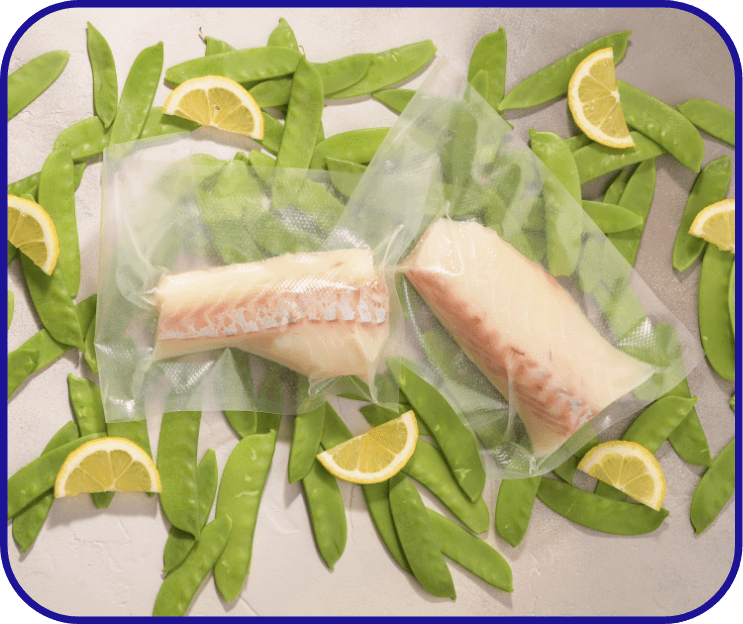
    Clear vacuum pouches with cod fillets, surrounded by snow peas and lemon slices, emphasizing freshness and quality.

    Steps to Ensure Your Frozen Food Packaging is Compliant

    When it comes to ensuring your packaging materials meet the standards set forth for both direct and indirect food contact applications, there are a few things you can do:

    Partner with an Experienced Supplier

    By partnering with an experienced supplier, they’ll guide you towards using materials that don’t require FDA approval, ensuring compliance and product integrity.

    Conduct Migration and Durability Testing

    As discussed in the previous section, you should be testing your products for migration and durability. Additional testing for heavy metals, especially in high exposure applications, can also help.

    Ensure Labels meet FDA and USDA Standards

    Finally, you need to make sure your labels meet FDA and USDA standards; they should include specific labeling requirements like nutritional content or how to store your product for extended periods of time.

    Assorted frozen vegetables like peas, carrots, and corn sealed in clear flexible packaging labeled “Frozen Food.”Frozen green beans and broccoli in resealable clear plastic vacuum pouches on colorful background.

    How CarePac Helps You Meet FDA Approval

    At CarePac, we understand the importance of compliance with FDA and USDA regulations in ensuring the safety and quality of food products. Our custom flexible barrier packaging solutions are meticulously designed to align with all relevant regulatory standards, offering both protection and compliance for businesses in the food industry. If you’re seeking FDA approval, we can help. 

    If you’re looking for FDA-compliant, USDA-approved packaging solutions tailored to your business’s needs, CarePac is here to help. Whether you need custom designs for frozen foods or other specialized packaging requirements, our team is ready to guide you through the process and provide the best solution for your product.

    Contact CarePac today to learn more about our compliant packaging solutions and how we can help your business stay ahead of regulatory requirements while preserving product quality and safety.

    Food and Drug Administration Packaging FAQs:

    Let’s Get Started

    Made In The USA

    Full PouchCustomization

    Scalable Printing Digital & Plate

  • Navigating Frozen Food Logistics

    Navigating Frozen Food Logistics

    Navigating Frozen Food Logistics: Challenges, Innovations, and Sustainable Solutions

    Ensuring Cold Chain Integrity: The Logistics Behind Frozen Food Distribution

    Frozen food has revolutionized the way we store and consume food. It offers unparalleled convenience for the consumer, reduces food waste by extending the shelf life of everyday food products, and offers year-round access to nutritious fruits and vegetables. 

    But ensuring that frozen products remain frozen during transport is extremely complex, requiring a large network of third party logistics companies, truck drivers, temperature monitoring systems, and land and ocean freight, all ensuring that the frozen food can travel a long distance while maintaining the appropriate temperature. 

    In this blog, we’ll explore how frozen goods can reach their final destination in a temperature controlled atmosphere and how CarePac contributes to frozen food logistics.

    Challenges in Frozen Food Logistics

    If you’ve ever tried to keep food cool during a day at the beach or an amusement park, you already know it can be complicated. When it comes to frozen food logistics, the challenges are elevated. Here are some of the primary challenges faced by frozen food transportation solutions, including air freight and ground shippers, each and every day.

    Temperature Fluctuations and Integrity Breaches

    Frozen foods must be consistently stored at the correct temperature to maintain their quality and prevent spoilage. If it’s stored at the incorrect temperature it can suffer from freezer burn, bacterial growth, degradation of flavor, or spoilage. Similarly, if the packaging suffers from an integrity breach (like tears, holes, or improper sealing), the frozen food products can be exposed to air and moisture, leading to rapid degradation.

    High Costs and Resource Allocation for Cold Storage and Transport

    Cold storage isn’t cheap — you have to pay for refrigerated trucks, commercial-quality gel packs, and skilled labor that understands how to manage the facilities and logistics. Additionally, there are costs associated with the higher energy use required to refrigerate trucks, and many frozen food shipping companies have to invest in real-time temperature monitoring systems, advanced GPS tracking, and temperature sensors. It’s much cheaper to ship a bag of chips!

    Managing Supply Chain Disruptions for Frozen Food Products

    Frozen foods are highly perishable and require specific handling conditions. Disruptions do occur, though, and a business in the cold storage and transportation industry must have strategies in place to both mitigate these risks and address them when they do arise. These strategies include backup infrastructure in case of a failure, increased supply chain visibility, and a crisis management team ready to deal with customer communication in case of any disruptions.

    Regulatory Compliance and Food Safety Concerns

    Ensuring that frozen food products are stored, transported, and handled to comply with food safety standards is critical. Regulation bodies (FDA in the U.S. and the EFSA in Europe) outline temperature control requirements all customers in the logistics industry must meet, regardless of the shipping method. They also require strict record-keeping and documentation and perform regular inspection and audits to ensure the companies are complying.

    Innovative Solutions to Frozen Food Logistics Challenges

    Advances in frozen food logistics have significantly improved the storage and transit of frozen food products. Some of these innovations include: 

    • Real-time temperature tracking 
    • Remote access and alerts 
    • Integration with cloud-based platforms and IoT-enables monitoring systems 
    • End-to-end traceability using blockchain technology 
    • Active packaging technologies 
    • GPS-enabled packaging 
    • Drive dashboards and alerts 
    • AI-driven inventory management
    • Demand forecasting and route optimization 
    • Autonomous refrigerated trucks

    These are just a few of the recent advancements in cold chain technology. These technologies all work together to ensure that the frozen food shipment remains at the right temperature from the moments its shipped to the minute it reaches its final destination.

    Enhancing Resilience in Frozen Food Supply Chains

    If the above solutions sound expensive, don’t worry — there are a few things you can do today to enhance resilience in frozen food supply chains. For example, if you currently rely on a single supplier or multiple suppliers from a single region, this puts you at risk for disruptions due to natural disasters. Instead, select multiple suppliers with geographic diversification. This way, you have a backup supplier in case there’s supply disruptions.

    Next, always maintain a safety stock or buffer inventory, and you can use advanced analytics or AI to help predict spikes in demand. Don’t be afraid to investigate new technologies and how they can support you with real-time monitoring and contingency plans.

    Finally, if you haven’t already, invest in backup power systems, distributed storage networks, and other energy-efficient solutions that can help you maintain cost-effective operations while ensuring product quality. Consider networking, visiting a conference, or joining webinars to learn more from leaders in the frozen food logistics industry.

    CarePac’s Contribution to Frozen Food Logistics

    At CarePac, we’re committed to providing custom solutions tailored to frozen food products. Our cost effective packaging for frozen food will help you save money money on frozen food packaging, while our FDA-approved packaging will help you maintain compliance. All our frozen food bags are available with gloss finish, matte finish, and shiny finish, which provide an effective shelf display of the products on the shelves, and popular options for our customers in the frozen food space include the 3-seal pouch, the square bottom bag, and the stand up pouch

    Your food might be frozen, but your packaging is guaranteed to be hot with CarePac. Contact us today to get started!

    Let’s Get Started

    Made In The USA

    Full PouchCustomization

    Scalable Printing Digital & Plate

  • Meeting Food Safety Standards for Large-Scale Distribution

    Meeting Food Safety Standards for Large-Scale Distribution

    Meeting Food Safety Standards for Large-Scale Distribution

    Why Food Safety Standards Matter for Large-Scale Distribution

    Food safety is critical for large-scale operations because it protects consumers from potential hazards, can help prevent cross contamination, and reduce the likelihood of food-borne illnesses from inefficient processes or dirty equipment. Not only do food safety regulations protect consumers, but good manufacturing practices can protect food manufacturing companies from legal repercussions and severe damage to their reputation. 

    Regular inspections, refresher training courses, adhering to regulatory requirements, routine pest control, proper storage processes, equipment inspections, and good record keeping can reduce food safety risks and enhance consumer trust. Risks of non-compliance with established regulations for food manufacturing facilities include product recalls, health hazards due to an increased risk of cross contamination, legal issues, and a loss of consumer trust. 

    Fortunately, a comprehensive food safety manufacturing plan, including proper packaging and distribution practices across the food industry, is essential to preventing food-borne illnesses and maintaining consumer confidence. Even if your customer will end up cooking the food, the bulk of food safety falls on food manufacturing companies.

    Key Food Safety Regulations for Large-Scale Distribution

    Major food safety regulatory bodies in the United States include the FDA, USDA, and the Food Safety Modernization Act. These regulatory bodies provide general guidelines for food safety across many aspects of the food industry, including food production and food manufacturing, how raw materials are handled during manufacturing and distribution, and safe food handling practices. Below we’ll discuss a little more about these food safety procedures and processes.

    FDA Food Safety Standards

    The food safety guidelines outlined by the FDA focus on proper food manufacturing processes, including sanitation, hazard analysis, and critical control points for food production facilities. The FDA has very specific regulations for different food categories, including seafood, juice, frozen food, and quality standards for other foods. They also regulate the proper temperature a food thermometer needs to reach to prevent foodborne illnesses and things like avoid thawing chicken under cold water.

    Food Safety Modernization Act (FSMA)

    The Food Safety Modernization Act requires food facilities to develop and implement food safety plans and tips with hazard analysis and risk-based preventive controls. Key components of the FSMA include regulations for handling fresh produce and specific food safety temperatures during transportation.

    USDA Food Safety Requirements for Meat, Poultry, and Dairy

    The USDA food safety regulations focus on meat, poultry, and dairy specifically. Their corrective actions include mandatory inspections of meat and poultry processing plants, which includes pathogen testing and grading based on manufacturing quality. Not only do they focus on the food production process, but they also have strict guidelines for distribution of food products, so the meat, poultry, and dairy products are regulated throughout the supply chain.

    Food Safety Packaging Best Practices for the Food Industry

    When it comes to food packaging and safety, specifically, there are several food safety best practices to keep in mind. These are intended to protect the safety and quality of food products as they make their way through the supply chain. Below are a few things to keep in mind:

    Choose the Right Packaging Materials

    To adhere to the critical control points for food packaging, you’ll need to choose packaging that’s FDA-approved, durable, and leak-proof. Proper packaging can prevent raw materials from coming into contact with each other during transport and protects things like fresh beef and dietary supplements from spoilage during transport. Browse our materials here.

    Pay Attention to Barrier Properties

    By selecting the appropriate barrier properties, you can prevent moisture, oxygen exposure, and contamination. After all, what’s the point of going through risk assessment, training programs, and maintaining proper hygiene and equipment safety at the food manufacturing plant if your transport and storage practices cause the food to spoil before arrival?

    Use Tamper-Proof and Resealable Features

    Another important thing to keep in mind is adding tamper-proof or resealable features to your packaging. Although these safety standards aren’t mandated by the FDA or USDA, it can enhance food security during transit and throughout the food supply chain. The best food defense is taking the extra steps during both transport and during the manufacturing process.

    Preventing Contamination & Ensuring Safety Throughout Food Production & Distribution

    There are several food safety best practices to keep in mind as you package and distribute your product, whether you’re producing raw materials like flour or sugar or processed food products that are ready-to-eat. These corrective actions and internal processes can help ensure your products meet safety standards and protect the American food supply chain from major issues.

    Temperature control & cold chain logistics

    Ensuring proper temperature control and cold chain logistics throughout your operations can help keep perishable foods safe. Even if your customers will be cooking food to the appropriate temperature before eating, the responsibility still falls on you to maintain the proper temperature of your finished products during transport.

    Proper storage & handling

    If you haven’t already, you’ll need to come up with standards to help avoid cross-contamination in warehouses. Some standards to consider include how to handle dirty cutting boards, if your employees need to change clothes after coming in contact with certain raw materials, hygiene standards for your employees and contractors, washing hands with soapy water, ensuring running water in your facility is clean, and outlining other operations processes you can think of.

    Labeling & tracking

    Another thing you’ll need to ensure is accurate food product identification for consumers. Do your labels outline proper cooking instructions? Does it provide tips for keeping the food fresh and safe? Food safety might start with the individuals in the food manufacturing industry, but it ends with the consumer. Make sure they have the hygiene and sanitation tips they need for proper cooking, storage, or consumption.

    How CarePac Helps You Meet Food Safety Manufacturing Standards

    When it comes to food safety, compliance with food manufacturing regulations isn’t just important—it’s essential. Our food-safe packaging solutions are designed to help food manufacturing businesses meet strict FDA, USDA, and other industry standards. Our packaging is made from food-grade materials that meet regulatory requirements and will protect your food products against product contamination. This way, your food products stay safe for consumption throughout their life cycle. 

    We’re proud to provide custom packaging solutions for large-scale food distributors, whether you need packaging for bulk food distribution, ready-to-eat meals, or fresh food products, like fruits and vegetables. Choose barrier films, resealable pouches, and tamper-evident options to ensure the safety and quality of your food after manufacturing. 

    Don’t leave the safety and quality of your food to chance. Contact us today to find the right packaging solutions that will keep your business compliant and customers safe.

    Packaging for Food Safety: FAQs

    Here are some common questions we receive about food safety and how it is impacted by proper packaging.

    Lets Get Started

    Made In The USA

    Full PouchCustomization

    Scalable Printing Digital & Plate

  • Optimizing Packaging for Cold Chain Logistics

    Optimizing Packaging for Cold Chain Logistics

    Optimizing Packaging for Cold Chain Logistics

    Introduction to Cold Chain Logistics

    Cold chain logistics is essential for maintaining the quality, safety, and sustainability of temperature sensitive products, like food and certain pharmaceuticals. If you’ve ever tried to keep food cold during a long day at the beach, though, you already understand that keeping things at a specific temperature is more difficult than it sounds. That’s where cold chain packaging solutions come into play.

    The right cold chain packaging solutions ensure the integrity of vaccines, biologics, medication, and food products as they make their way from the manufacturing and shipping facility to the store or pharmacy shelves. There are three types of cold chain packaging: active, passive, and hybrid, all of which use different methods to maintain a consistent temperature for temperature sensitive items.

    In this blog, we’ll discuss the key challenges of cold chain packaging, how cold chain packaging manufacturers can better optimize their processes, and how CarePac can help support your cold chain products with our customized and high-quality packaging.

    Key Challenges in Cold Chain Packaging

    There are several key cold chain challenges, including maintaining temperature integrity, preventing condensation and moisture damage, and ensuring compliance with industry standards. We’ll cover each of these cold supply chain challenges more in-depth below.

    Maintaining Temperature Integrity

    Whether you’re transporting vaccines or shipping frozen goods and dairy products, you’ll need to maintain temperature integrity via insulated box liners, gel packs, and robust seals. Finding packaging solutions that fit the bill can be difficult and expensive, especially for an industry that’s already strained.

    Preventing Condensation and Moisture Damage

    You’ll need to find moisture-resistant packaging that will help protect your products from moisture damage. Additionally, you’ll need to invest in expensive technology to protect your frozen foods and pharmaceuticals from drastic temperature changes in the first place.

    Ensuring Compliance with Industry Standards

    Cold chain packaging materials will need to meet strict industry standards that are set forth for the cold chain industries. This protects the end user from sickness (or even death) due to consuming spoiled food or expired vaccines or pharmaceuticals that spoiled during transport.

    Best Practices for Optimizing Cold Chain Packaging

    Optimizing cold chain packaging is crucial for ensuring product integrity and reducing costs throughout the supply chain. Here are a few best practices:

    Use Insulated and Durable Materials

    By using cold chain solutions that focus on insulated and durable materials you can avoid damage during transit. Higher quality materials may be more expensive on the onset, but they’ll save you money in the long run. Invest in materials and gel packs that retain temperature and help you avoid food waste.

    Optimize Package Design for Efficiency

    Compact, stackable designs can help maximize shipping space and reduce costs. Find cold chain packaging solutions and providers that will work with you to truly understand your shipping logistics and craft cold chain packaging that’ll fit the bill. Even better if they offer thermal packaging solutions in various sizes.

    Incorporate Real-Time Tracking Solutions

    The benefits of integrating tracking for temperature-sensitive shipments are many. Not only will you be able to track your goods throughout the transportation cycle, but you’ll be able to rest easy knowing that your temperature sensitive goods are being transported in the proper temperature environment.

    Cost-Effective Strategies for Cold Chain Logistics

    If all of the above sounds expensive, it’s because it is. Fortunately, there are a couple things you can do now to cut back on costs.

    Minimize Packaging Waste

    Use reusable or recyclable materials to lower costs. Some companies even offer discounts or other incentives for customers that send their packaging back in the mail. Whether you use expanded polystyrene or sustainable materials, anything you can do to improve sustainability is a step in the right direction.

    Streamline Packaging Processes

    You can streamline your packaging processes by partnering with trusted suppliers for efficient packaging solutions. It’s always a good idea to find a few companies that can manufacture your temperature controlled packaging; that way, if one of your temperature controlled packaging solutions goes out of business or needs to close due to bad weather, you won’t be left in a lurch.

    How CarePac Supports Cold Chain Packaging Needs

    At CarePac, we are proud to offer custom cold chain packaging solutions for temperature sensitive products. Not only will our packaging help you ensure proper temperature control for your sensitive items, like pharmaceuticals, chemicals, or food products, but our customization capabilities mean that your product will stand out to your customers.

    Ready to learn more about our cold chain solutions for packaging? Contact us today to get started!

    Lets Get Started

    Made In The USA

    Full PouchCustomization
    Scalable Printing Digital & Plate

  • SQF Certification

    SQF Certification

    SQF Certification

    what-is-sqf-certification

    What is SQF Certification

    If you’re unfamiliar, SQF is a set of food safety and quality recommendations that impact the entire supply chain of food products, including companies that process and pack food products. At this time, SQF code and SQF certification does not include pet food or treat manufacturers, but the SQF system and SQF code does offer safety and quality standard to food packaging companies like CarePac.

    In this blog, you’ll learn more about this global food safety initiative, the SQF code, and how this certification body aims to reduce food safety risks through its proprietary food safety plan and innovative SQF certification program.

    sqf-meaning

    SQF Meaning

    What does SQF stand for? It stands for “Safe Quality Food” and it’s a global food safety initiative that focuses on, you guessed it, food safety and quality. Regardless of where you are on the food supply chain or who you work for in the food industry, this SQF food safety program will impact you in one way or another. It’s a high quality program that is respected by numerous food packaging and producers of food products around the world, and many strive to adhere to SQF code as closely as possible.

    About the Safe Quality Food Institute

    Often shortened to SQFI, the Safe Quality Food Institute is a division of FMI, and was established to administer the SQF program. Their mission as a certification body is to deliver consistent, globally recognized food safety standards for the entire food industry, regardless of where you fall on the food chain. From verifying the food safety management at retail stores to ensuring good agricultural practices, the principles of SQFI can be applied across all industry sectors.

    about-safe-quality-food-institutehow-to-get-food-safety-certification

    About FMI

    FMI is short for the “Food Marketing Institute” and is an organization that works on behalf of the entire industry to promote a safer, healthier, and more efficient consumer food supply. The Safe Quality Food SQF is a division of the FMI.

    How to Get This Food Safety Certification

    If you’ve decided to start your journey towards SQF certification, we would first like to congratulate you on taking an interest in the safe quality food program. This shows your commitment to good manufacturing practices and by implementing food safety management systems you can ensure food safety for your customers.

    SQF Certification Steps

    To get SQF certified by the SQF system, follow the below steps:

    Learn about the food safety standard code

    First, you will want to spend plenty of time researching this rigorous food safety code. By studying the SWF code, you’ll be prepared for everything this food safety system expects of you. From implementing a food safety management system, to learning more about the certification body, ask plenty of questions and consider meeting with a company that’s SQF certified to learn more about their experience and opinion of the food certification process.
    Pay special attention to SQF food safety codes, what food manufacturers can expect from the initial certification audit, and what the SQF certification process is like.

    register-for-sqf-certification

    Register for SQF certification

    Next, you will want to register for certification. This involves contacting an SQF practitioner and letting them know that you’re interested in SQF certification. They’ll briefly discuss the SQF program and will walk you through the steps of achieving SQF certification.

    At this point, you’ll want to ask them questions about their internal audits, as preparing for the certification audit is step 3.

    Prepare for your SQF audit

    In order to be SQF certified, you will need to pass the the SQF audit. Many food companies struggle with meeting the SQF code requirements, which is why learning about the SQF programs, meeting with other certified companies, and potentially getting your hands on an audit report is so important.

    Before your SQAF audit, you should have a food safety program implemented at your organization, be familiar with SQF code, ensure the proper training of your staff, and make sure you meet all regulatory requirements for foodservice providers worldwide.

    Additionally, you should show a commitment to continuous improvement and adherence to all globally recognized standards.

    prepare-for-sqf-auditschedule-and-conduct-sqf-audit

    Schedule and conduct the SQF audit

    Once you feel confident that your organization’s food safety programs and food safety management system is up to snuff, you’ll want to schedule your SQF audit with a qualified SQF practitioner. They’ll review your quality management system, food manufacturing processes, and food safety standards to ensure they comply with what’s required by the SQF food safety program.

    If you don’t earn your SQAF certification the first time around, the SQF practitioner will provide valuable feedback so you can make improvements and become SQF certified down the line.

    Renew your certification from this global food safety initiative

    Food safety is a serious concern, and the SQF program is well aware that getting an initial certification is not enough. The certification program requires frequent certification re-audits, as the SQF assessment database is frequently updated. SQF certification is valid for one year. To ensure your SQF certification remains active, please remember to re-register in the SQF Assessment Database and schedule your SQF audits every year.

    If you’re hoping to earn SQF certification once and hope to never deal with the SQF institute again, this is not how the SQF program works. The SQF program is a certification program that focuses on a lifelong commitment to “safe quality foods”, so annual SQF food safety and SQF certification audits are required.

    renew-your-certification-from-global-food-safety-initiative

    Food Safety Code: Manufacture of Food Packaging

    At CarePac, our SQF certification goal is to earn and maintain our SQF certification on an annual basis. The food safety and quality standards we’re required to meet focus on food packaging companies, specifically. We take SQF certification seriously and are committed to adhering to food safety and quality guidelines on an ongoing basis. Whether through a prerequisite program, a pre assessment audit, or any other type of inspection, we are dedicated to the quality food SQF program.

    In addition to food safety, we are also committed to the environment. To learn more about our sustainable packaging options, click here.

    SQF Frequently Asked Questions (FAQs)

    Here are a few FAQs about the SQF certification:

    How much does it cost to get SQF certified?

    Typically, the audit alone will cost between $7,300 and $9,000, before travel fees.

    What are the 3 principles of the SQF certification?

    The three principles of SQF certification are

    • To produce safe, quality food products,
    • Comply with various SQF code requirements, and
    • Comply with all relevant food legislation.

    How long does it take to get SQF certified?

    The audit itself only takes a few days, but preparing for the audit can take weeks, months, or years.

    Who needs SQF certification?

    Since it is a voluntary certification, nobody technically “needs” the certification. But, if you’re a food manufacturer, retailer, or food packaging provider, becoming SQF certified will reduce the risk of a supply chain issue that could result in a recall, litigation, or other financial impacts.

    What is the highest SQF certification?

    If you want to ensure your products meet the highest possible standards, aim for SQF Level 3 certification.

    Overwhelmed with

    all the options?