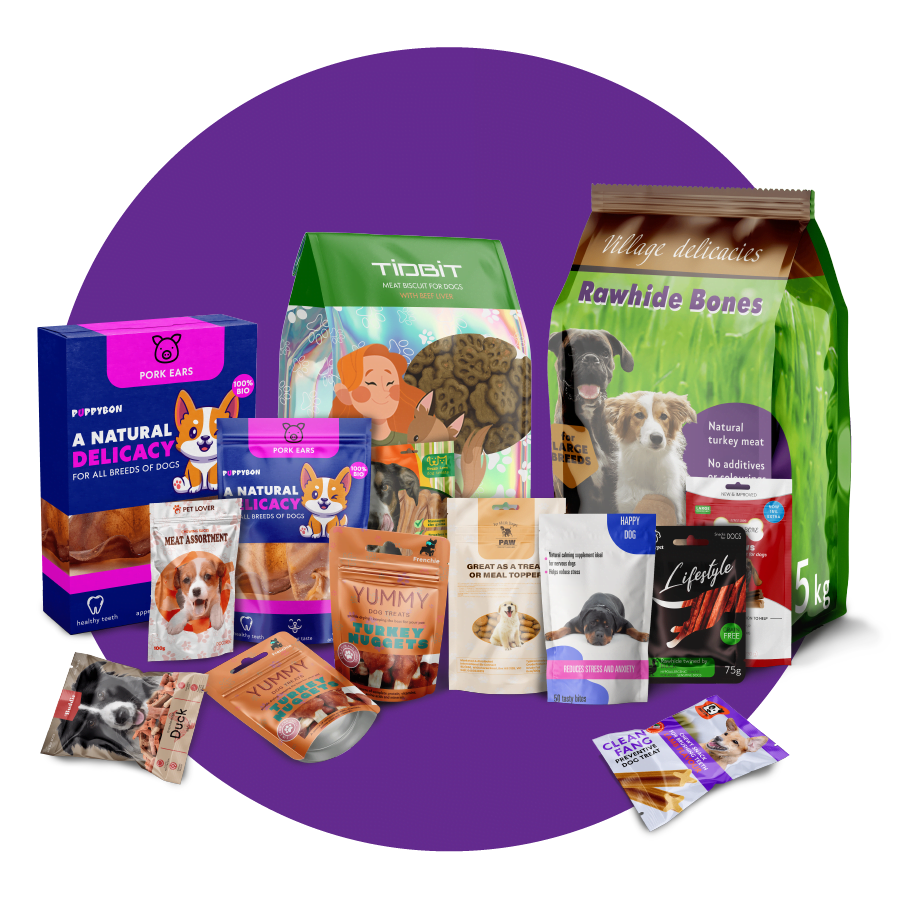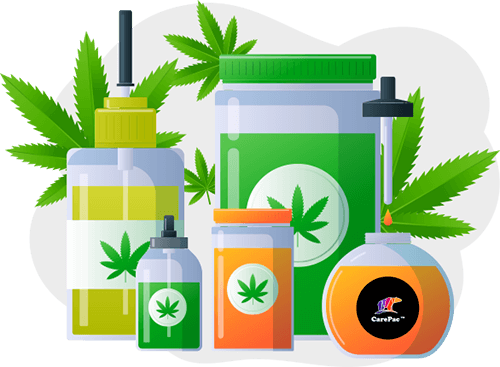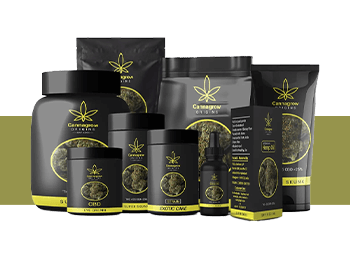
Category: Non Food Items Packaging

  • Optimizing Packaging for Cold Chain Logistics

    Optimizing Packaging for Cold Chain Logistics

    Optimizing Packaging for Cold Chain Logistics

    Introduction to Cold Chain Logistics

    Cold chain logistics is essential for maintaining the quality, safety, and sustainability of temperature sensitive products, like food and certain pharmaceuticals. If you’ve ever tried to keep food cold during a long day at the beach, though, you already understand that keeping things at a specific temperature is more difficult than it sounds. That’s where cold chain packaging solutions come into play.

    The right cold chain packaging solutions ensure the integrity of vaccines, biologics, medication, and food products as they make their way from the manufacturing and shipping facility to the store or pharmacy shelves. There are three types of cold chain packaging: active, passive, and hybrid, all of which use different methods to maintain a consistent temperature for temperature sensitive items.

    In this blog, we’ll discuss the key challenges of cold chain packaging, how cold chain packaging manufacturers can better optimize their processes, and how CarePac can help support your cold chain products with our customized and high-quality packaging.

    Key Challenges in Cold Chain Packaging

    There are several key cold chain challenges, including maintaining temperature integrity, preventing condensation and moisture damage, and ensuring compliance with industry standards. We’ll cover each of these cold supply chain challenges more in-depth below.

    Maintaining Temperature Integrity

    Whether you’re transporting vaccines or shipping frozen goods and dairy products, you’ll need to maintain temperature integrity via insulated box liners, gel packs, and robust seals. Finding packaging solutions that fit the bill can be difficult and expensive, especially for an industry that’s already strained.

    Preventing Condensation and Moisture Damage

    You’ll need to find moisture-resistant packaging that will help protect your products from moisture damage. Additionally, you’ll need to invest in expensive technology to protect your frozen foods and pharmaceuticals from drastic temperature changes in the first place.

    Ensuring Compliance with Industry Standards

    Cold chain packaging materials will need to meet strict industry standards that are set forth for the cold chain industries. This protects the end user from sickness (or even death) due to consuming spoiled food or expired vaccines or pharmaceuticals that spoiled during transport.

    Best Practices for Optimizing Cold Chain Packaging

    Optimizing cold chain packaging is crucial for ensuring product integrity and reducing costs throughout the supply chain. Here are a few best practices:
    Use Insulated and Durable Materials

    By using cold chain solutions that focus on insulated and durable materials you can avoid damage during transit. Higher quality materials may be more expensive on the onset, but they’ll save you money in the long run. Invest in materials and gel packs that retain temperature and help you avoid food waste.

    Optimize Package Design for Efficiency

    Compact, stackable designs can help maximize shipping space and reduce costs. Find cold chain packaging solutions and providers that will work with you to truly understand your shipping logistics and craft cold chain packaging that’ll fit the bill. Even better if they offer thermal packaging solutions in various sizes.

    Incorporate Real-Time Tracking Solutions

    The benefits of integrating tracking for temperature-sensitive shipments are many. Not only will you be able to track your goods throughout the transportation cycle, but you’ll be able to rest easy knowing that your temperature sensitive goods are being transported in the proper temperature environment.

    Cost-Effective Strategies for Cold Chain Logistics

    If all of the above sounds expensive, it’s because it is. Fortunately, there are a couple things you can do now to cut back on costs.

    Minimize Packaging Waste

    Use reusable or recyclable materials to lower costs. Some companies even offer discounts or other incentives for customers that send their packaging back in the mail. Whether you use expanded polystyrene or sustainable materials, anything you can do to improve sustainability is a step in the right direction.

    Streamline Packaging Processes

    You can streamline your packaging processes by partnering with trusted suppliers for efficient packaging solutions. It’s always a good idea to find a few companies that can manufacture your temperature controlled packaging; that way, if one of your temperature controlled packaging solutions goes out of business or needs to close due to bad weather, you won’t be left in a lurch.

    How CarePac Supports Cold Chain Packaging Needs

    At CarePac, we are proud to offer custom cold chain packaging solutions for temperature sensitive products. Not only will our packaging help you ensure proper temperature control for your sensitive items, like pharmaceuticals, chemicals, or food products, but our customization capabilities mean that your product will stand out to your customers.

    Ready to learn more about our cold chain solutions for packaging? Contact us today to get started!
    Lets Get Started

    Made In The USA

    Full PouchCustomization

    Scalable Printing Digital & Plate

  • Ecommerce Packaging Guide

    Ecommerce Packaging Guide

    Ecommerce Packaging Guide

    Ecommerce Packaging Guide: Enhancing Customer Experience

    Nothing influences a customer’s first impressions and perception of product quality more than product packaging. Customers expect their product packaging to be environmentally conscious and to provide a memorable unboxing experience. Bonus points if your product packaging can help you reduce costs, improve profit margins, and reduce your carbon footprint.

    customer-friendly-ecommerce-packaging-guide

    If you perfect your product packaging, your target market and new customers will start to associate your commerce packaging with your brand. For example, Tiffany has become synonymous with its blue packaging materials, and brands like Glossier have made their commerce packaging part of their customer’s online shopping experience.

    Simply put, your retail packaging can help solidify your brand identity, which is why it’s so important to create commerce packaging that’s the right fit for your small businesses.

    Factors to consider in ecommerce packaging

    When it comes to perfecting your ecommerce packaging, there are a few things to consider. Depending on what your e commerce business sells, some of these custom packaging solutions and features will be more important than others.

    Functionality and protective packaging

    If you’re a packaging company that ships fragile items, you’ll need to choose packaging materials and designs that will ensure the safe transit of products. This includes adding features like bubble wrap, foam inserts, and padded mailers when you create packaging. Other things to consider include using a padded envelope or adding extra tissue paper and environmentally friendly packing peanuts to your ecommerce packaging.

    At the end of the day, better packaging is ecommerce packaging made from recycled materials that’s cost effective and protects what’s inside from damage during transit. Your packaging supplies should be efficient and durable.

    custom-branding-ecommerce-packaging

    Branding and unboxing experience (+ frustration free packaging)

    One of the best ways to boost customer retention and help stimulate repeat purchases is to focus on creating a positive unboxing experience for your customers. You should make sure this unboxing experience aligns with your brand’s identity and will foster customer engagement. Use frustration free packaging, ensure your production and shipping process is seamless, and consider using custom printed tissue paper to ship products. Throw in a few extra stickers as an added bonus!
    It’s small details like this that can make the unboxing experience memorable, creating a positive impression, enhancing perceived value, and improving customer loyalty.

    Sustainable and eco-friendly packaging materials & practices

    Let’s face it: customers are caring more and more about brands using and creating packaging that’s eco-friendly and sustainable. Use packaging supplies or a poly mailer that’s recyclable or compostable (i.e., Kraft paper), and offer customers the option to offset the carbon impacts of the delivery process. Many customers are willing to spend a little more on shipping costs if it means their custom packaging isn’t negatively impacting the environment.

    Other things to consider include using recycled paper, leveraging a nearby fulfillment center, and using recycled materials in lieu of bubble wrap or bulky protective packaging.

    eco-friendly-ecommerce-packaging-materialcustomized-ecommerce-packaging-options

    Weight of your custom boxes and packaging options

    One of the biggest things many ecommerce brands are trying to do is to reduce weight to get their shipping boxes and other packaging options into flat rate shipping tiers. For example, the maximum weight for USPS first class packaging is 13 oz. This dimensional weight limit includes the packaging, and this is one of the hidden costs of the shipping and packaging process.

    We can help ensure that the packaging solution our packaging specialists create for you won’t weigh more than you intend it to.

    Best practices in ecommerce packaging

    If you’re engaging with a packaging expert to help you design and create your e commerce ready packaging, here are a few things to keep in mind as you create your packaging solutions.

    Optimize the size

    As mentioned, you’ll want to make sure the weight of your custom box doesn’t cost you more in shipping costs. Your packaging partner should ask you things about how much space you’ll need in your packaging boxes and poly mailers, so they can work with you to maximize this space. Do you really need bubble wrap? Should you use corrugated packaging? These are all good questions to ask!

    custom-size-and-weight-ecommerce-packagingpersonalized-ecommerce-packaging

    Personalization and customization of e commerce packaging

    This is perhaps the “most fun” part of the packaging process. Successful ecommerce packaging leverages digital printing and professional graphic design to ensure their poly mailer and packaging boxes act as free advertising for their brand. Make sure to incorporate brand colors into the corrugated boxes! Think of this phase of the custom printing process as a chance to use your ecommerce packaging to improve brand loyalty.

    You can add a logo, incorporate brand colors throughout the packaging, and add text wherever you’d like on the packaging.

    Material selection and recyclability

    You’ll need to be extra careful when selecting corrugated boxes and poly mailers for your commerce packaging. All of your packaging supplies and packaging solutions should be environmentally conscious. Tyvek envelopes may be ultra durable and puncture resistant, but is this type of commerce packaging necessary for every product you sell? Don’t forget to focus on sustainability as you think about printing: should you use digital printing or printing plates? How big do your shipping boxes and commerce packaging really need to be?

    recyclable-ecommerce-pagkaging-order

    Get started with CarePac

    As you can see, thoughtful and strategic packaging is essential for the success of your brand. Integrating sustainability into your packaging practices is as important as it’s ever been, as customers expect a certain level of environmental responsibility from the brands they trust. We encourage all ecommerce businesses to prioritize the customer experience and environmental responsibility in their packaging choices.At Carepac, we have decades of experience working with companies of all sizes to create the packaging of their dreams. Contact us today to learn more about our customization, design, and printing process.

    Overwhelmed with

    all the options?

  • Pharmaceutical Secondary Packaging & Pharma Packaging Basics 

    Pharmaceutical Secondary Packaging & Pharma Packaging Basics 

    Pharmaceutical Secondary Packaging

    & Pharma Packaging Basics

    If you work in the medical industry, particularly in the pharma industry, you’ve likely heard the terms “primary”, “secondary,” and “tertiary” used in reference to pharmaceutical packaging.

    Some medical or pharmaceutical products or medicines may only require primary packaging, some require a combination of primary and secondary, and others require all three.

    For the purpose of this blog, we’ll define the common forms of pharmaceutical packaging, before discussing secondary packaging exclusively. 

    The Different Types of Pharmaceutical Packaging

    As discussed, there are three main types of packaging within the pharmaceutical industry. Although this blog focuses on pharmaceutical secondary packaging, in particular, it’s important to understand the purpose of all three and how they work together to protect consumer drugs and pharmaceuticals.

    Here’s a little more information about primary and secondary packaging, and tertiary packaging material.

    Primary Packaging

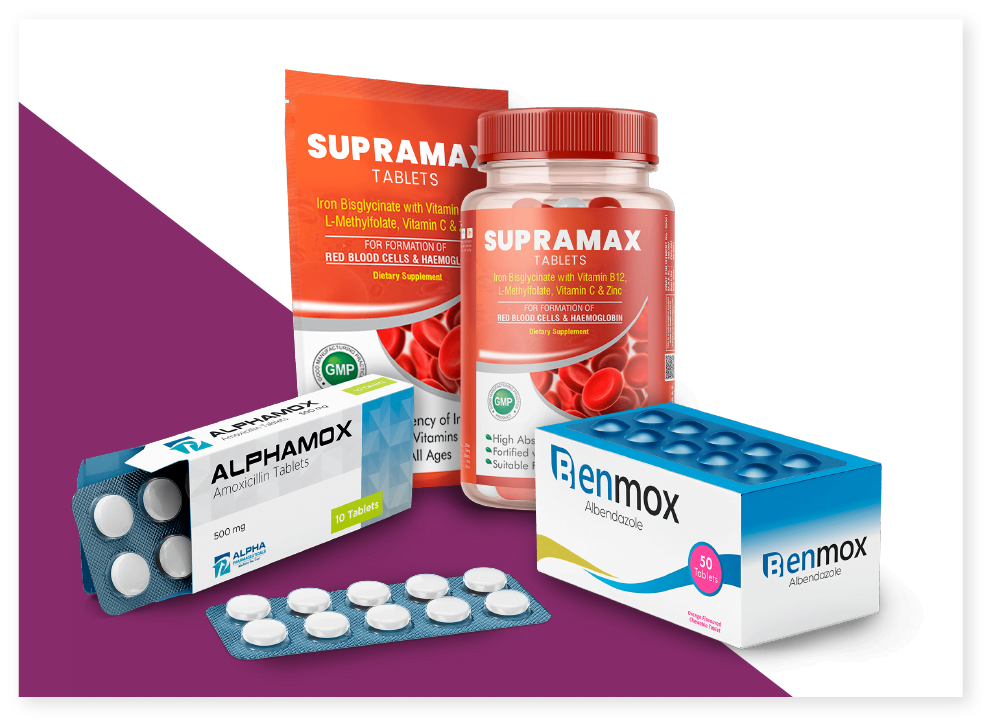
    Primary packaging refers to any packaging materials that will typically come in direct contact with medication (or the medical device). This includes foil-lid plastic blister packs, a bottle, or single-use packs, which many consumers are already familiar with, either through clinical trials or purchasing medications at the store.

    Since this type of pharma packaging comes into direct contact with different types of medication, its main purpose is to protect the medication from extreme heat, extreme cold, and exposure to the elements. It must also achieve a certain level of impact resistance and pliability since it might be dropped on the floor or may fall over on the shelf. 

    Secondary Packaging 

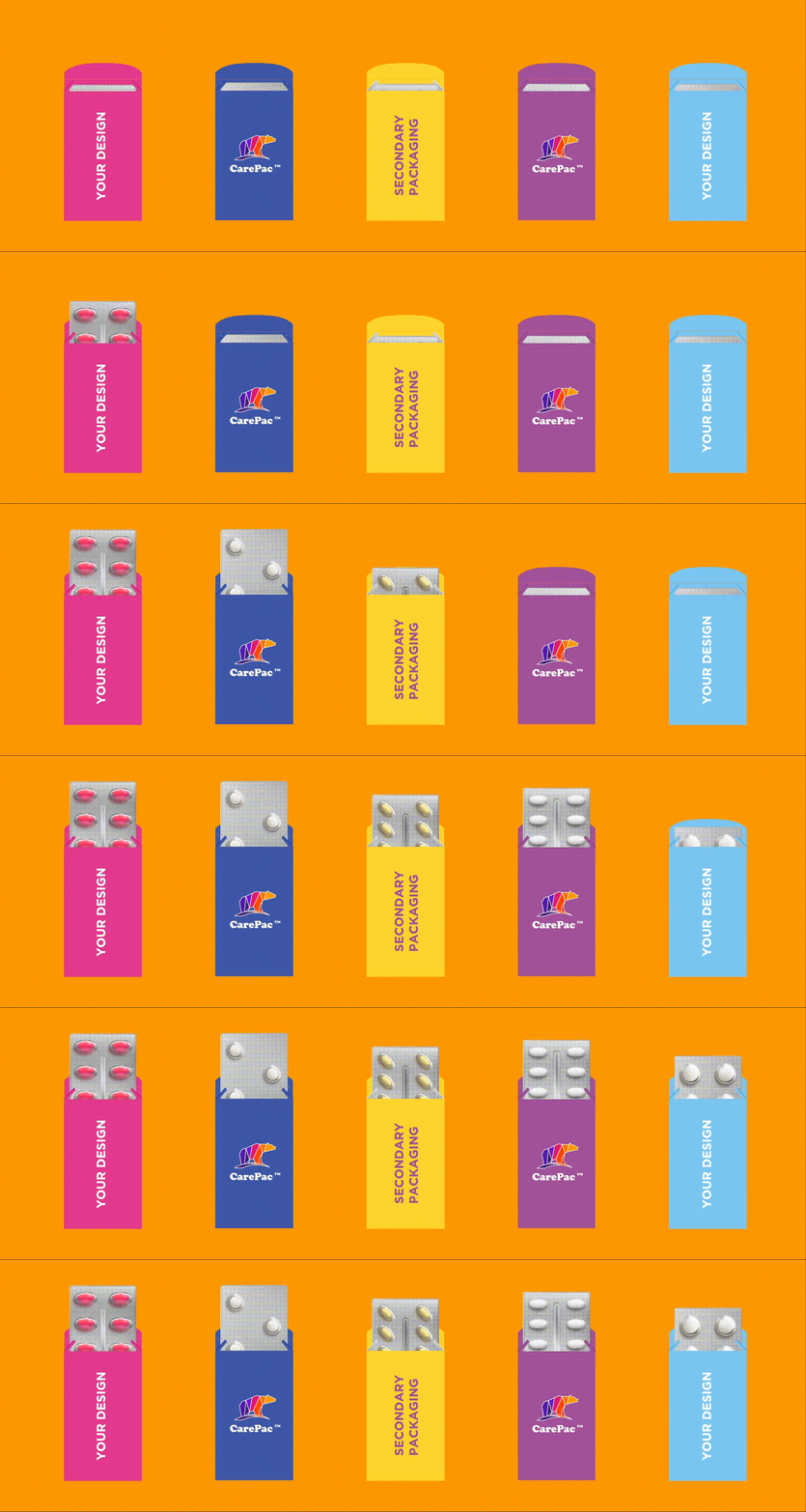
    Secondary packaging is the exterior packaging, or overpacking material, that lies outside of the primary packaging. Using the above examples, the manufacturer blister packs (or primary packaging) would be enclosed by a pre printed box or carton at the point of sale — this box or carton is secondary packaging.

    What makes secondary packaging unique is that these packages often include the manufacturer’s branding, a retail message, or dosing information. They’re often brightly colored or otherwise altered to be attractive to patients browsing shelves at the pharmacy. In some cases, secondary packaging may also need to be printed in multiple languages. 

    Tertiary Packaging 

    Finally, tertiary packaging is packaging that lies outside of both the primary and secondary packaging. This type of packaging is most often used during delivery and storage (think: big cardboard boxes for delivery, plastic wrap around a case of medication cartons, etc.)

    Tertiary packaging is often thrown away shortly after delivery and is not seen by the patient. Compared to secondary packaging, tertiary packaging is bland and plain, as it really doesn’t “matter” what it looks like. 

    One of the easiest ways to think about these three packaging types and how they work together is that a blister (primary packaging) is placed into a paper carton (secondary packaging) before it is packed into a large cardboard box (tertiary packaging) for shipping. The three different types of packaging work together to protect the medicines during storage, but only one or two are actually visible to the patient. 

    Essential Elements of Secondary Packaging

    When it comes to the main types of pharmaceutical secondary packaging, there are a variety of essential things for a packaging company to consider. First and foremost, it must keep the medication protected from contamination. Not only does this keep the medication free from spoilage, but it ensures potency, which keeps the medication’s effectiveness stable until at least its expiration date. After all, taking medication is pointless if it’s not potent and cannot serve its intended purpose. 

    Second, secondary packaging should be attractive to the consumer (particularly if the product is available over the counter and competes with all the other products lining the pharmacy’s shelves). It must also accurately and simply describe the product within and provide clear instructions for use.

    In some cases, depending on the locale, the instructions included on the pharmaceutical secondary packaging may need to be written in 2-3 different languages. For example, it’s not uncommon for medical products in America to have instructions written in English, Spanish, and Chinese. 

    Finally, all secondary packaging should adhere to laws and regulations. The medical and pharmaceuticals industries are highly regulated, and many of those rules and regulations apply to packaging specifically. 

    Secondary Packaging Types & Materials 

    Though the specific material used depends on the specific use of the secondary packaging, in most cases, secondary packaging is manufactured from the following materials: 

    • Plastics (PE, PP, PET) 

    • LDPE laminates 

    • Aluminum foil 

    • Cardboard 

    • Glass

    Plastics are the most popular, though, since many types of medications or medical devices can be safely stored and transported in plastic without sacrificing quality or effectiveness. It’s also very economical and can easily be customized. 

    Why CarePac 

    Since our inception, we’ve been designing, manufacturing, and producing secondary packaging for a variety of clients within the pharmaceutical industry. To meet regulatory requirements, we create our pharmaceutical secondary packaging in sterile environments, with only the best line equipment, and all of our products go through strict QA protocols, including serialization.No matter your needs, CarePac is committed to providing a solution for each and every one of your packaging needs, secondary packaging included. Learn more about our packaging solutions today! 

    Ready to get started? 
    Visit our medical packaging page for more information! 
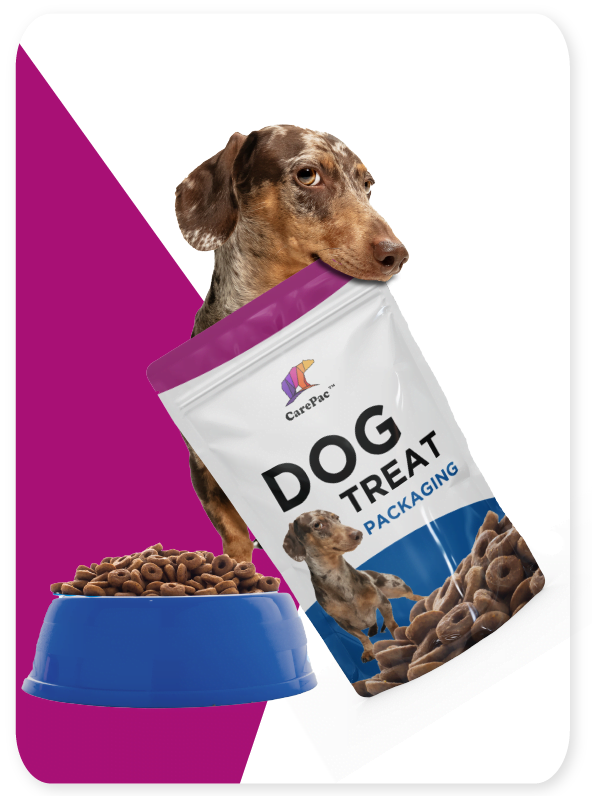
  • What Materials to Consider for Your Dog Treat Packaging

    What Materials to Consider for Your Dog Treat Packaging

    What Materials to Consider

    for Your Dog Treat Packaging

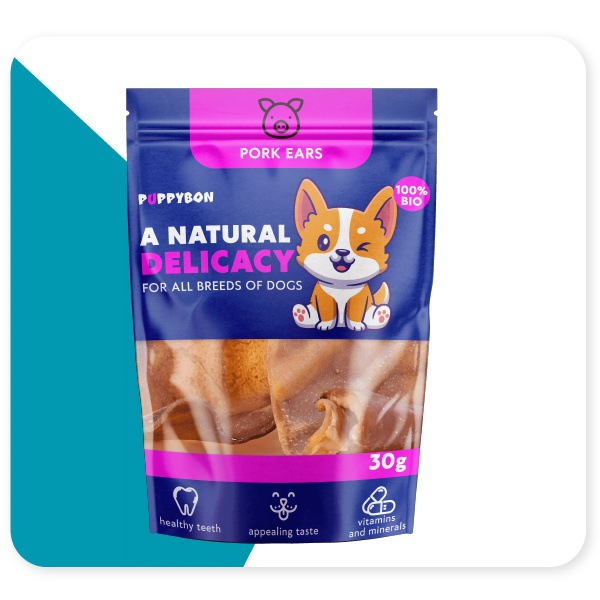
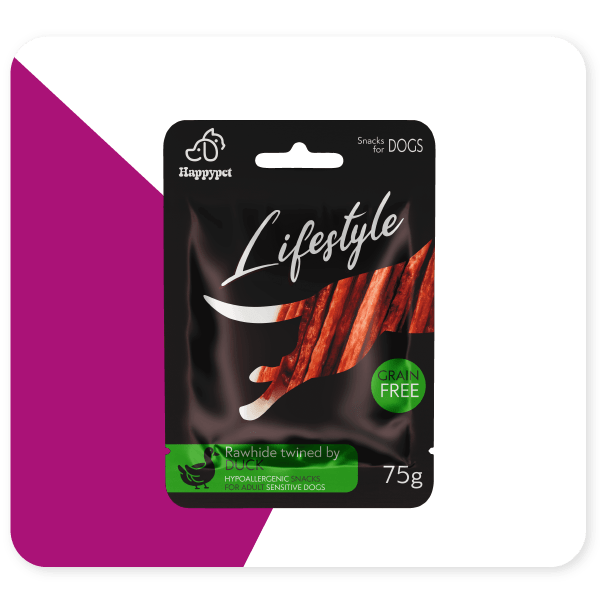
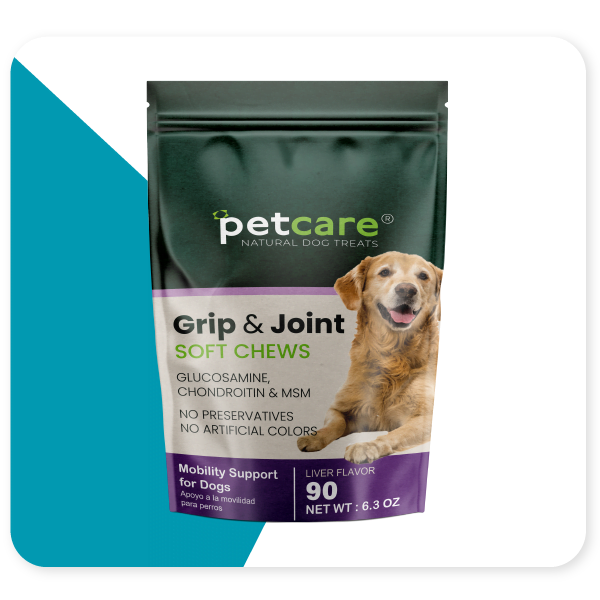
    As a manufacturer of dog treats, you know how important it is to differentiate your pet products from all the other dog food brands out there. After all, the industry is very competitive, and you need to do everything you can to attract customers as they wander the aisles and are overwhelmed with options.

    That’s where the perfect pet food packaging comes in. Fortunately, CarePac has decades of experience with flexible packaging, including treat packaging manufacturing, design, and development.

    In this blog post, we’ll cover the important things to consider when choosing a dog treat packaging material for pets before discussing our Barrier, CareFoil, CareSilver, CareClear, and CareClear-XP materials. Continue reading to learn more about packaging design and custom printing packaging for your pet food.

    Factors to Consider When Choosing Dog Treat Packaging Materials

    Pet food packaging is a very tricky industry. First, you need to make sure your product is food safe and healthy for our furry friends! Your packaging should also be durable and sustainable so your customers feel confident in your company and its impact on the environment.

    Other important factors to consider for your dog treat packaging bags include the below items.


    Product freshness

    Will the packaging design keep the pet treats inside safe from spoilage? Our dogs deserve only the best, so your flexible pouches need to pass the sniff test! Tear notches can also help keep your pet food fresh.

    Branding opportunities

    Your pet treat package needs to stand out from others at the market and should provide plenty of opportunities for you to include your company name differentiators.

    Print quality

    There is no point in selling dog treats in a bag with low print quality. You need a bag that represents your brand in the best way possible with high-quality custom printing.

    Product viewing windows

    A high-quality product like yours deserves to be SEEN! Dog treat packaging bags with viewing windows will help pet owners see the organic ingredients inside with their own eyes.

    Cost concerns

    Most dog treat brands require dog treat packaging that’s as beautiful as it is affordable. This way, you have money left over for marketing, paying employees, and coming up with more tasty treats that’ll please dog owners and pets alike.

    Bonus: Consider DMET

    For the best of both (or all!) worlds, consider DMET. With DMET, you’ll have a high-quality barrier bag that’ll keep your product fresh, but it also has a clear window inside of a metalized material. This gives your product a great backdrop with superior color fidelity, all while maintaining freshness! And yes, it’s perfectly safe for Fido!

    In the next section, we will discuss common materials we use in our pouches.

    Common Dog Treat Packaging Materials

    As mentioned above, the best materials for dog treat packaging are those that are durable, cost-effective, and have a low impact on the environment. Learn more about our materials below.

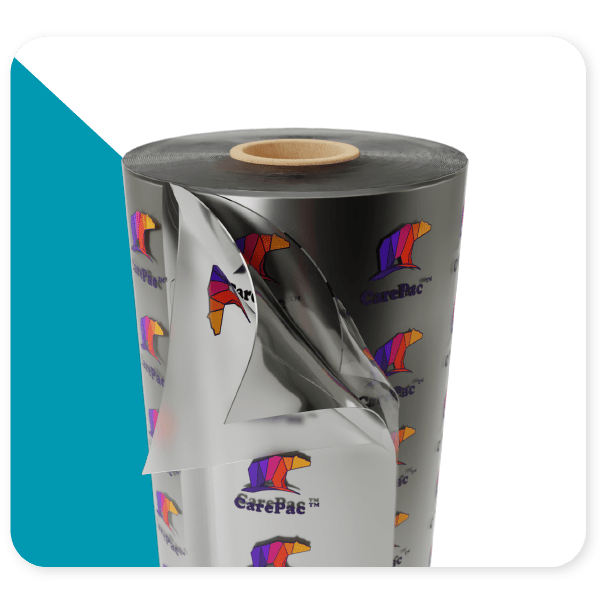
    CareFoil

    CareFoil offers the highest barrier, which means it has the longest shelf life. It is good for printing and will protect the pet treats within from spoilage. CareFoil prints well and will ensure your treats are well preserved and look great. 

    CareSilver

    CareSilver is a metalized PET lamination in the line of a mylar type material. Which provides quality oxygen and moisture barrier at a economical price. It’s a great base for printed pouches  that helps colors come to life.

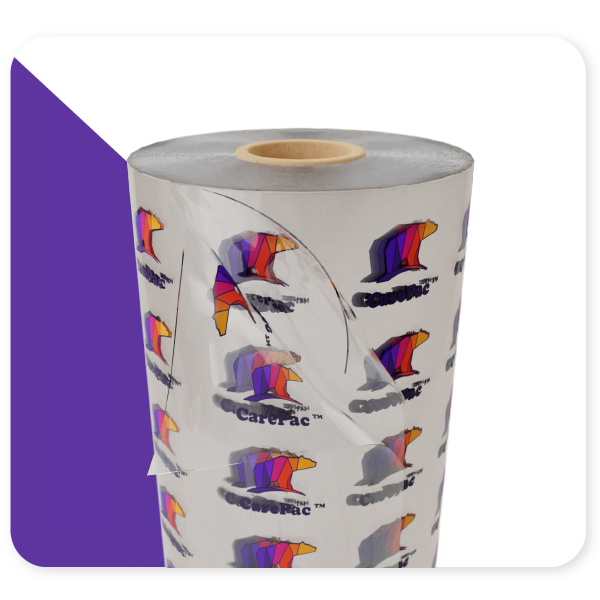
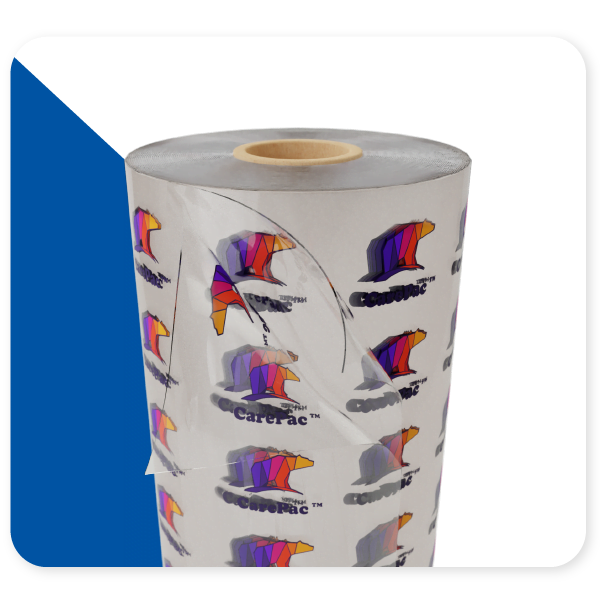
    CareClear

    This material allows for a viewing window but has a lower barrier than both CareSilver or CareFoil. As such, it is best used for short-term storage. This material is also an economical choice and is one of the packaging options that can help lower costs.

    CareClear-XP

    Treat bags made from this material provide an enhanced barrier material, which can help increase the shelf life of your dog treats. This product still allows for a viewing window and can help your packaging bags stand out on the shelves.

    Sustainable Materials for Treat Bags

    Last but not least, don’t forget about sustainability!

    Unless you’ve been living in a dog house, you’ve probably noticed the growing trend of customers caring more and more about supporting a business that uses eco-friendly materials. This applies to dog treat bags, too! When selecting a packaging design for pet food, it’s important to use these types of products.

    Biodegradable, compostable paper, and recycled materials are all things that customers care about for both pet and food products. Fortunately, CarePac specializes in designing and manufacturing dog treat bags that use eco-friendly materials.

    Contact us today to learn more about our sustainable packaging design options for dog treat packaging bags.

    Trust CarePac with Your Pet Treat Packaging

    After reading this blog, it should be obvious that choosing the right materials is essential for your packaging. As the market becomes inundated with more and more options, consumers are becoming more and more selective. As such, your brand and package need to stand out.

    You’ll need to consider factors like safety, durability, and sustainability when making decisions about the materials you use to create your pouches, and CarePac is the perfect brand to work with. Your consumers will love the package, and you’ll love working with us.

    Ready to get started with designing the perfect stand up pouch? We are, too! Contact us today to get started.

  • Types of Cannabis Packaging

    Types of Cannabis Packaging

    Types Of Cannabis Packaging | CBD Packaging

    Cannabis and Cannabis Products Have Been Legalized

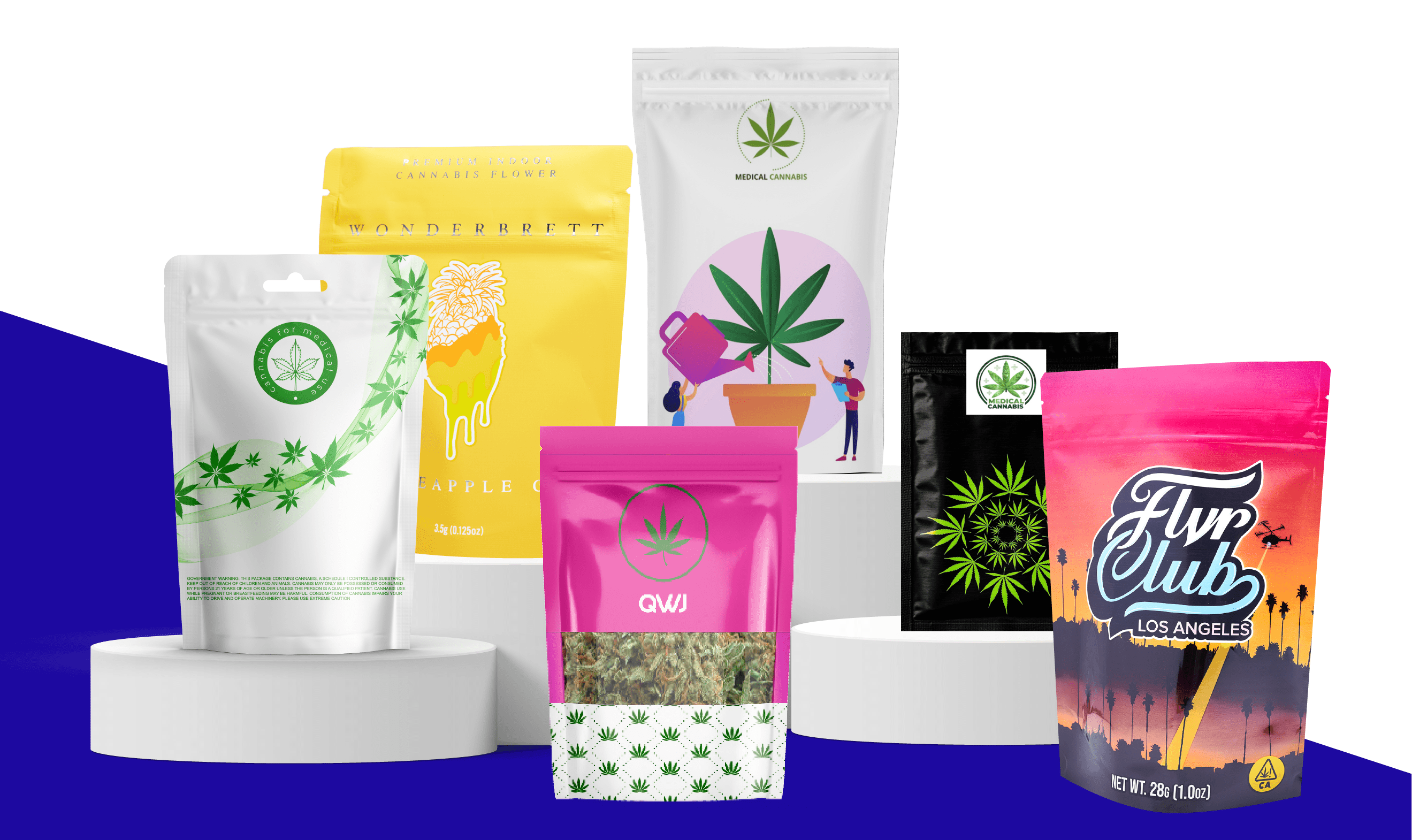
    Now that cannabis and CBD have been legalized in one way or another in virtually every state, there’s an influx of products on the market. From flower and edibles to vape cartridges and oil, there are a ton of products to market — and options for packaging cannabis products. Regardless of the specific product (or products) you sell, selecting the right THC or CBD packaging can make or break your success.  From rigid cannabis packaging toflexible cannabis packaging, here’s a breakdown of thedifferent types of cannabis packaging to choose from.

    Rigid Cannabis Packaging

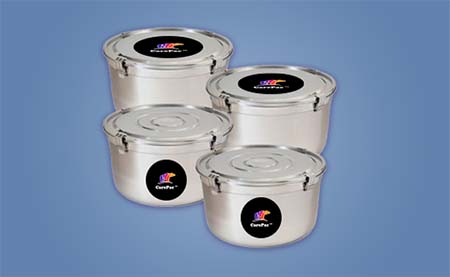
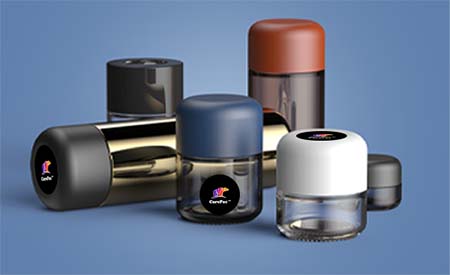
    As the name implies, rigid and semi-rigid cannabis packaging is anything that’s hard to the touch, including glass bottles and jars, tin containers, and plastic vials. Rigid cannabis packaging and containers, in general, are better than paper and has its benefits (it protects delicate flower from breakage, and is very moisture resistant and smell-proof), but it can also be very difficult to transport and store in bulk. Here’s a bit more information about each of the rigid packaging types for THC.

    Glass Jars and Bottles Packaging Types

    The primary selling point of this packaging type for packaging cannabis is that it means customers can see exactly what’s inside the containers before purchasing. Since customers can’t legally smell or touch products in most dispensaries, sight is the main sense they’ll use to get to know your product. Glass also doesn’t react to most chemicals, meaning THC won’t leech into the weed packaging and other chemicals won’t make their way inside.

    Packaging Cannabis in Tin Containers

    This weed packaging type is often used for pre-rolls or certain edibles, like candies or mints, to help keep out moisture and sunlight so the product within stays fresh. Many companies opt to use sliding properties for the tin containers (similar to a tin of Altoids), but tin containers can be customized to pop open or contain a clear top or viewing window. It all comes down to you and your preferences.

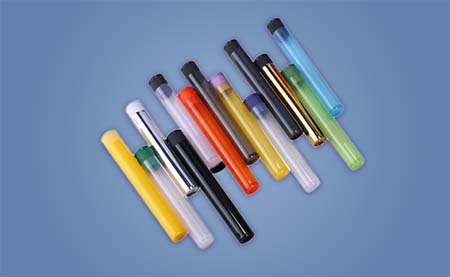
    Plastic Tubes for Marijuana

    Finally, the ever-popular plastic pop-top tubes. These are probably the type of cannabis packaging that most people are familiar with. They can be used to custom package pre-rolls, whole cannabis flower, or pre-ground marijuana. The lids are child-resistant, and the tubes are easy to label.

    Flexible Cannabis Packaging Types

    Many cannabis companies are moving away from bulky and rigid packaging to flexible packaging. In general, flexible packaging is easy to customize, can be ordered in bulk to save you money, and doesn’t take up as much space in storage.

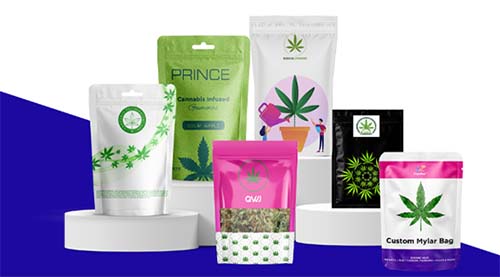
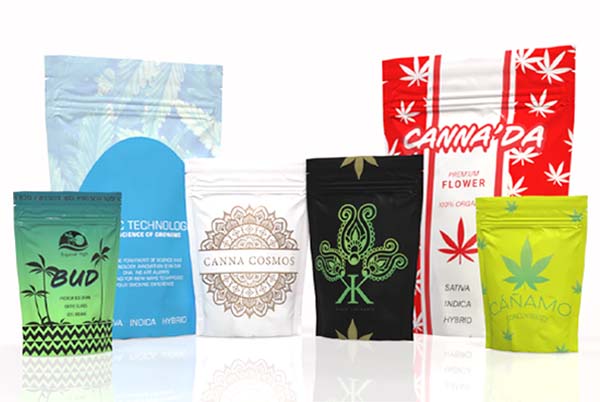
    Flexible Mylar Pouches

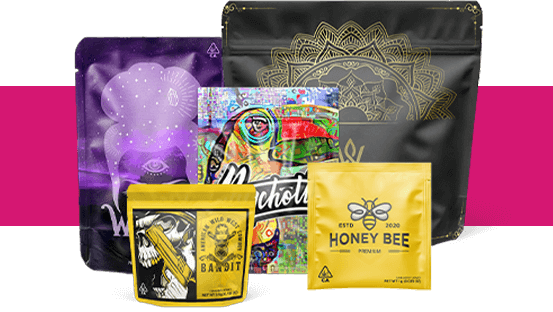
    Our mylar bags and pouches are perfect for the marijuana industry. They’re smell-proof, come in all shapes and sizes, and offer the highest level of odor containment. They can be purchased in smaller quantities, but for the quickest turnaround should be ordered in bulk wholesale amounts. To learn more about our custom cannabis packaging, reach out to our customer service team or click here. Our mylar pouches can be purchased in many shapes and styles, including stand-up pouches, lay-flat bags, vacuum-sealed bags, and more!

    Customized Cannabis Packaging Types

    Any of the above packaging options can be customized to fit your unique needs. In many cases, flexible packaging is easier to customize, and customization options for custom  flexible packaging include the following:

    •  Holographic elements – Incorporating holographic gloss laminate elements into your packaging will make it look cool. You can add small holographic touches or make the entire bag holographic in nature. 
    • Zipper – Adding a zipper or other resealable aspect to your marijuana and CBD packaging means your customer can use the product over time without sacrificing quality, taste, or potency. 
    • Child-resistant properties – Making your cannabis packing child-resistant isn’t just a nice-to-have; it’s the law. We encourage all customers to obey all local and state laws for cannabis packaging. 
    • Tamper-resistant properties – By incorporating a tear notch or heat seal into your bag, your customer will be able to tell if their cannabis has been tampered with. 
    • High-quality finishes – From soft-touch finishes to Spot UV, you can take your CBD packaging to the next level with one of our high-quality, premium finishes. 

    As you can see, there’s a lot to think about when it comes to flexible cannabis and CBD packaging. Reach out to our team for more information!

    Comply with Local & State Laws

    Legal requirements are constantly changing, and each state has its own laws and regulations surrounding the packaging and labeling of cannabis and CBD products. We work with customers around the country (and the world!) and are accustomed to customizing bags for compliance with cannabis industry regulations, and can adhere to CBD labeling requirements. 

    Please note: we are not lawyers, but we will work with you to make sure our bags conform to the standards you’ve provided.

    Cannabis & CBD Packaging FAQs

    As a leading supplier of flexible cannabis and CBD packaging, we get a lot of questions from potential and existing customers. Here are a few of the most common.

    Q: What is cannabis packaging made of?Cannabis packaging can be made from a variety of materials, including plastic, biodegradable materials, and Kraft paper. Q: Can cannabis buds be vacuum sealed?Yes, cannabis buds can be vacuum sealed, but only if the material used to vacuum seal them doesn’t contain any harmful chemicals. Q: Why is cannabis best stored in an airtightcontainer? Cannabis needs to be stored in an airtight container, so it’s not exposed to air, moisture, or the elements. This helps prevent contamination and preserves its taste, smell, and potency. Q: What are the different types of cannabisproducts?There’s a lot of variation when it comes to cannabis products, and common products include edibles, flower, THC and CBD-infused drinks, vapes, pre-rolls, and tinctures or oils.

    Cannabis & CBD Mylar Bags- FAQs

    For the best cannabis packaging on the market, look no further than CarePac. As a California-based company, we were an early adopter and have had time to perfect our cannabis packaging. The process is simple, our customer service team is helpful, and we offer many different sizes, styles, and bag materials. To get the process started, get an Instant Online Quote today!

    Overwhelmed withall the options?

  • Popular Paper Bag Materials

    Popular Paper Bag Materials

    Popular Paper Bag Materials – Paper Bags & Their Materials

    Popular Material for Paper Bags

    Paper bags have been gaining a lot of attraction in the packaging industry. Not only are they cheap to purchase in bulk and easy to customize, but as cities and states pass laws against plastic bags, they’re becoming the only packaging option for many companies. Even if plastic isn’t currently banned where you do business, transitioning away from plastic to recyclable, biodegradable, and eco-friendly materials like paper is a good move to make.

    As with bags made from other materials, paper bags come in many shapes and sizes. Each of these bags serves a different purpose and are manufactured for different properties. In this blog, we’ll discuss the most common paper bag materials before diving into the different types of paper bags that are manufactured from these materials.

    Bags Made from Paper

    Paper bags have been gaining a lot of attraction in the packaging industry. Not only are they cheap to purchase in bulk and easy to customize, but as cities and states pass laws against plastic packaging, they’re becoming the only packaging option for many companies. Even if plastic isn’t currently banned where you do business, transitioning away from plastic to recyclable, biodegradable, and eco-friendly materials like paper is a good move to make. 

    As with bags made from other materials, paper bags come in many shapes and sizes. Each of these bags serves a different purpose and are manufactured for different properties. In this blog, we’ll discuss the most common paper bag materials before diving into the different types of paper bags that are manufactured from these materials.

    What’s the difference between Kraft Barrier and Normal Paper Bag Material

    Kraft Barrier materials are laminated films which combine kraft paper with other materials like aluminum or nylon as well as polyethylene. kraft barrier materials are not glued, but are laminated, while normal paper bags are made of paper that is glued together. 

    Common paper bag materials

    Though the raw material for making paper bags is natural wood fiber, each of the materials included in this list has different properties because of different processing methods. Think of it like this: apple juice, applesauce, and apple cider are all made from apples, but since they’re processed differently the end result is different. 

    Kraft paper 

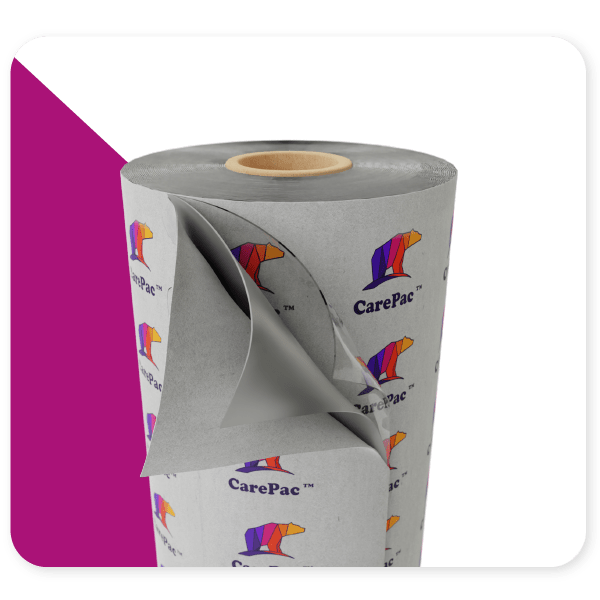
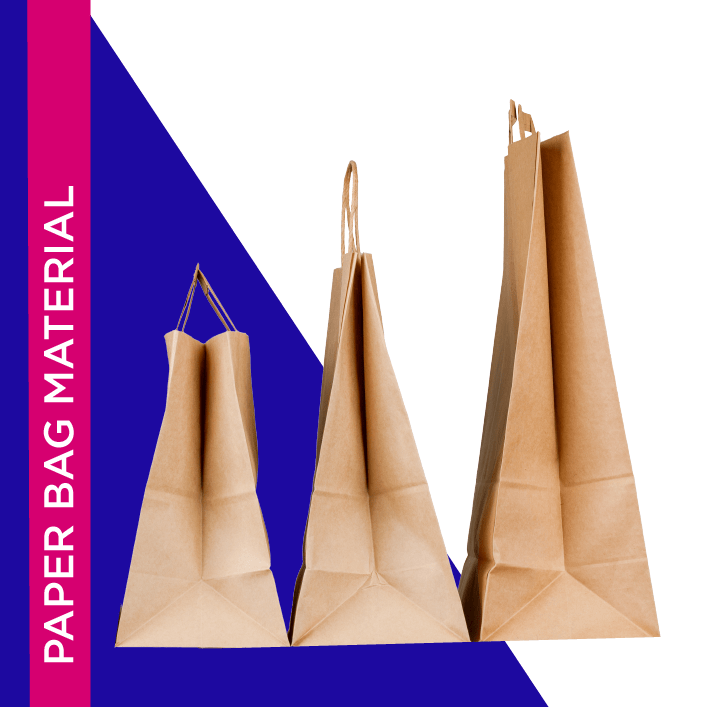
    This is the most common kind of paper used in making paper bags, and customers come across Kraft paper bags most often at grocery stores. It typically weighs 80-120/g square meters, making it a light, yet strong, packaging option. It has great flexibility and tear resistance, so it can be used to carry heavy things. Its natural look is brown, but the fibers can be bleached white or dyed a different color after bleaching. 

    The largest advantage of brown Kraft paper is its cost. It is the lowest cost option on this list, making it the ideal choice for even the most for cost-conscious customers. 

    White cardboard

    As the name would suggest, these bags are composed of single or multiple layers of bleached chemical pulp. The end result is a firm white bag with a smooth surface. If you’re looking for top-of-the-line gift boxes or bags, they will likely be manufactured from white cardboard. They tend to be thicker with a more premium texture, so they make wonderful promotional items for clients who expect something with a bit more oomph. These bags also often have handles

    Coated paper 

    This is another common material used for shopping bags. It’s a little thicker than Kraft paper, typically flailing between 80-250g/square meters. It is also softer than white cardboard and can be coated on one or both sides. One of the primary benefits of coated paper is that ink latches onto the paper better, so it’s a great choice for companies that plan on using a lot of color on their bags. 

    Recycled/eco-friendly paper 

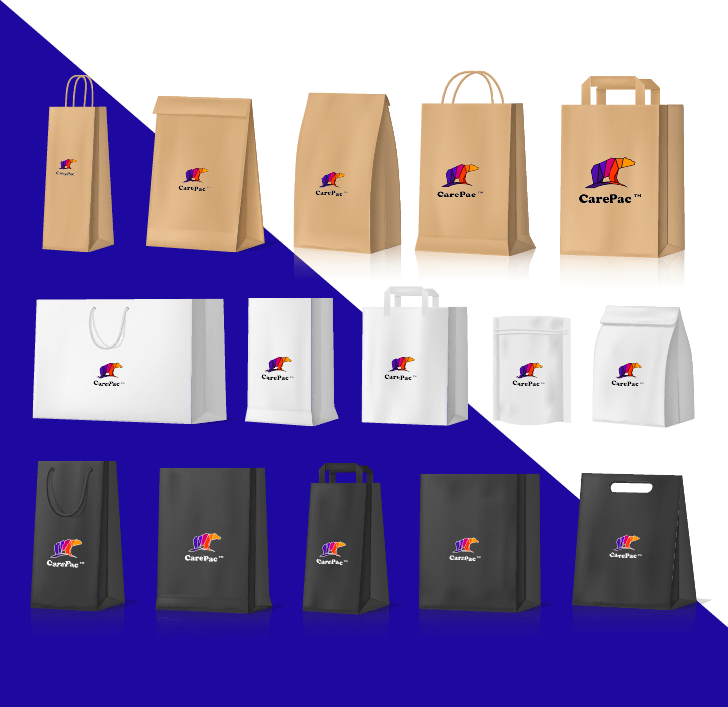
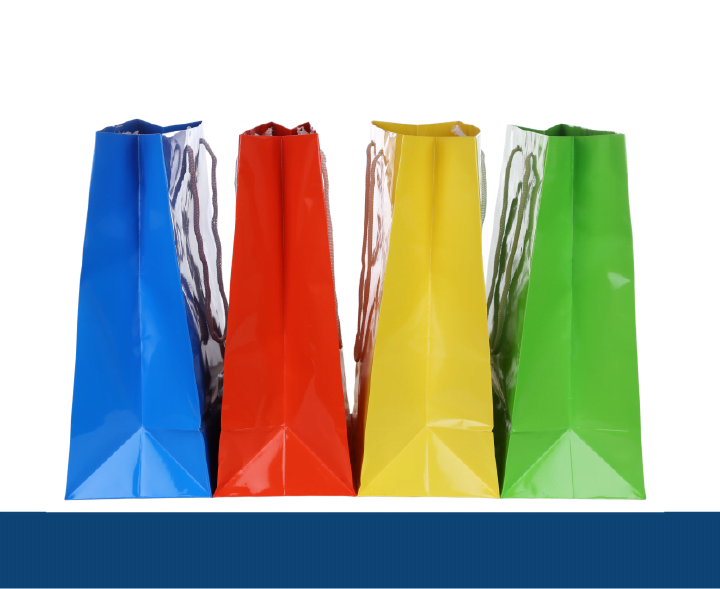
    A family group shot of all the different types of Custom Shopping Bags Carepac offers

    This is another common material used for shopping bags. It’s a little thicker than Kraft paper, typically flailing between 80-250g/square meters. It is also softer than white cardboard and can be coated on one or both sides. One of the primary benefits of coated paper is that ink latches onto the paper better, so it’s a great choice for companies that plan on using a lot of color on their bags. 

    Common paper bag types

    So, now that you understand the different types of paper bag materials, we think it’s important to explore the different types of paper bags made and their applications. Here are some of the most common paper bag types and their uses: 

    Stand on shelf bags

    Sometimes called SOS bags, these are most often used for carrying food and drinks (think: brown paper bag lunches!) SOS bags come in a wide range of colors and are a great option for companies looking to package their products in an affordable and attractive way. 

    Pinch bottom bags

    Similar to envelopes, these bags are most commonly used in bakeries. They tend to have a built-in grease-resistant lining, making them a great option for packaging food. 

    Merchandise bags

    Retail chains and smaller brick and mortar shops both use merchandise bags to package their products and clothing. Sometimes online retailers ship their products in merchandise bags, too! They’re colorful, stylish, and often include the name or logo of the shop. 

    Party bags

    These take the shape of standard Kraft paper bags but are bright and colorful – perfect for parties and to package gifts. 

    Mailing bags

    These bags are used to ship small and large items, and often have a self-adhesive stirp for easy sealing and mailing. 

    Recycled bags

    Like the bags mentioned in the previous section, these are manufactured from recycled materials (paper) or other waste materials (sugarcane pulp.)

     FAQ on Brown Paper Bags

    As one of the largest manufacturers of packaging, including paper bags, we get a lot of questions from prospective customers about our bags. Here are a few of the most frequently asked questions about paper bags in particular. 

    Q: Are all paper bags eco-friendly? 

    Yes, since paper bags are made from a natural material (paper) that easily degrades over time or recycled materials, paper bags are an eco-friendly packaging option for your organization. Some dyes are difficult to recycle, so check with CarePac before customizing your bag if recycling is important to you. 

    Q: Are all paper bag materials safe? 

    If you’re purchasing food-grade paper bags, yes — they are safe to come into contact with food and drinks. Some bags, though, particularly coated bags, can be toxic if burned.

    Q: What other options can I add to my bags? 

    At CarePac, we’re all about customization! This means you can add your logo, an image, brand colors, or other design elements to your bag. Some of the customizable features we can add to bags include zippers and hang holes.

    The CarePac Guarantee

    Still not sure? CarePac focuses exclusively on barrier bags and custom packaging for a variety of industries, from cannabis wholesalers to food and beverage distributors. We have exceptional customer service reps who are committed to making sure your order bundle is completed to perfection. With our CareDesign® process  you can rest assured that your barrier pouches will be done right, no matter what. 
    Ready to experience the CarePac difference? 
    We think now is the right time to give us a try.
  • How is Commercial Cannabis Dried

    How is Commercial Cannabis Dried

    How Is CommercialCannabis Dried – Cannabis Drying Tips

    Cannabis Growing and Processing Strategies

    Although cannabis growing and processing strategies vary from one facility to the next within the hemp industry, all cannabis companies have the same goal: to provide the best-quality cannabis at an affordable price. By doing so, more and more people can take advantage of cannabis’ medicinal properties without having to worry about the affordability.

    One very important area of the cannabis lifecycle that’s often overlooked and doesn’t vary much between wholesalers is the drying and curing process. Whether you’re a new company in the cannabis space or a curious customer that’s wondering how their favorite cannabis strain is harvested and dried, this blog is for you. Read on to learn more about how commercial cannabis is dried before distribution.

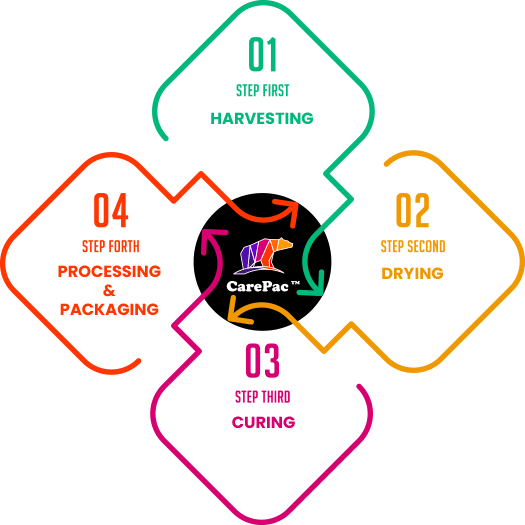
    Step 1: Cannabis Grow & Harvesting

    First things first is harvesting. During harvesting season, usually late September into October, cannabis farms throughout the United States begin harvesting their cannabis crops. This time of the season is often affectionately referred to as “Croptober” since it combines the words “crop” and “October.” Please note: Croptober is for sun-grown/outdoor cannabis only — indoor cannabis can be harvested at any time, as the lighting, humidity, and other elements that promote growth can be manually adjusted. 

    To learn more about Croptober, check out this blog.

    Step 2: Cannabis Drying

    Once the cannabis is harvested, it’s time for drying cannabis on racks or bins. During cannabis drying, the initial moisture is removed from the plants via traditional drying methods. During drying, cultivators hang the whole plant or wishbone-shaped branches to dry when they’ve cut it down, and this is done in an environmentally controlled space. This is one of the most important, if not the most important, aspects of the cultivation process. If rushed or done incorrectly, the quality of your end product can be severely impacted. In some cases, an improper drying process can lead to cannabis that’s unusable. 

    When it comes to drying via traditional drying methods, the environment where drying takes place is everything. Drying always occurs indoors because cultivators must be able to control all environmental factors, from temp and humidity to light and airflow. Although most commercial growers dry their plants in 10 days or less, it’s not uncommon for drying to take as long as 21 days or as few as 5. The actual length varies less than the end product — a properly dried cannabis plant.

    Step 3: Curing

    Once cultivators have completed the drying process, it’s time to move on to the next step: curing. Curing is important because, although drying does remove excess moisture, there will always be additional moisture that needs to be removed. 

    The curing process removes any remaining moisture, by encouraging it to move from the center of the plant toward the outside of the buds. Each grower has their own cure method, and most cultivators learn how to cure from someone on the team who has done it before. 

    Not only does curing involve knowing the perfect temperature and humidity levels, but it also requires special containers, equipment, and environmental monitoring. Curing has many benefits, including: 

    • It helps improve the taste 
    • It preserves and enhances terpenes and cannabinoids
    • It breaks down sugars that can encourage mold growth 

    Ultimately, curing recreational retail hemp is important because it makes your product better, tastier, and less prone to mold.

    Step 4: Processing and packaging

    Once cannabis is harvested, dried, and cured, it’s time to process and package. Processing refers to getting the cannabis ready for whatever its intended purpose is — trimmed for smokable hemp flower, ground for pre-rolls or edibles, or turned into a distillate for vape cartridges or oils. Afterward, the product is packaged for sale and distributed to dispensaries.

    Cannabis Curing & Drying Process FAQs

    Here are some common cannabis drying, curing, and processing FAQs.

    Q. How long does cannabis need to be dried on racks?

    The average drying time is about ten days, although some cultivators dry for as few as five days and others as long as 21 days. The amount of drying time doesn’t matter — what matters is that the cannabis is properly dried before being cured, and, ultimately, processed, packaged, and sold.Q. How long does cannabis need to be dried? As cannabis dries, any excess moisture is released from the plant. By removing this moisture, the plant won’t attract mold or mildew and will last longer on the shelves. If you’ve ever come across moldy cannabis, this is almost always the direct result ofimproperly drying and curing.

    Q: What are the perfect conditions for dryingcannabis?

    To effectively dry cannabis, there needs to be the perfect blend of lighting, humidity, and airflow. Those conditions vary from cultivator to cultivator and are adjusted depending on the moisture content of the cannabis they harvested.

    Q: Can cannabis complete drying in 2 days? 

    No, in most cases cannabis won’t be dried in two days, and especially not faster. The industry’s average is around 10 days we don’t recommend drying cannabis for anything less than five days. In some cases, it generally takes three to four weeks to properly dry and cure cannabis. 

    Q: Can you dry bud too long?

    Yes, just like you shouldn’t dry cannabis for only two days, you shouldn’t dry cannabis for longer than a month. Like under-drying, over-drying can also cause mold to grow.

    Q: Can you dry buds without hanging them?

    Yes! If you prefer not to hang your buds to dry them, you can trim them and use a flat rack. Flat racks are circular and have layers of mesh, which is ideal for airflow. If you use the flat rack method, the buds should be checked every 2-3 days. Note: this methodrequires that the buds be trimmed before drying.

    Protect your product with the right packaging     

    Properly drying and curing cannabis occurs after harvest is only the first step in producing quality smokable flower and protecting cannabis from mold, mildew, and other environmental contaminants. Ensuring that you’re using the right cannabis packaging is just as important. All custom cannabis packaging should protect the cannabis within from exposure to the elements, including air and light, and should be resealable so customers can close their package and keep their cannabis fresh in between use.

    For the best cannabis packaging on the market, look no further than CarePac. As a California-based company, we were an early adopter and have had time to perfect our cannabis packaging. The process is simple, our customer service team is helpful, and we offer many different sizes, styles, and bag materials. To get the process started, get an Instant Online Quote today!

    Overwhelmed withall the options?

  • Cannabis as a Consumer Packaged Good

    Cannabis as a Consumer Packaged Good

    Is Cannabis a Consumer Packaged Good? | Cannabis as a CPG

    Legal Cannabis as a CPG

    If you live in a state that has a legal cannabis market, it’s a game-changer for the consumer packaged goods (CPG) industry. Why? Well, basically every single mainstream product on the shelves, from lotions and shampoos to drinks and snacks, can be infused with tetrahydrocannabinol (THC) or cannabidiol (CBD), the most common (and popular) cannabinoids found in cannabis.

    Unless you’ve been living under a rock, you’ve probably seen (or even tried!) a product infused with CBD – it’s a billion dollar cannabis industry! Long heralded as the property of cannabis that “heals”, cannabidiol is growing in popularity. In fact, major food and beverage companies and brands — including Ben and Jerry’s, Coca-Cola, Hershey Co., and General Mills — have shown interest in incorporating CBD into their products. 

    Cannabis, particularly CBD, is no longer a product consumers use in secret. Now that it is legal in almost every state, you can guarantee that more and more CBD-infused products will pop up on the shelves. So, what does this mean for the billion-dollar consumer packaged goods CPG cannabis industry? Read on to learn more.

    It All Started With The 2018Farm Bill Impacting CBD Market

    The 2018 Farm Bill, officially The Agriculture Improvement Act of 2018, was groundbreaking for the cannabis industry. It authorized the industry to produce hemp and removed hemp and hemp seeds from the DEA’s schedule of controlled substances. Additionally, it directed the USDA to issue regulations and guidance to implement a program to create a consistent regulatory framework around the production of hemp in the United States. 

    Although it did not legalize cannabis to the level it’s legalized today (cannabis with THC was still illegal!), it did pave the way for a billion products containing CBD to become more mainstream and make their way into the legal cannabis market. Without the 2018 Farm Bill, cannabis as a consumer packaged goods CPG wouldn’t exist. 

    Snacks As A ConsumerPackaged Good

    Cookies. Crackers. Candy. What do they all have in common? Well, they can all be infused with CBD, and in states where marijuana is legal beyond just CBD, they can even be infused with THC. Beyond CBD and THC-infused snacks themselves, it’s no secret that using cannabis can increase your appetite. This means that if cannabis is legalized in your state, you can expect snack sales to go up. In fact, Nielsen data shows that the growth rates for candy and snacks are rising faster in areas where cannabis is legal for recreational use than in states that haven’t yet legalized it.

    Whether customers are snacking ON cannabis or snacking AFTER they use cannabis, one thing is for sure: the legalization of American and Canadian cannabis will increase the demand for packaged snack foods in one way or another.

    The Cannabis Market And C​ustomersAre Diverse

    The other important thing to consider is that mainstream cannabis consumers are super diverse. Although the average cannabis consumer is men and women in their early 40s, individuals as young as 18 and as old as 100+ use cannabis, either in its flower form or in more mainstream lotions or foods infused with CBD and THC.

    Although 26% of consumers purchase their products at a dispensary, 18% purchase them online and 9% at the grocery store. All this to say: as with other CPGs, how you package and present your product to the public is essential. The cannabis market is saturated with competition, so standing out from the crows through superior and stylish packaging is a must.

    Cannabis As a CPG FAQ’s

    Here are some frequently asked questions about cannabis consumers and cannabis as a consumer packaged good:

    Q. Who is the typical cannabis consumer?

    Data shows that there is no typical cannabis consumer, as many different people use cannabis for many different reasons. Although most users are in their 40s, it’s legal for individuals as young as 18 or 21 to use cannabis or cannabis-infused products. It has also been growing in popularity among senior citizens and the elderly. 

    Q: What is a CPG business?

    A CPG business often produces on a large scale and with a short lifespan. CPG companies sell their goods to retailers, who then sell directly to consumers. They often rely on big data technology and analytics to perfect their products and marketing and improve their CPG economic indicators. 

    Q: Which state consumes the most cannabis?

    Unsurprisingly, big data and market performance shows that the states with the highest cannabis consumption are states with legal cannabis sales. The number one state is Oregon, followed by Colorado, Vermont, Maine, and Alaska.

    Q: What do cannabis consumers want?

    Most cannabis consumers want a potent product at a low price. To help keep costs down, we recommend partnering with CarePac for your cannabis packaging needs. With low MOQs and competitive pricing, we can help you keep your costs down.

    Q: Which country consumes the most cannabis?

    As of 2022 news, Chile consumes the most cannabis, with Canada, Papa New Guinea, Israel, and Australia rounding out the top 5. The United States is #9 on the list of countries that consume the most cannabis. 

    Q: What age group uses cannabis the most?

    Although all age groups use cannabis, big data and market performance show it is most prevalent among users 18-25

    Don’t forget retail cannabis itself as a CPG

    Though most of this article has focused on items infused with CBD and THC, it’s important to note that cannabis itself needs to be packaged and has an influence on the CPG industry. After all, cannabis as the product itself remains foundational to cannabis as  CPG. Cannabis comes in so many forms (flower, edibles, drinks, vapes, oils, etc.), and each type of cannabis product needs to be packaged in a way that’s compliant with the cannabis industry laws and regulations.People tend to use cannabis for many different reasons, from pain relief or medical purposes to those who use it as a replacement for alcohol or nicotine during a night out with friends. Cannabis can also be used topically, either through creams infused with CBD or by rubbing a tincture into your skin.All this to say: not only are cannabis-infused products a CPG but so is cannabis itself and in many different formats. Whether you package cannabis itself or products infused with cannabis, you need to package it in a stylish and compliant way.

    Trust CarePac With Your Cannabis Packaging

    If you’re interested in cannabis as a CPG, we’re your one-stop shop for weed packaging of all shapes and sizes. Whether you’re packaging edibles, flower, vape cartridges, or anything in between, our selection of stand-up pouches and other types of cannabis packaging are guaranteed to exceed your expectations.

    All our packaging can be custom ordered or, for quicker delivery, purchased in standard sizes. Want to learn more? Reach out to us today, or get an Instant Quote now. 

  • Utah Marijuana Laws 2022

    Utah Marijuana Laws 2022

    Utah Marijuana Laws 2022

    Utah Marijuana Laws – Marijuana Law in Utah

    On Monday, March 2, 2020, the first Utah medical cannabis “dispensary” opened in Salt Lake City. After two years of legal cannabis sales, Utah’s medical cannabis program has made improvements. Patients can now have medical marijuana delivered to their home or have cannabis delivered through a drive-thru. This is especially important for maintaining the health of the medically vulnerable in the light of COVID. And in 2022, a range of bipartisan bills passed during legislative session expanding Utah’s medical cannabis program. These Utah marijuana laws aim for clearer protections for patients to expanded access to cannabis for qualifying conditions and more regulatory labeling. Learn more about the laws below. 

    These new 2022 laws in Utah for medical weed are as follows:

     Hemp and CBD THC Amendments

    These laws make it illegal to distribute, sell, or market any industrial hemp product with a THC concentration of more than 0.3%.It also makes it illegal to transport these materials out of state and manufacture, sale or use of cannabinoid products to add to traditional foods and beverages, attract children or smokable flowers.Additionally, the involvement of the Utah Department of Agriculture in regulating hemp cultivation is eliminated.This bill was passed and signed by the governor on 21st March 2022.

    State amendment in the definition of marijuana

    This changes the definition of cannabis or “marijuana” in current Utah code to include all species of the cannabis genus and all parts of the genus which are growing or not. It contains synthetic equivalents of substances found in the sativa cannabis plant. Any component or cannabinoid extracted or isolated from plants, including extracted or isolated tetrahydrocannabinol.This bill passed as was signed by the governor on 22 Mar 2022.

    Medical Cannabis Patients Protection Amendment

    This Utah law would amend the Utah Medical Patient Protection Act to ensure that government employees are protected from discrimination for having a medical card, which it says should be treated like any other prescription. This cannabis bill only covers Utah’s government employees, not private citizens.This bill passed as was signed by the governor on 23 Mar 2022.

    Medical Cannabis Governance Study

    This legislation would require Utah’s Health and Human Services Interim Committee to create a subcommittee to study and recommend a single state agency to oversee all regulations and laws related to Utah medical cannabis. In addition, the Department of Agriculture and Food and the Department of Health should report to the sub-committee if requested.This bill was passed and signed by the governor on 21st March 2022

    Medical Cannabis Act Amendments

    This bill made amendments to the provisions and laws related to the production and distribution of medical cannabis in Utah. Notable law changes include the following:

  • Clarifies the distinction between allowable hemp products and medical cannabisProducts based on their tetrahydrocannabinol (THC) and THC analog concentration;
  • Requires certain retailers marketing a hemp or cannabinoid product to include a statement that the product is not cannabis or medical cannabis;
  • Makes unlawful the act of distributing, selling, or marketing an industrial hemp product that contains a certain amount of THC or a THC analog;
  • Includes an aerosol as an approved medicinal dosage form;
  • Allows the Utah Department of Health (UDOH) to issue conditional medical cannabis caregiver cards in relation to designating patients with a terminal illness;
  • Allows UDOH to issue a conditional medical cannabis pharmacy license when a license renewal process is not complete before the pharmacy’s license expires.
  • This bill passed as was signed by the governor on 23 Mar 2022.
  • Medical Cannabis Access Amendments

    This bill and Utah law amends provisions regarding patient access and medical professionals in relation to medical cannabis. It includes the following:

    • Requires a hospice program to provide at least one qualified medical provider;
    • Renames the Cannabinoid Product Board as the Cannabis Research Review Board;
    • Requires physician members of the board to be qualified medical providers;
    • Adds acute pain for which a medical professional may generally prescribe opioids as a qualifying condition for a limited supply of medical cannabis;
    • Requires a recommending medical provider to consider a patient’s history of substance use or opioid use disorder before recommending medical cannabis;
    • Requires certain individuals overseeing certain higher education medical training to be qualified medical providers

    This bill passed as was signed by the governor on 24 Mar 2022.

    Utah Marijuana Laws & Legalization

    These are some of the laws and changes brought in Utah Cannabis Law in January-December 2022. We can see that lawmakers and criminal defense attorney are listening and continue to implement programs and Utah laws that address the needs of patients, but it must be ensured that cannabis is used for medical purposes and not for recreational purposes. For more information on these laws or other marijuana laws, speak with your criminal defense lawyer. 

  • 10 Creative Uses of Flexible Packaging for Health Supplements and 5 Packaging Trends for your Brand

    10 Creative Uses of Flexible Packaging for Health Supplements and 5 Packaging Trends for your Brand

    10 Creates Uses of Flexible Packaging for Health Supplements and 5 Packaging Trends for your Brand

    Getting healthy and starting a new wellness journey is always going to be trending, with consumers perpetually on the lookout for newer, modernized supplements, treatments, pills, powders, and more. Make sure that your product stands out among the crowd with supplement packaging design that sells.

    Supplement Packaging Design Trends

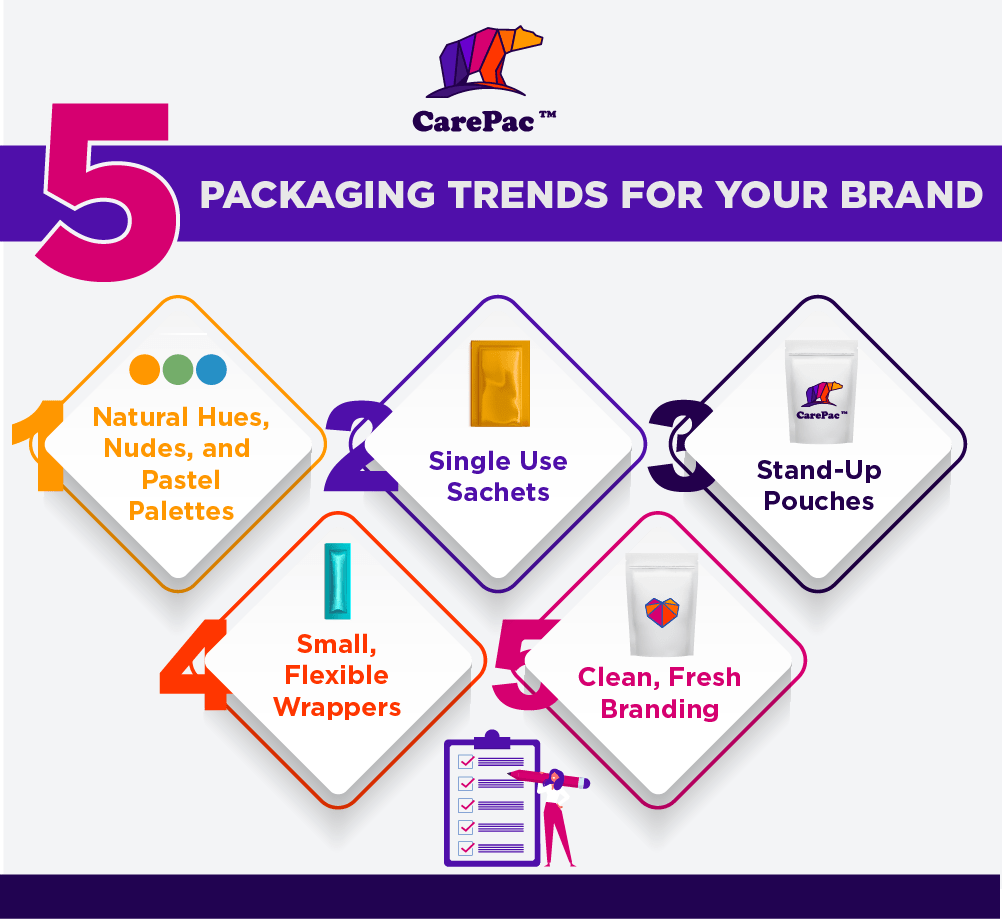
    The easiest way to do this is by keeping up with industry trends. Learn about five current trends as you create your packaging.

    1. Use Natural Hues, Nudes, and Pastel Palettes for Your Health Supplement Packaging

    Your color palette is often the first thing your potential clients are going to notice. It’s what’s going to catch their eye- but is it what’s going to sell them on your product and make them open the package? Wellness-oriented products tend to attract customers who are looking to treat their body and mind. They look for things that are “all-natural”, “organic”, “non-GMO”, “plat-based”, etc. Having a color palette that is either a natural, earthy shade like creams, beiges, browns, and sage greens, or nudes with various shades of taupe, or muted, pastel variations of bright and bold colors tend to evoke the right energy for selling a health product.

    2. Single Use Sachets

    Modernization is all about convenience, and convenience helps consumers save time in their day. For a lot of people, this means having single-use pouches for supplements or daily packs for vitamins. They can grab just one sachet and know exactly what they’re getting without having to measure and pour scoops or count out vitamins. When you offer single-use sachets or one-a-day packs of a product, it’s seen as a time-saver as well as an easy way to grab what the consumer needs and head out the door! A small sachet of vitamins is easier to grab and put in a purse to take later with breakfast rather than sorting and grabbing a handful of loose vitamins and losing them. Get on the same page as your customers, and make your product packaging simple and convenient. 

    3. Stand-Up Pouches are Great for Dietary Supplement Packaging

    Protein powders, collagen blends, smoothie mixes, supplements, and more are in powder forms that most consumers want to be able to store on the shelves in their cupboards. If you’re offering a product that needs to be stored and saved, having it be a sealable stand-up pouch is going to make their life easier. It’s also going to help sell your product as opposed to having a bulky box or a saggy bag, both of which are harder to keep stored and prevent spillage. Stand-up pouches not only fit better in a pantry but they also make it easier to count out portions, which can be poured into a measuring cup or scooped out.

    4. Small, Flexible Wrappers and Packagings

    Small and flexible wrappers as packaging are ideal for supplement design for similar reasons having single-use sachets are. They offer consumers the convenience of transportation. No time to grab an electrolyte drink, but keeping the small, flexible single-use pack (or a few) in a purse, pocket, backpack, or work desk make for a world of convenience. The size and flexibility mean they’re subtle and easier to transport than having to truck along a whole box of the product. The same can be said for certain products, like hand wipes or ED pills, that would only need to be used in certain moments, but one wouldn’t want to be caught without them.

    5. Clean, Fresh Branding for Supplement Label Design

    When it comes to what we put in our bodies, consumers are looking for products that are clean with better-for-you ingredients and protein, so your branding should convey the same message as the ingredients in your product. This includes clean lines, calm colors, mellow fonts, simple yet creative design elements, and avoiding loud, messy, chaotic, or in-your-face designs that may work for other products on Pinterest.

    Supplement Design and Supplement Packaging Design We Love

    1. beam

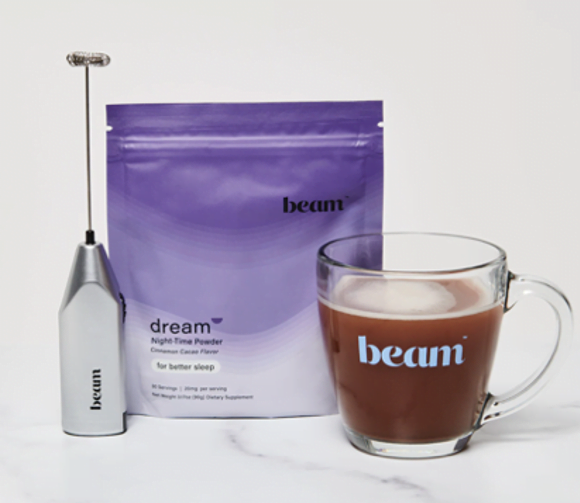
    As a supplement and protein powder manufacturer, beam has a series of products that are designed to supplement consumers’ daily lifestyle, with products like dream, which support sleep, or revive, which supports recovery. The matte packaging is sleek, with stand-up pouches that reseal for convenience. The ombre transition of the package from purple to white is subtle and calming, much like their products. Their logo is simple and all lowercase, which furthers their message effectively.

    Complement Protein Supplement Packaging

    2. Complement

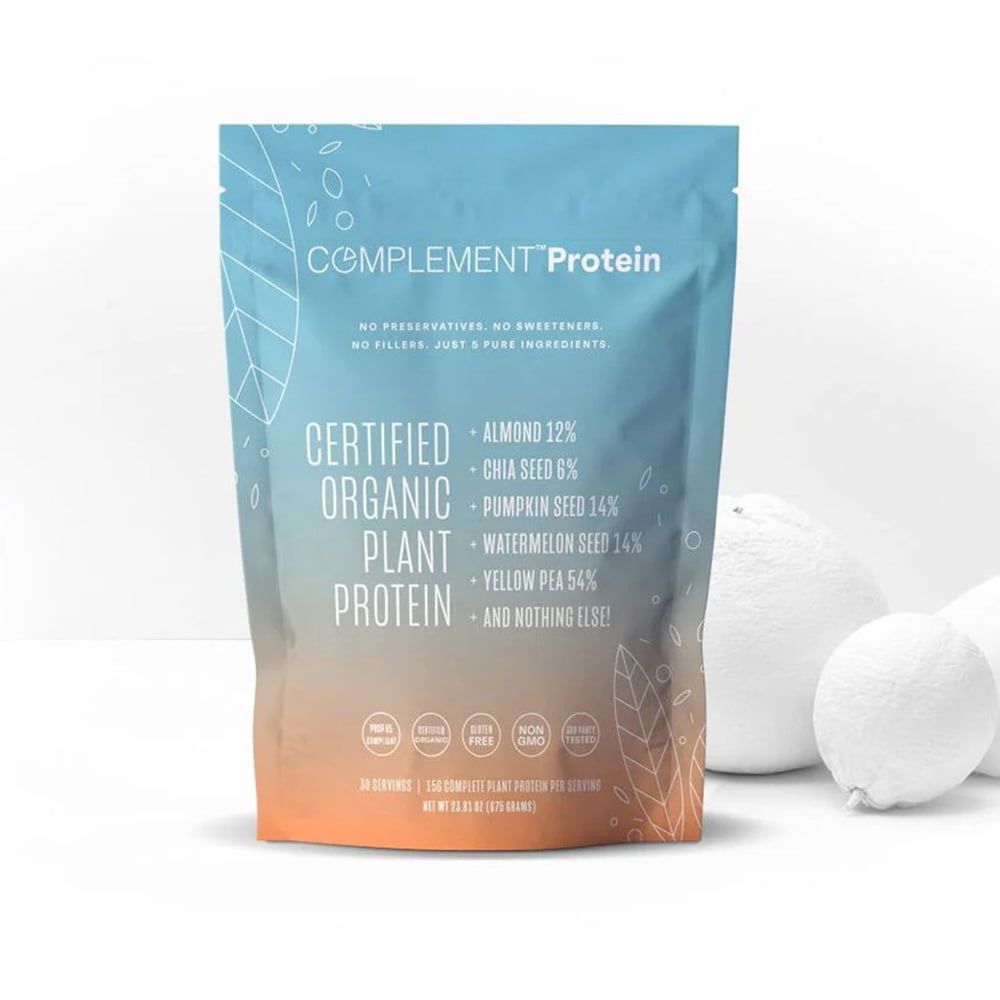
    Complement Protein is a plant-based, organic brand that offers capsules, powders, snacks, dps, and more similar types of wellness products. The flexible, stand-up package has a resealable top for maintaining freshness and allowing easy storage. The source is simple, with an ombre transition from blue to orange, san serif fonts that are easy to read, and minimal graphics that convey the plant-based product messaging.

    hims ed viagra Supplement Packaging

    3. hims

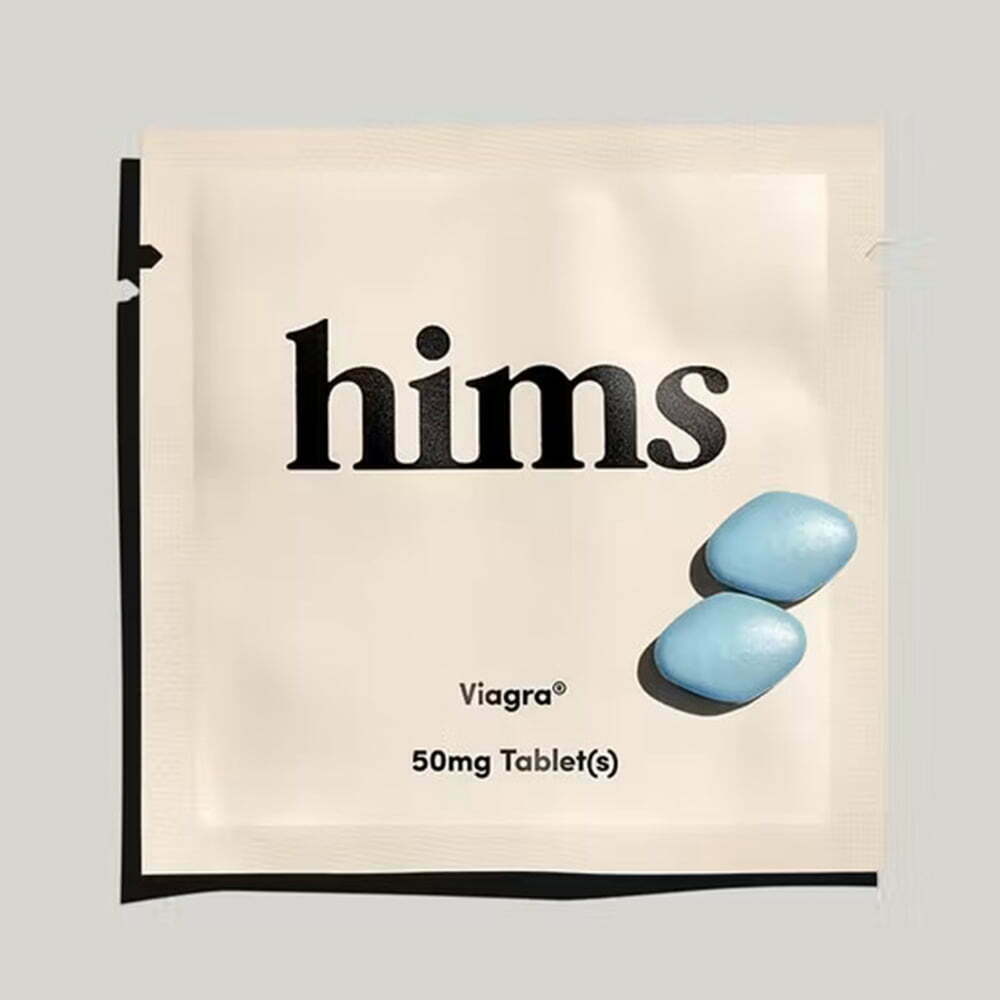
    As a big market item, hims products are simple, minimal, yet incredibly effective. The brand came in hard and fast, with its own variation of the Viagra pill and other men’s and women’s wellness and supplement products. Very simple serif font with little to no elements on the package keep it sleek yet subtle. The beige is neutral and natural in shade. The single-use tear package is convenient to allow the consumer to keep a single pack with them for the time when it’s needed most.

    Lyfefuel Supplement Packaging

    4. Lyfefuel

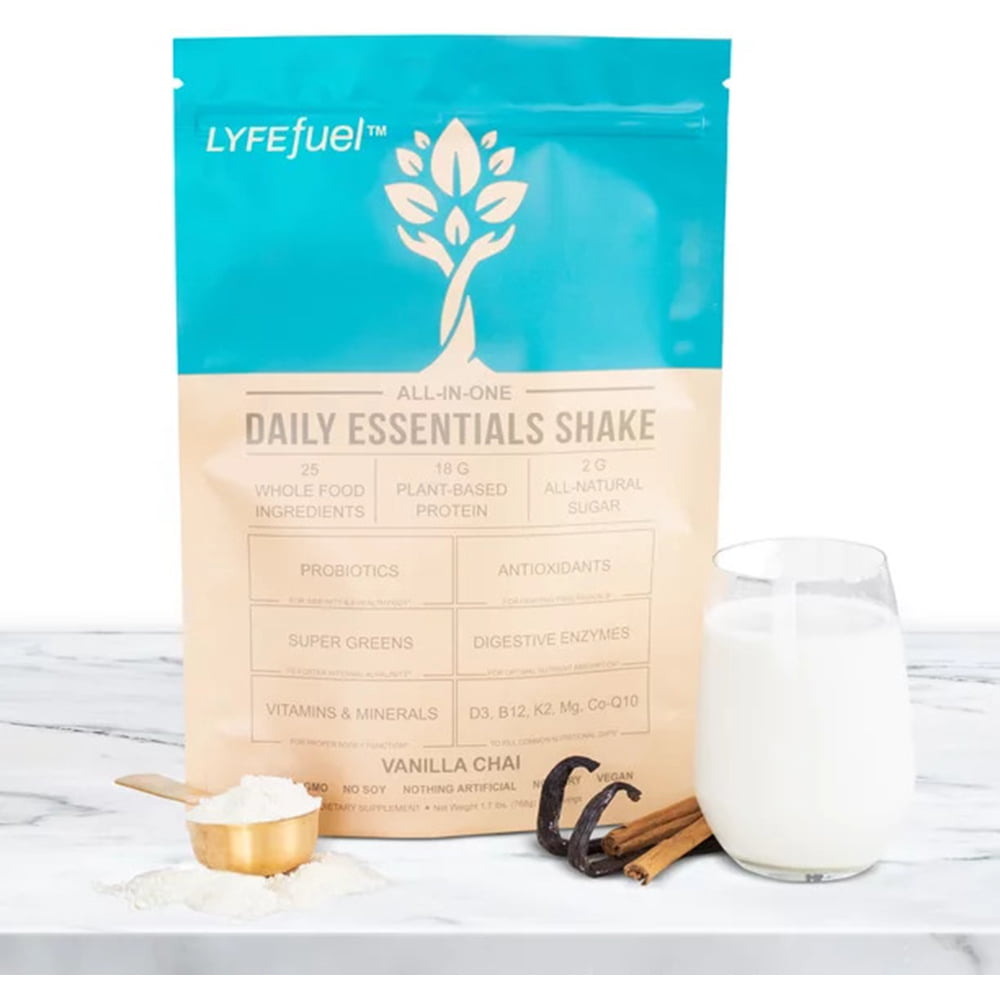
    Lyfefuel offers daily shake and protein powders for consumers in a variety of flavors. Their reseal packages are flexible and stand-up, which is ideal (if not essential) for bulk powder supplements. The color palette runs on a nature-based aesthetic, with a beige tone on the bottom half (earth) and a blue tone on the top half (sky). They incorporate little badges of essential information across the package as well to alert consumers to need-to-know information.

    Moon Juice Supplement Packaging

    5. Moon Juice

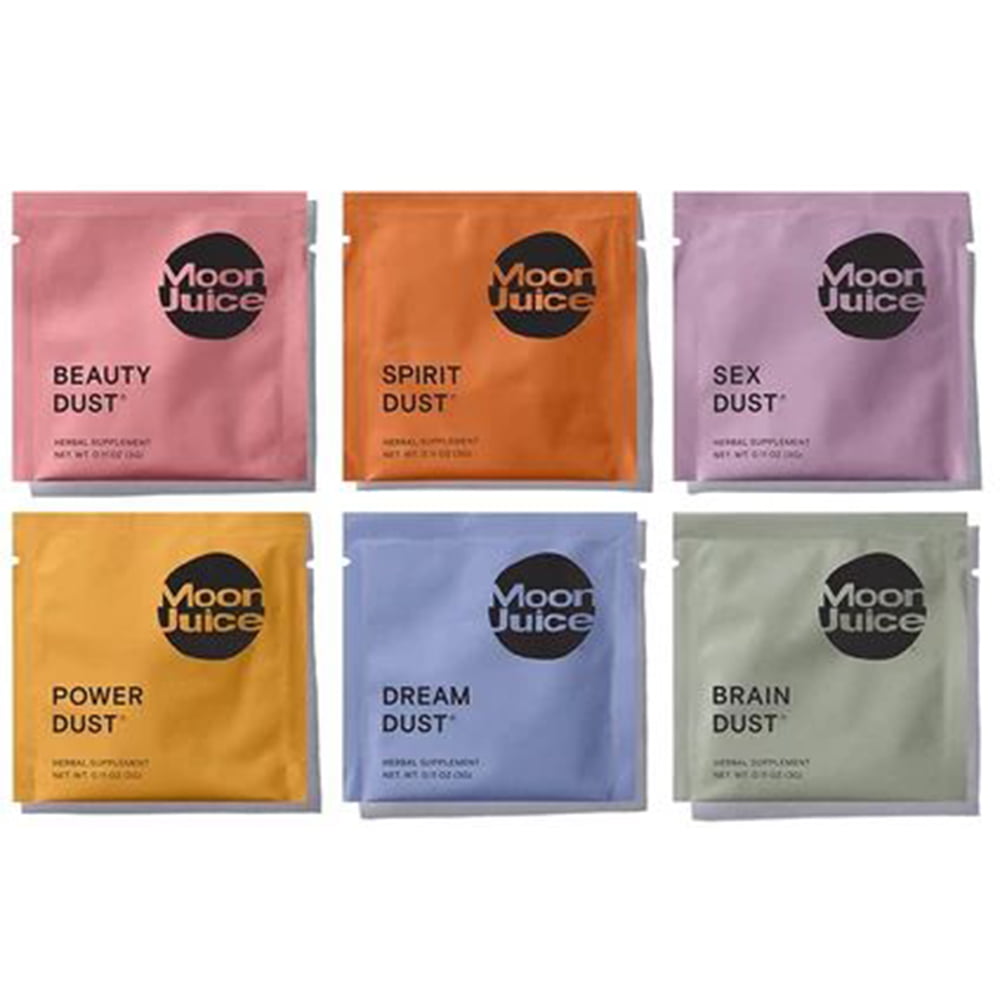
    Moon Juice markets off supplement powders for a variety of effects, including sleeping, energizing, calming, libido support, focus and concentration, and more. These small, single-use sachets are perfect for consumers who want a grab-and-go when they have the need come up. The matte colors are sleek and help convey the different protein powders from one another. They’re also small and flexible and easy to keep in a purse or desk drawer until needed.

    mushroom revival Supplement Packaging

    6. Mushroom Revival

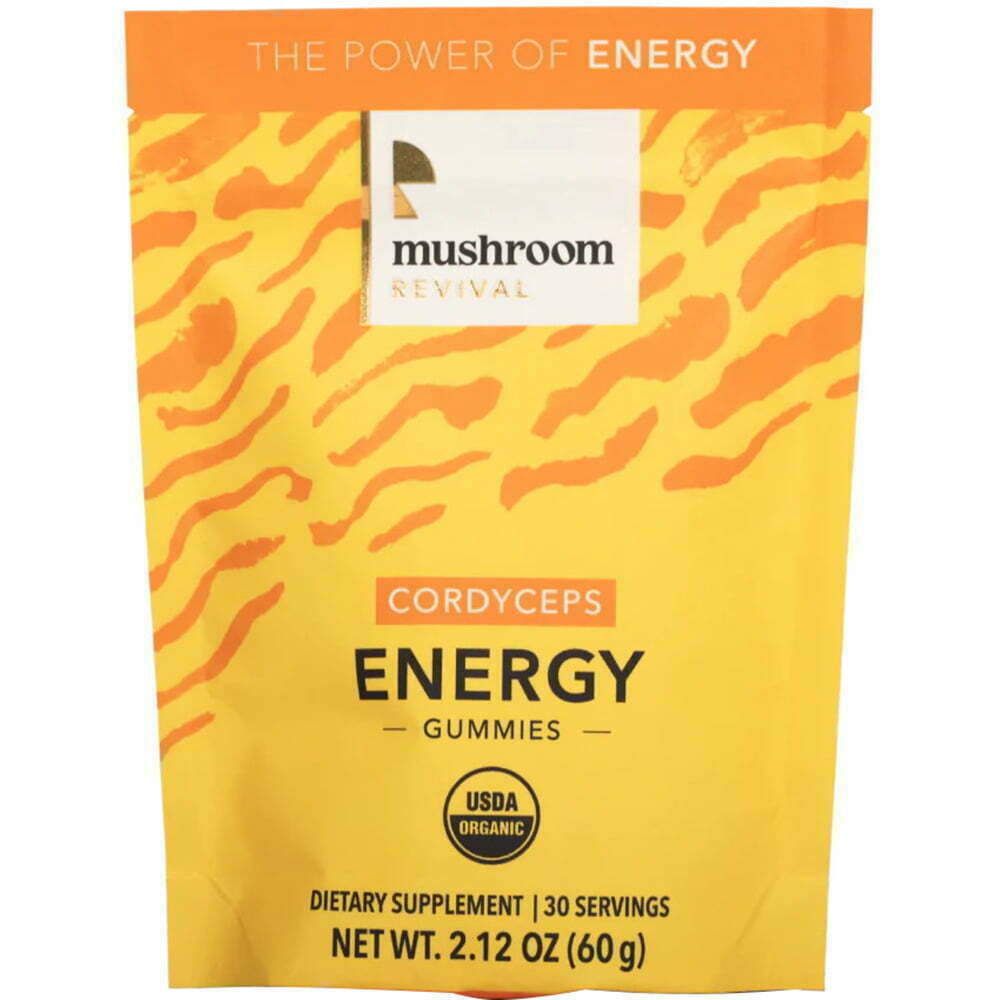
    Mushroom Revival offers consumers gummies, drops, powders, capsules, and more, all enhanced with mushrooms for various effects. They distinguish their different products with bright, vibrant colors that parallel the effects, as well. The flexible packaging stands up, has a resealable top to preserve the gummies, and has design elements that don’t overwhelm the visual palette.

    Olly Supplement Packaging

    7. Olly

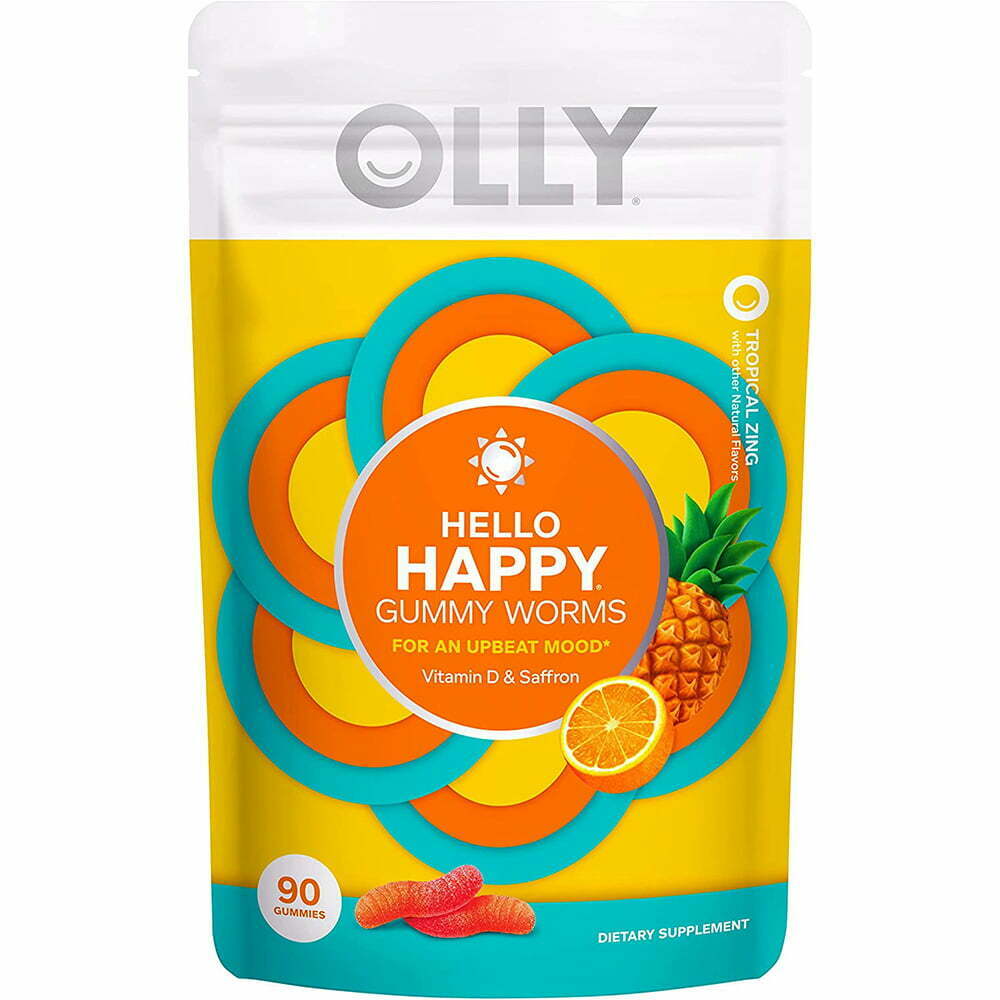
    Olly is one of the bigger names in wellness on the web, offering a variety of gummy vitamins and supplements. These are their “Happy Gummy Worms,” taking on the form of a treat instead of the traditional block gummy pieces. The Happy gummies are designed to be a natural mood-booster, and the packaging is intended to reflect that with bright colors with positive connotations, like yellow, orange, and teal, for a sunshine combo. The packaging is also flexible and seals shut to preserve the remaining treats.

    Onnit Supplement Packaging

    8. Onnit

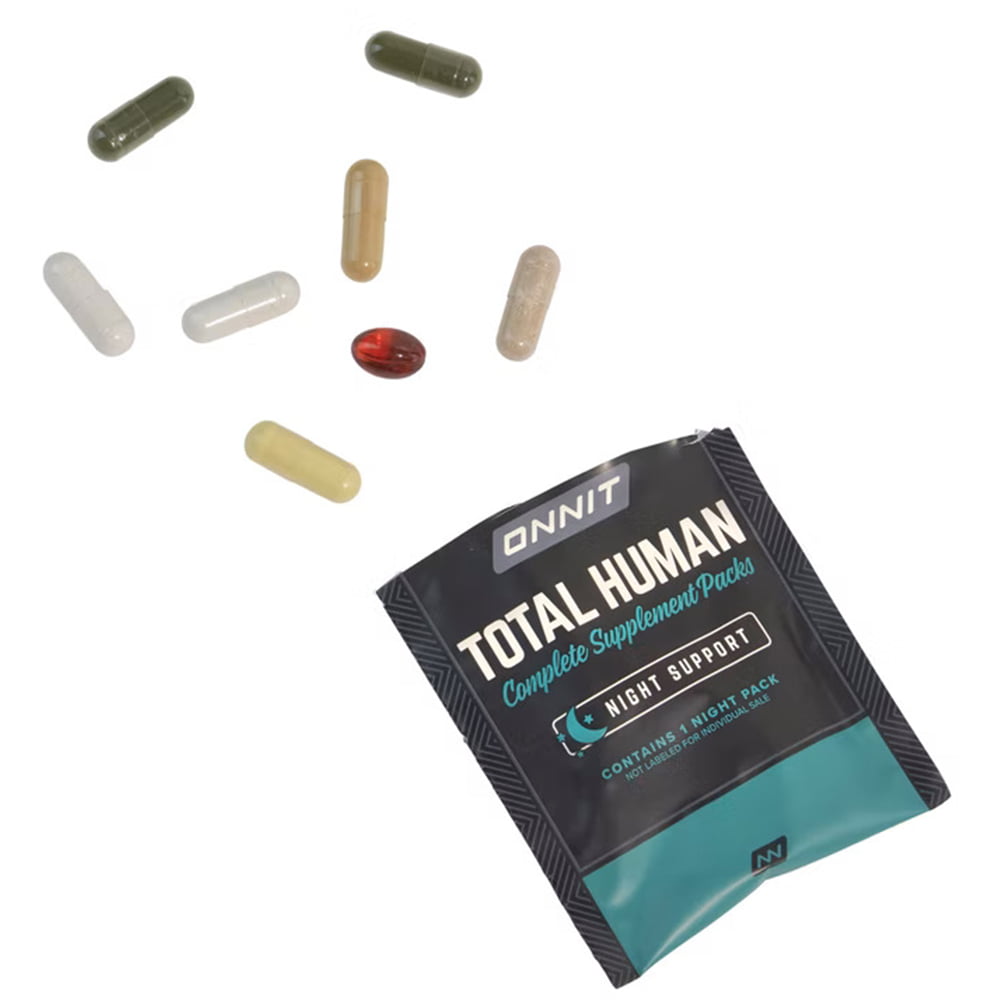
    Onnit doesn’t have the most attractive packaging, but it gets the job done. Their daily sachets for single-serve vitamins make it easy for consumers to take their daily vitamins without needing to count out vitamins or keep dozens of pill containers in their cupboard. The brown earth tones give a message that reads natural and healthy. The easy-tear top is also convenient.

    Vegamour Supplement Packaging

    9. Vegamour

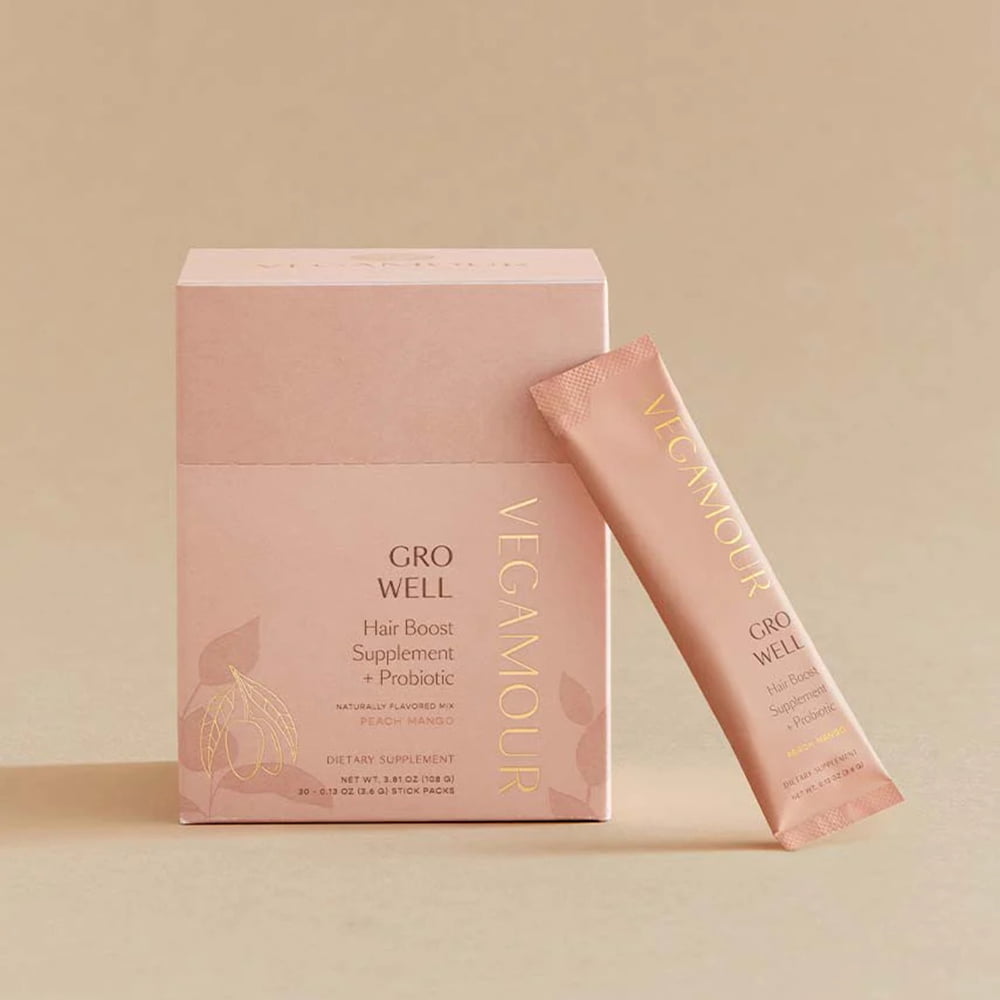
    Vegamour’s effective packagings are as elegant as can be. The whole aesthetic feels glamorous, rich, and visually pleasing, with a neutral color palette in shades of tan, pink, and orange that pair well with their signature gold lettering. The individual sachets are ideal for grab-and-go usage and convenient to keep on hand for whenever one wants to enjoy the powder in a beverage. Their supplement label design and typography is clean, sharp and elegant at the forefront of their dietary supplement packaging.

    Care of Electrolyte_Boost Supplement Packaging

    10. Care Of

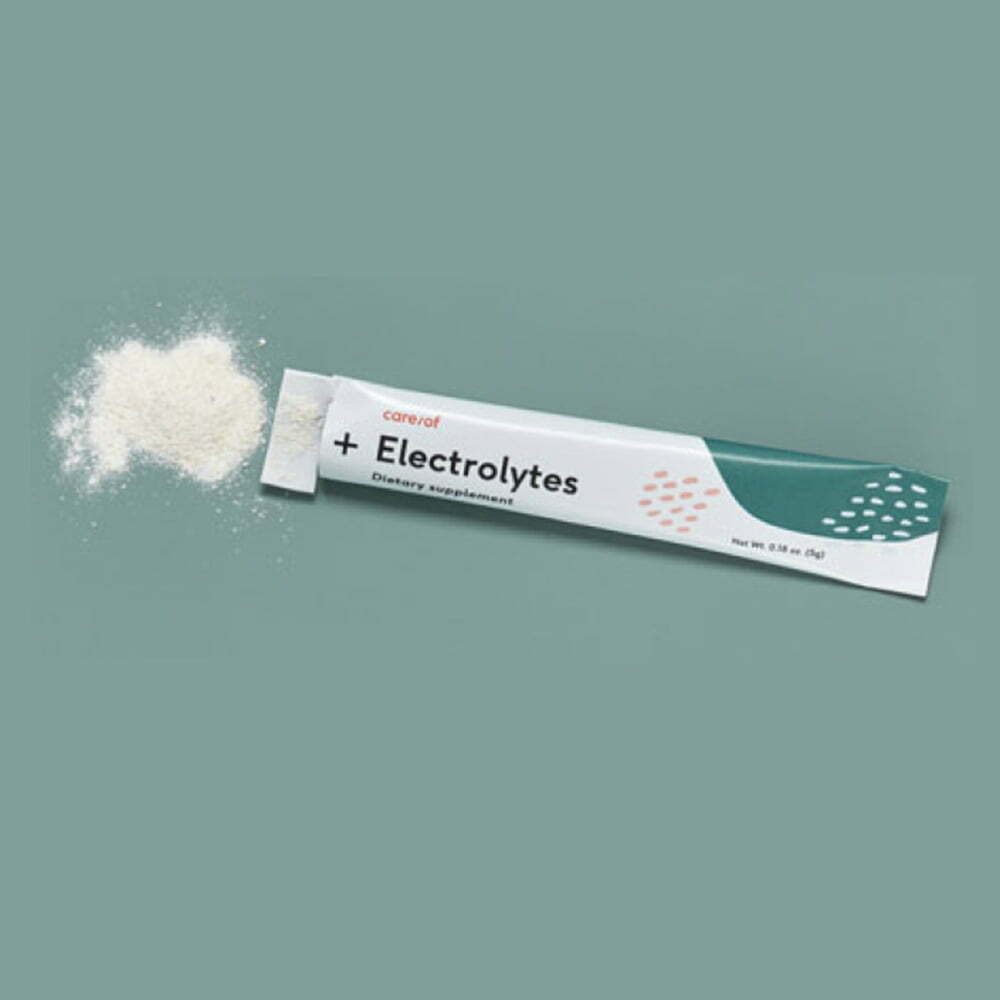
    Care Of sells a line of products, including their best seller, which is the personalized daily vitamins, name-stamped for individualism and all. Their packages are all artsy with abstract minimalism, and most are sold as single-packs, like their powder supplements. The clean, refreshing, and simple product label design is aesthetically pleasing, and the packs are easy to keep on hand.

    Health supplement packaging and wellness products have increasing market trends as consumers look for award winning products on the market. Catch their eye on the shelves with packaging that is clean, refreshing, and convenient. Care Pac offers a variety of pouches, sachets, and packs that are perfect for daily vitamins, powder supplements, single-use vitamins, and more. Check out their product line to figure out the right packaging for your small business.