Author: Jecris G

  • 5 Steps of Design Thinking for Flexible Packaging

    5 Steps of Design Thinking for Flexible Packaging

    5 Steps of Design Thinking for Flexible Packaging

    What is the design thinking process?

    Design thinking is a design process for creative problem solving that helps design teams and product developers move past the ‘good ideas’ of their initial brainstorming session and towards a final design that actually solves problems. In the design thinking process, design teams use design thinking frameworks to identify problems and pain points, challenge their assumptions, and create solutions to test during the testing phase. 

    At its core, this design thinking framework takes a user centric approach vs rapid prototyping, so their product is solving complex problems in a human centered manner. Put simply, it is one of the best ways to find the very best solutions for your customers.

    Sometimes referred to as “design thinking workshops”, the design team often gathers together to work through the five stages of this specific creative process. The design thinking process is an iterative process that’s divided into five phases: empathize, define, ideate, prototype, and test. In this blog, we’ll walk you through the steps of this popular design thinking model, and how each phase works to find creative solutions to as many ideas as possible. 

    Phase 1: Empathize

    During the first stage of this linear process, marketers try to understand consumer needs, attitudes, and aspirations. During the empathize stage, stakeholders in the company must put aside their assumptions and stereotypes, and gather real insights that are relevant to their product. Standard activities that occur during the first stages of design thinking include observations and qualitative interviews.

    Observations

    During this activity, stakeholders and marketing managers go where their users go and see firsthand what they are about. Considered a form of user research, the idea here is to observe real users and come up with creative ideas on how to best solve their problems.

    Qualitative interviews

    Here, stakeholders will hold one-on-one interviews with their users to gather their thoughts and opinions on the topic in question. Since the five steps of design thinking is a human centered design process, it only makes sense that real user feedback contributes to business success. 

    Phase 2: Define

    Once you’ve completed the first stage, it’s time to move onto the second stage of the design process: the define stage. During the define stage, you’ll define the user problem you want to solve with your creative solutions. First, gather all of the insights and new ideas you’ve compiled during the first stage and look for themes, patterns, or other findings.

    By this point, you should have a deeper understanding of what your target users are looking for, including their pain points and diverse ideas. Use clustering, themes, and problem statements to identify the most painful issues faced by your customers and how you want to solve them moving forward.

    Phase 3: Ideate

    The third stage is the ideation phase. During this phase, you collect as many potential solutions and innovative ideas as possible, so your team can work through them and decide which ones they want to test during the usability testing phase. Some common activities that occur during the ideation stage of the design process include brainstorming and the “worst possible idea” activity. 

    Brainstorming

    This is an incredibly important part of the ideation phase. During this step, the design team considers what they learned in the previous stage. They take those findings and bring their unique perspectives, experiences, and insights to the table to brainstorm some potential solutions. Ideally, you’ve invited individuals of different ages, economic backgrounds, and racial demographics to the brainstorming session.

    “Worst possible idea”

    This might sound counterintuitive, but coming up with the worst possible solutions or scenarios is one of the key steps of the design thinking process. The ideation phase is as much about finding a solution to complex problems as it is uncovering why certain ideas are the “worst.” Simply put, you cannot solve complex problems without the entire team using creative problem solving to identify additional problems.

    Phase 4: Prototype

    Once you’ve interviewed real users and completed the previous stages, it’s time to move onto the next step of this iterative process: the prototyping stage. By this point, you should have already taken the time to generate ideas with your entire time, so now it’s time to prototype. Typical activities during these stages of design thinking include creating a creative vision board, holding inspirational rapid-sketch sessions, and gathering your design thinkers together for design sprints. 

    Phase 5: Test

    Once you’ve gone through the empathize, define, ideate, prototype phases, it’s time for the final phase of the design thinking process: user testing. By this point, you should have a user centered design that solves the problems of real users. Now, it’s time to put them to the test during this final stage. Although it’s a linear process and all the phases are important, user testing is one of the key steps and this stage of the design process should not be rushed. 

    Observational testing phase

    During this exercise, you observe your target users interacting with your user centered design. The goal here isn’t just to confirm if your design works as intended, but to gain a deeper understanding of the user centric behaviors of your customer. Your design thinkers should look for any problems or issues with how they interact with your product, as you may need to focus on producing scaled down versions if real users are having difficulty interacting with your product.

    Iterative testing phase

    Once you’ve observed real users interacting with your product, it’s time to make improves and test again. Think about what your entire team learned during the empathize stage and the ideation stage (+ the other five stages of the design process), and consider user feedback you may have received from your target users during all the five stages. Whether the end result is scaled down versions of your initial idea or something that requires minimal effort to open or close, it’s important to take a solutions based approach to the iterative testing phase. 

    CarePac: Your partner in innovative packaging designs

    Now that you understand the empathize, define, ideate, prototype phases and how they impact the testing phase, you may be wondering what’s next? Once you’ve used the design thinking process and user feedback to come up with innovative solutions to your customers problems, you’ll need to find a partner that can package your product.

    Well, you’re in luck. With decades of experience in the packaging industry, we’re extremely familiar with the design thinking process. In fact, we ideate, prototype, and test all our own products using the design thinking process. Contact us today to learn at which stage of the design thinking process we should be included in!

    Design thinking process FAQs

    Here are some common questions we receive about this particular design thinking methodology:

    What are the five stages of design thinking? 

    The five stages of the design thinking process are empathize, define, ideate, prototype, and test. The design process must be completed in order since it’s an iterative process where each phase builds upon the previous stage.

    What are the benefits of design thinking?

    The benefits of using the design thinking process include increased innovation among design teams, enhanced solving of complex problems, and using user research to truly understand the needs of your customers. If you’re completing the ideate, prototype, and test phases appropriately, you’ll be taking a solution based approach to your customers problems and fixing them in human centric ways. 

    Why is design thinking so effective?

    The design thinking process is so effective because it uses user feedback and user testing to find innovative solutions to complex problems. Since it’s a user centric approach that’s focused inherently on finding new concepts to ideate, prototype, and test, many feel that it’s an incredibly effective way to generate new ideas that truly solve problems.

    What is the define phase of the design thinking process? 

    The define phase is the second stage of the design thinking process. Since the design thinking process is a linear process, you simply cannot skip one phase before going onto the next. It’s goal is to aid with problem solving and find alternative solutions to common problems. 
    Lets Get Started

    Made In The USA

    Full PouchCustomization

    Scalable Printing Digital & Plate

  • Rustic Packaging Ideas & Inspiration: Enhance Your Designs

    Rustic Packaging Ideas & Inspiration: Enhance Your Designs

    Rustic Packaging Ideas & Inspiration:

    Enhance Your Designs

    What is rustic design?

    If you like the rustic touch of brown paper bags, DIY ribbons, and items beautifully packaged in a paper or cardboard box, you’ll love the elegance and value of rustic design. Not only does this fantastic design style create an unforgettable unboxing experience for your customers, but it puts an emphasis on the natural beauty we can already find all around us.

    In interior design, rustic design typically includes aesthetically pleasing elements, like green pine tree branches, ornaments made from wood, lots of warm colors and patterns, and ornaments made from dried flowers and other supplies from nature that help present a personal touch in your home or store.

    But did you know rustic elements can make their way into product packaging, too? From wood imprints on a package, rustic gift wrapping, adding DIY eco friendly upcycled cloth or clothing scraps to jars and lids, and using lots of neutral colors on your boxes, there are several ways you can give your packaging a rustic touch.

    So, get inspired and learn how to impress your loyal brand customers with fun and rustic packaging. Read on to learn more about how we can create the perfect packaging for your brand.

    Tips for giving your product packaging a rustic touch 

    Use a warm color palette

    When you think about rustic gift wrapping or interior design, which colors do you think of? The browns of Kraft paper, the muted greens of a pine tree, or the beige of a cool winter morning. If you’re selecting a color palette, get creative: look at what other similar products are doing with their branding, and really think about which colors would make you feel special.

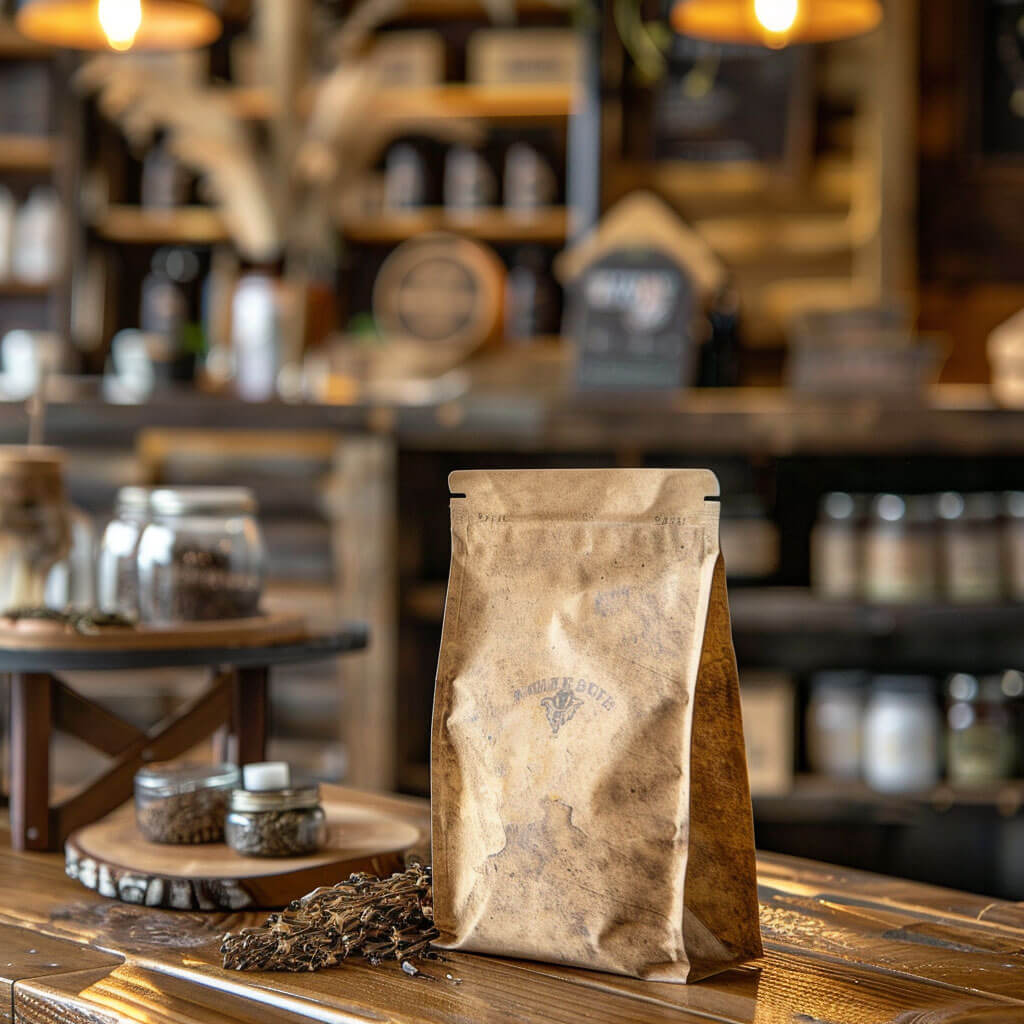
    When in doubt, opt for Kraft paper or brown paper bags

    Packaging your products in Kraft paper, especially if it’s eco friendly or DIY, is one of the easiest ways to incorporate rustic design elements into your packaging. Even better if you add natural decorative pieces into the packaging, like a fresh pine cone from a pine tree or a bundle of dried cranberries. Think about the things that make you think “rustic” and incorporate them into your packaging. They’ll be sure to help your business stand out!

    Natural cardboard with black printing

    Another relatively easy way to enhance your packaging by giving it a rustic feel is to opt for natural, brown cardboard boxes. Then, print your brand’s logo, business catch phrase, or showcase your differentiating factors with black ink. Rustic design doesn’t take a lot of creativity or supplies: keep it simple, use recycled or value materials when you can, and keep an eye on what other brands are doing.

    Add handcrafted design elements to your rustic gift wrapping

    If you prefer to avoid incorporating natural elements into your packaging (like pine cones or branches), consider adding handcrafted ribbons, a vintage stamp, handmade gift tags, or other DIY elements to your business packaging. Not only is this a perfect way to create a rustic feel with your packaging, but it also lets your customers know that the package was designed and put together by a human. Incorporating a human touch like this is especially impactful during the holiday season. 

    Holiday-themed rustic packaging

    Rustic packaging is especially impactful during the holiday season, as it brings customers back to their natural roots (vs. the consumerist culture they’re immersed in.) Here are some tips for incorporating rustic themes into your Christmas wrapping paper and packaging:

    • Use muted Christmas colors in your wrapping paper (i.e., lighter colors of green and red)

    • Opt for using gold and black ink on your Kraft paper, ribbons, or cardboard gift packaging

    • Incorporate your logo, patterns, or brand name onto the rustic gift wrapping or boxes with an eco friendly stickers

    • When in doubt, err on the side of minimalism vs. doing too much with your boxes and packaging

    • Consider creative decoration aspects, like embossing or using a hot stamp onto your packaging.

    The above packaging design ideas don’t need to be limited to special occasions or holidays, either. Any gift is a special gift, and you can help your customers feel inspired and complete by getting creative with your DIY packaging and stickers. Whether they’re gifting for a birthday, holiday, or some other special events, rustic gift wrapping can help finalize the perfect gift. 

    How CarePac Enhances Rustic Packaging Designs

    At CarePac, we live and breathe product packaging of all types, from the complex patterns and elegance of over the top packaging to the simple charm of rustic packaging. We can tailor our packaging designs to meet your unique needs, and use only the highest quality materials and printing techniques to achieve your desired aesthetics. Our customers come first, and our designers are ready to get creative and create the fun, charming, and fantastic package you’ve always dreamed of.

    The appeal and benefits of rustic packaging is undeniable, especially around Christmas time, and we’re ready to be your partner in flexible package design. Need packaging that stands out on the shelf? You’ve come to the right place! From paper packaging to plastic packaging, and everything in between, we’re leaders in the packaging market and are ready to make your idea a reality.

    Contact us today if your business is ready to get started.

    Lets Get Started

    Made In The USA

    Full PouchCustomization

    Scalable Printing Digital & Plate

  • The Science of Laser Cutting in Packaging Design

    The Science of Laser Cutting in Packaging Design

    The Science of Laser Cutting in Packaging Design

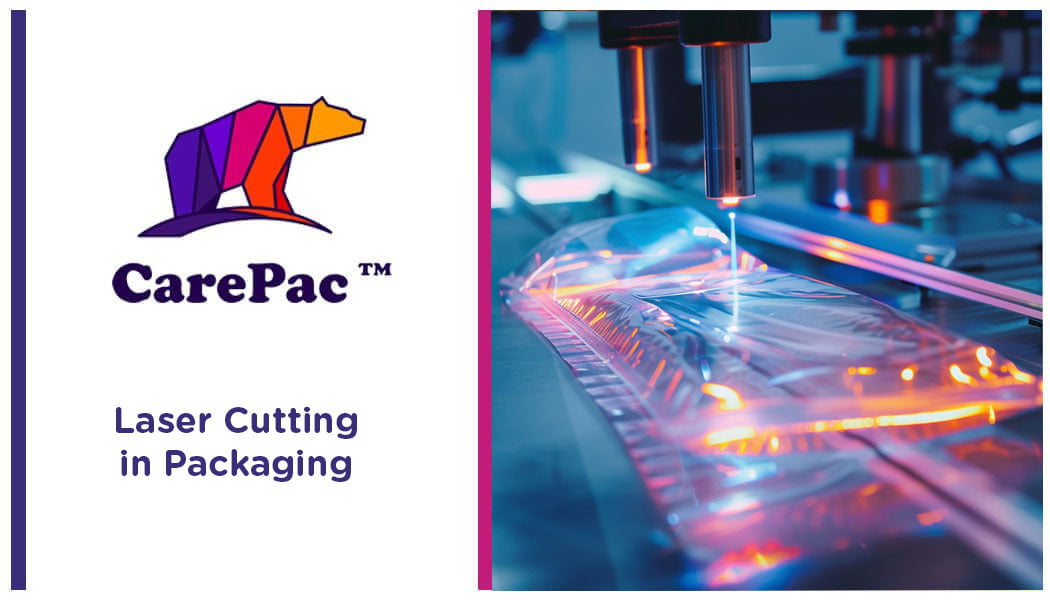
    Laser cutting is an extremely precise and versatile method that uses a laser beam to cut various shapes or objects out of plastic, acrylic, or other materials, regardless of material thickness. In packaging design, specifically, laser cutting with a focused laser beam ensures dimensional accuracy, and is more accurate than many other types of cutting, regardless of material thickness.

    Additionally, laser cutting with a laser beam is a cutting edge technology often used to cut materials for prototyping or low-volume production runs.

    Sometimes referred to as laser scoring, laser cutting also means that packages can be opened effortlessly because they’re constructed with materials that provide clean and easy opening. If you sell or manufacture products that will be opened by a consumer (think: candy, coffee, or any other type of snack), then our laser cutting capabilities should be considered. 

    How Does Laser Cutting Work?

    As you probably guessed, the laser cutting process works by using a laser cutting machine and a high-powered laser beam to cut materials. These laser beams don’t cut or melt and don’t waste heat or have high power consumption; instead, the laser beam vaporizes the material which prevents it from catching fire or degrading. The laser wavelengths can be visible or invisible to the eye, depending on the light spectrum of the wavelength. The laser beams pass through several mirrors before converging at a single spot.

    A special laser cutting software in the laser systems moves the laser head/module back and forth over different materials via an automated process, per the settings that are entered into the computer controlled machine via computer numerical control (CNC).

    As soon as the laser beam lands on the intended target, the temperature increases, causing sublimation. Depending on the strength of the laser beams, this process can be done in one pass or may require several passes to cut materials with the laser head. 

    What Materials Can Be Cut By a Laser Beam?

    As a packaging and pouch provider, we typically use the focused laser beam to cut through plastic material, paper, or cardboard, but laser cutting can be used to cut through a various materials, including very thick materials and thin materials, too.

    Since not all materials are compatible, particularly thicker materials, here just a few other materials that can work with laser cutting technologies to create extremely precise cuts. From wood to metals, learn about the various materials that can be used with a laser generator:

    Laser cutting machines are often used to cut through wood, regardless of the material thickness. If you’ve ever held a wood Christmas ornament or seen cutting boards with letters engraved into it, these are two examples of how laser cutting is often used with wood.

    Acrylic

    If your application requires an attractive, clean, and beautiful finish, using acrylic in tandem with laser cutting is a good choice. Awards, trophies, and decorative items and figurines that are made out of acrylic are often the result of laser cutting.

    Plastic

    This is where CarePac shines! Some of the plastic materials that are suitable for use with a laser cutting machine include: acrylic (PMMA), polystyrene (PS), polyethylene (PE), and polypropylene (PP), just to name a few. Different plastics have different melting points, so always check with a professional about material compatibility.

    Fabric

    Since laser cutting can create extremely clean cuts, it can be used to cut shapes out of different types of fabric, including cotton, silk, polyester, and leather.

    Paper and cardboard

    Have you ever seen a beautiful paper lantern with intricate shapes cut into it, or seen a beautiful wedding invitation with lots of embellishments? Chances are both of these items were created by using laser cutting in combination with paper or cardboard materials.

    Metals

    Since metal is so hard, it almost always requires a high powered pulsed laser beam to cut through it. For cut metal, specifically, using fiber lasers is ideal, since this type of laser is high power and produces very high energy laser pulses. Need to cut metal? Using a high power laser is key. 

    Why Laser Cutting for Custom Pouches?

    When it comes to laser cutting for custom pouches, there are a few things that separate this type of industrial cutting technology from others. Here are just a few of the core advantages of laser cutting:

    Extremely precise

    Laser cutting is perhaps the most precise cutting process, especially when compared to other manufacturing processes. If accuracy and preciseness is important, using laser technologies is the best choice.

    Very efficient

    Producing products using laser cutting is extremely efficient. The metal cutting industry, in general, has tried-and-true processes in place that can create intricate designs with laser processing in a very short mount of time.

    Customizable

    One of the best parts of partnering with a laser cutting business for your marketing materials or products is that it’s highly customizable. Since the high powered laser only cuts where you tell it to, cutting thick materials is just as easy as cutting thin ones.

    Flexibility

    The laser cutting process is often used for short runs and prototyping, so you won’t be tied to large orders. This is one of the key advantages of laser cutting machine.

    Now that you know more about the advantages of laser cutting, read on to learn more about two different manufacturing processes that use laser cutting: laser perforation and scoring. 

    Laser Perforation & Scoring

    With laser perforation and scoring, your barrier films can be made “breathable”, meaning you can package things that need to breathe, like fresh-cut produce. Some common applications for laser scoring include:

    • Fresh-cut produce

    • Steam release for microwaveable packaging, like popcorn.

    • High-altitude burst elimination

    • Venting of excess air in bulk packaging that can build up over time.

    Since laser scoring requires no tooling, it has a lower up-front cost, making it a viable alternative to more traditional plasma cutting methods. 

    Why Choose CarePac for Your Laser Cutting Needs

    With decades of experience in the flexible packaging industry, CarePac is your go-to source for all your laser cutting needs. We have access to the highest-quality laser cutting machines and technology, including fiber lasers, transverse flow lasers, and high power CNC machines. Our laser cutting services are affordable, efficient, and we proudly perform all work in the USA.

    Our CareDesign team is on hand to answer any questions you may have, from the desired cutting width to how our high energy fiber laser works. Contact us today to get your project started.

    Laser Cutting FAQs

    What materials can be laser cut for packaging purposes?

    A variety of different materials can be used with a seed laser, including paper, plastic, cardboard, stainless steel, and acrylic.

    Can laser cutting services be used for all types of packaging designs?

    Yes. As long as the high energy laser beam is compatible with the material you’re using, our laser cutting services can be used for all types of packaging designs.

    What are the cost implications of opting for laser-cut packaging?

    Though the cost of laser cutting services varies greatly depending on on the laser power and whether it’s a fiber laser or uses radio frequency energy, it does have its advantages in that it has low start-up costs.

    What is the turnaround time for producing laser-cut packaging?

    Laser cutting services typically take 2-4 days, but this depends on a variety of factors, including the project size, the types of laser used, and the type of material (i.e., stainless steel is more expensive for laser cutting machines to cut through than other materials.) 

    Lets Get Started

    Made In The USA

    Full PouchCustomization

    Scalable Printing Digital & Plate

  • CareFoil-PNAR

    CareFoil-PNAR

    CareFoil-PNAR

    Overview

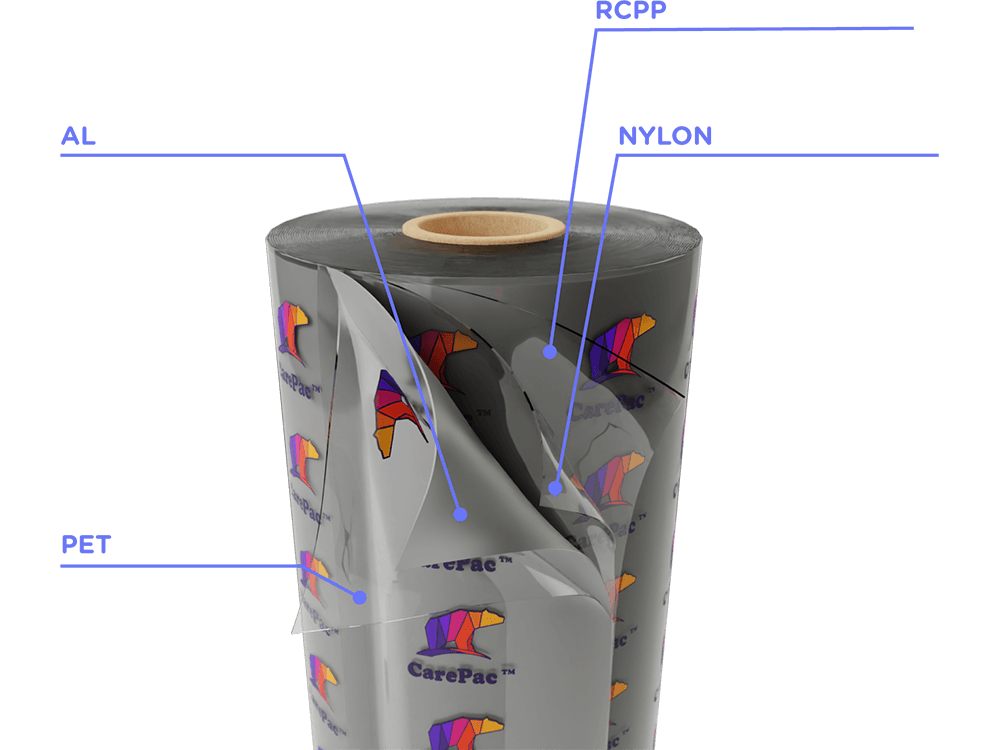
    A four layer lamination tested for use in retort applications. lamination incorporating RCPP sealant layer, Foil, and BOPA Nylon with an outer Pet printing layer. May be suitable for high performance requirement environments such as freezing, retort, and extended shelf life. This film is a modified version of our PET/AL/LLDPE CareFoil material. The film has heat resistance which has been tested to meet FDA standards for polypropylene and polyethylene used in articles that contact food. Meets SGS, FDA,QS, EC standards.

    Note: The performance of any film will be influenced by a number of factors and testing must always be performed to ensure the film meets the use.

    Relative Performance Indications

    Oxygen Barrier

    Moisture Barrier

    Light Barrier

    STrength

    Heat Resistance

    Freezer Storage

    Material Data

    Here are some of the common indicated properties for this film.

    ITEM

    VALUE / RESULT / INDICATION

    Final Material Composition 

    PET/BOPA/AL/RCPP 

    Common Available Thickness Range 

    5-7 mil 

    Tested as 

    Pouch 100mmx400mm 

    Thickness Variation

    +1.4~ +7.6  

    Length Variation 

    -1.0mm-~0 

    Width Variation 

    -1.0 

    Width Deviation of heat seal  

    0~+1.0 

    Tensile Strength  

    Long 57 N  | Landscape 57 N 

    Elongation at Break 

    159 % / 96% 

    Right Angle Tear 

    13.1N | 13.3 N 

    Peel Strength 

    W.V.T.R

    Sealing Force 

    8.5N | 9.1 N 

    Anti-Pendulum Impact Strength 

    29.9N | 29.1 N 

    MVTR 

    1.88 J 

    OTR 

    3.74 g/(·24h) 38C @ 90%RH 

    Heat Resistance 

    44.8 ³/(·24h·0.1MPa) 23C @ 40%RH) 

    Cold Resistance 

    Pass 

    Oil Resistance 

    95% 

    Pressure Resistance 

    Tensile force change rate 0.97 elongation force change 7.1 

    Drop Performance 

    Pass 140g load 400N 1min 

    Sensory Index 

    Pass 140g 500mm 

    Evaporation residue; 65% Acetic acid 

    Pass No Odor, Turbidity and discoloration  

    Evaporation residue; 65% Ethanol 

    Pass 

    Evaporation residue; Ethane 

    Pass 

    Heavy metal (Pb) 4% Acetic acid 

    Pass 

    Toluene diamine(4% Acetic acid) 

    Pass 

    Extractable fraction in n-hexane 

    Pass 

    Soluble fraction in xylene 

    Pass 

    All values indicated regarding film properties or characteristics, were provided by our film supplier and are given as an indication and should be considered as average indicative values. This document is based on our film supplier statements and / or independent lab testing, data from multiple tests, or different film suppliers of the same film family may be combined in the above table. While unexpected, it is possible that the validity of the statements could change without notice.

    Environmental Impact

    This material is a multi-layer laminated plastic and will typically fall into the check-locally, or store drop off category. 

    Property
    Sample Data

    Recyclable

    Multi-Layer Check Locally

    PCR Option Available

    No

    At Home Compostable

    No

    Commercial / Industrial Compostable

    No

    Recyclability and composability varies by jurisdiction. Composability claims are limited by law, and vary by jurisdiction, consult a qualified professional in your state. 

    Compliance

    Compliance is important, and here are CarePac we can support your compliance needs with extensive film supplier and lab testing data.  
     

    BPA FREE

    FDA Food Approved

    PROP 65

    Property
    Sample Data

    CEPE/EuPIA

    Manufactured in accordance with

    Cal. H&S (25214.16)

    Compliant

    PFAS – perfluoroalkyl and polyfluoroalkyl § 37-0209, RCW 70A.222.070

    Does not knowingly add

    Prop 65 (OEHHA)

    Does not contain listed substances

    SR 817.023.021

    Not in excess of overall or specific migration

    EU directive 10/2011/ED

    Compliant

    EU directive 1935/2004

    Compliant

    FDA 21 CFR 73

    Compliant

    Cal. H&S (25214.16)

    Compliant

    RoHS Directive 2011/65/EU

    PASS

    Compliance information above is derived from lab testing, or film supplier statements. Independent verification is advised, and Lot specific testing available

    Related Materials

    CareFoil-PAP

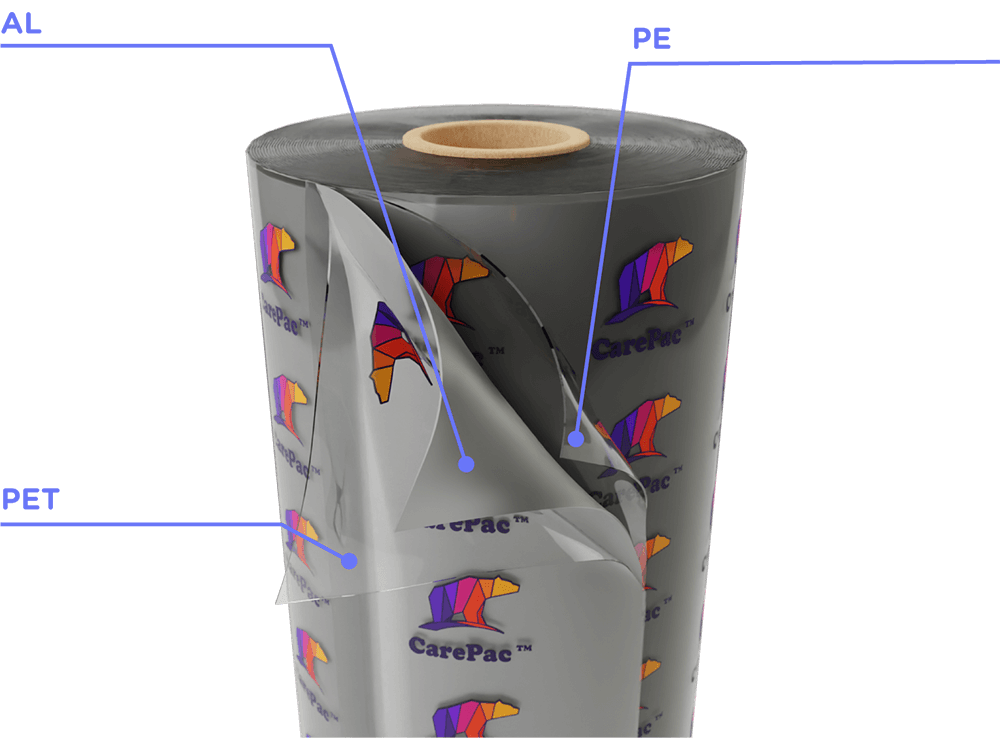
    CareFoil-PAP is our high barrier film structure which incorporates encapsulated aluminum foil as the barrier layer of this film. The exterior high grade PET serves as a great base for printed bags. The interior PE sealant layer is non-reactive and is heat sealable. CareFoil-PAP is great for FDA applications where long shelf life, or susceptibility to spoilage is a concern. 

    CareClear-PNP

    This material has a higher than average moisture and strength, with good oxygen and gas barrier. As this is a clear product it has limited light barrier potential but does have good heat resistance. Enhanced heat resistance could be obtained with CareClear-PNC is required by the use application.   

  • CareFoil-PANP

    CareFoil-PANP

    CareFoil-PANP

    Overview

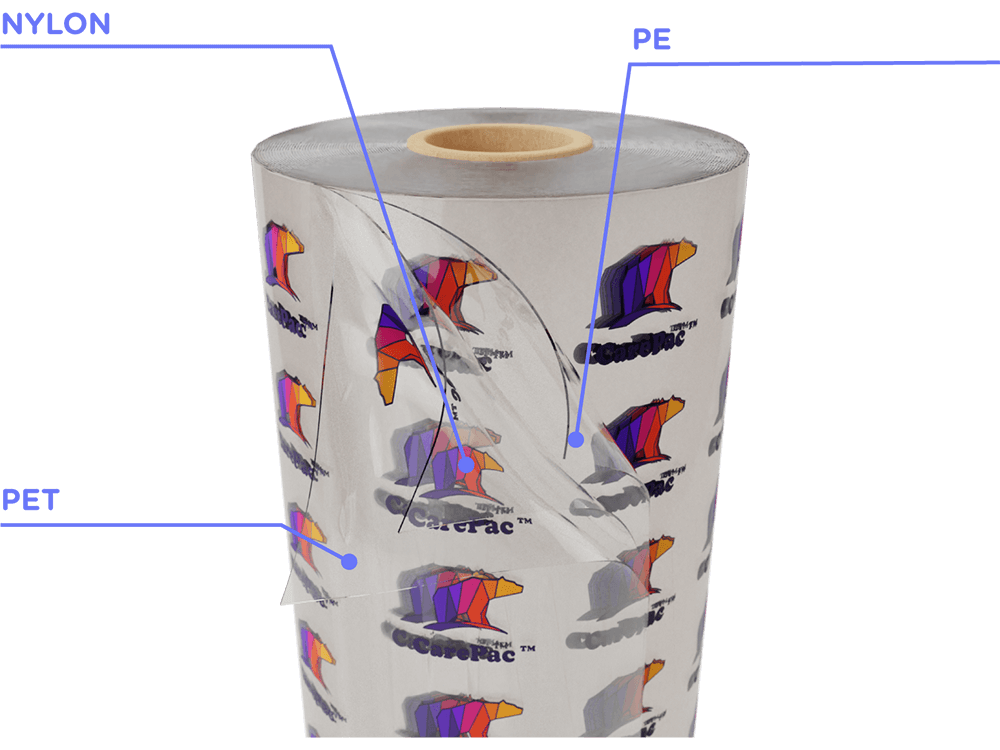
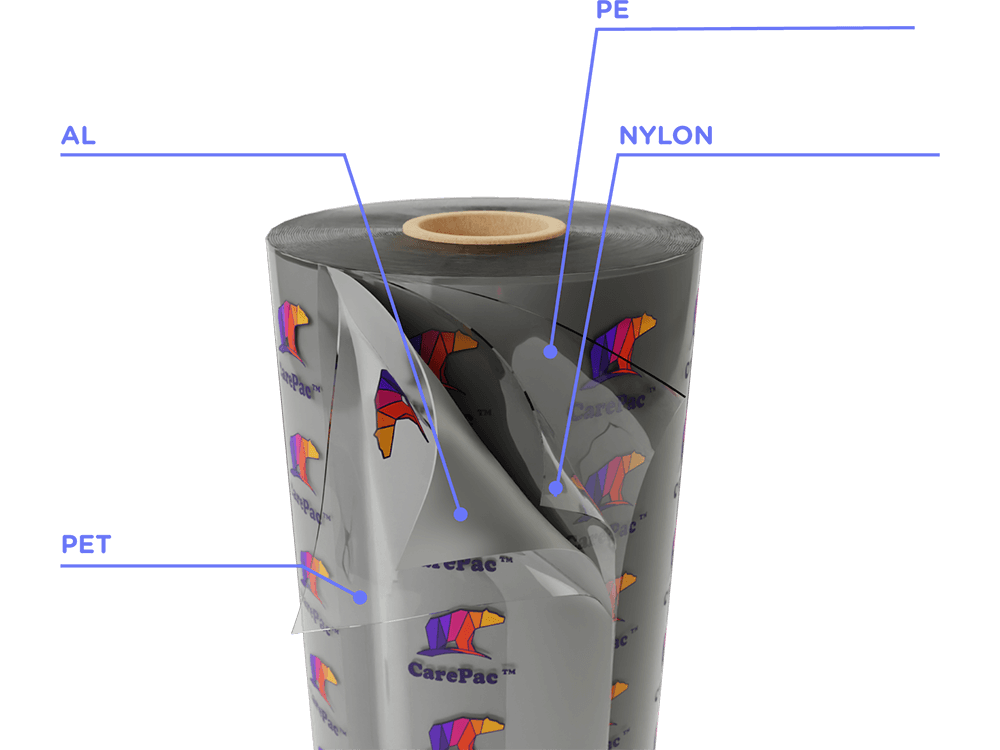
    This film is a multi-layer laminated BIAX film that is a strong high barrier aluminum nylon combination built for tough food and industrial applications. CareFoil-PANP is a high strength member of our CareFoil material line of foil based barrier films. This FDA approved film does not stretch due to the orientation of layers during the laminating process. High barrier applications such as freeze-dried foods, MRE and similar pouches.

    Note: The performance of any film will be influenced by a number of factors and testing must always be performed to ensure the film meets the use.

    Relative Performance Indications

    Oxygen Barrier

    Moisture Barrier

    Light Barrier

    STrength

    Heat Resistance

    Freezer Storage

    Material Data

    Here are some of the common indicated properties for this film.

    ITEM

    VALUE / RESULT / INDICATION

    Material Composition 

    PET/AL/NY/LDPE 

    Available Thickness Range 

    4 – 8 mil 

    Tested Caliper Thickness 

    5 Mil

    Tested As

    Roll Film 

    MVTR 

    .0005  gms/1002 in./24 hrs 

    OTR 

    .0006 cc/1002 in./24 hrs 

    Tensile Strength 

    24#/inch MD / 24#/inch CD 

    Tearing Strength 

    371g MD/ 352g CD 

    Sealing Strength 

    8523g/in 

    All values indicated regarding film properties or characteristics, were provided by our film supplier and are given as an indication and should be considered as average indicative values. This document is based on our film supplier statements and / or independent lab testing, data from multiple tests, or different film suppliers of the same film family may be combined in the above table. While unexpected, it is possible that the validity of the statements could change without notice.

    Environmental Impact

    This material is a multi-layer laminated plastic and will typically fall into the check-locally, or store drop off category. 

    Property
    Sample Data

    Recyclable

    Multi-Layer Check Locally

    PCR Option Available

    No

    At Home Compostable

    No

    Commercial / Industrial Compostable

    No

    Recyclability and composability varies by jurisdiction. Composability claims are limited by law, and vary by jurisdiction, consult a qualified professional in your state. 

    Compliance

    Compliance is important, and here are CarePac we can support your compliance needs with extensive film supplier and lab testing data.  
     

    BPA FREE

    FDA Food Approved

    PROP 65

    Property
    Sample Data

    CEPE/EuPIA

    Manufactured in accordance with

    Cal. H&S (25214.16)

    Compliant

    PFAS – perfluoroalkyl and polyfluoroalkyl § 37-0209, RCW 70A.222.070

    Does not knowingly add

    Prop 65 (OEHHA)

    Does not contain listed substances

    SR 817.023.021

    Not in excess of overall or specific migration

    EU directive 10/2011/ED

    Compliant

    EU directive 1935/2004

    Compliant

    FDA 21 CFR 73

    Compliant

    Cal. H&S (25214.16)

    Compliant

    RoHS Directive 2011/65/EU

    PASS

    Compliance information above is derived from lab testing, or film supplier statements. Independent verification is advised, and Lot specific testing available

    Related Materials

    CareSilver-PVNP

    The versatile nature of our packaging films and our position as a supplier makes it a unique choice for both industrial or FDA applications as it is free of toxins such as TSE, Sulfur, Phthalates, and BPA. It is specifically designed to maintain the fresh texture of FDA Food Items like dried goodssnacks & chipspet food (cats, birds, and all kinds of dog breeds), and its low thermal permeability rate, as well as the UV resistance, makes it an ideal choice as a pouch for bird seeds, fertilizers, detergents and many more products.

    CareClear-PNP

    This material has a higher than average moisture and strength, with good oxygen and gas barrier. As this is a clear product it has limited light barrier potential but does have good heat resistance. Enhanced heat resistance could be obtained with CareClear-PNC is required by the use application.   

  • CareFoil-XAP

    CareFoil-XAP

    CareFoil-XAP

    Overview

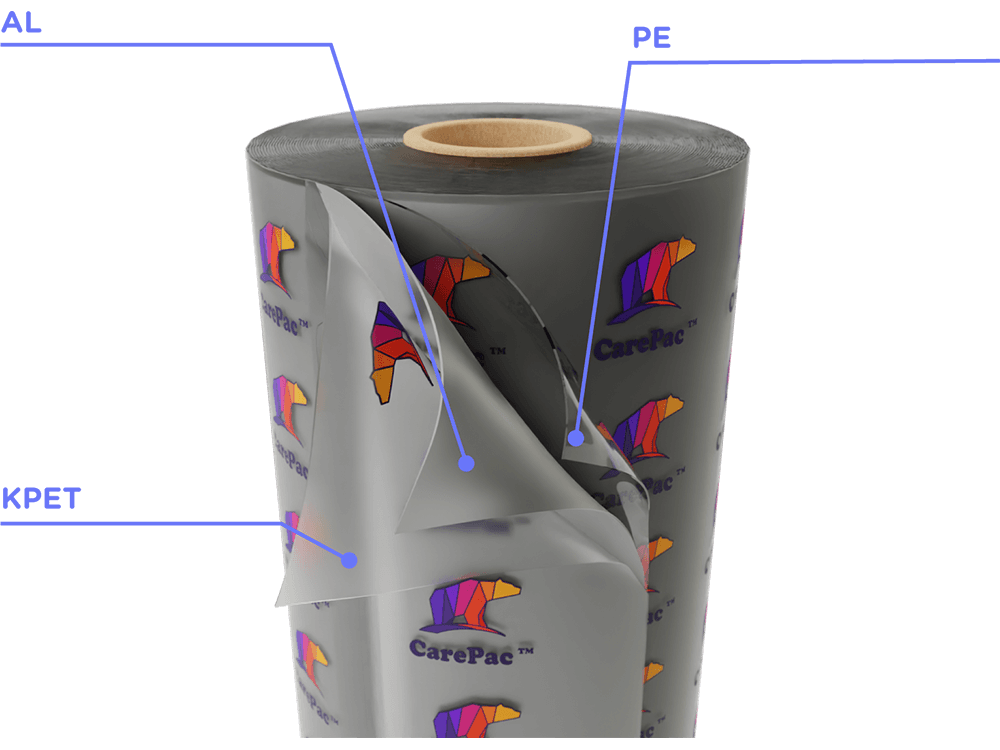
    This film is a multi-layer laminated film that combines strong and durable KPET with high barrier aluminum foil material designed for high barrier food and industrial applications. CareFoil-XAP adds PVDC coated PET to the base Carefoil PET/foil/PE structure. This FDA approved film does not stretch due to the orientation of layers during the laminating process. This film is often used when a die cut window is added to a pouch to offset the loss of barrier from adding a window into the Aluminum foil. High barrier application such as freeze dried foods, industrial powders and light sensitive contents.

    Note: The performance of any film will be influenced by a number of factors and testing must always be performed to ensure the film meets the use.

    Relative Performance Indications

    Oxygen Barrier

    Moisture Barrier

    Light Barrier

    STrength

    Heat Resistance

    Freezer Storage

    Material Data

    Here are some of the common indicated properties for this film.

    ITEM

    VALUE/RESULT

    Material Composition 

    KPET/Alu/LLDPE 

    Available Thickness Range 

    4 – 8 mil 

    Tested Caliper Thickness 

    4.0 mil (film) ~ 5.18 mil (converted) 

    Tested As  

    Film and converted 130x205x65 @ 5mm 130um 

    MVTR – Film 

    0.0003 (film), 0.06 (converted) gms/1002 in./24 hrs  

    OTR –  

    0.0006 (film), 0.07 (converted)  cc/1002 in./24 hrs 

    Tensile Strength 

    >80 N/mm2 

    Thrust Strength  

    3.5J 

    Elongation at Break 

    250% (MD), 150% (TD) 

    Tearing Strength 

    15 (MD), 12 (TD) N 

    Sealing Strength 

    70(L), 70(R), 89(B) KGF/15mm 

    SR 817.023.021 

    Not in excess of overall or specific migration 

    Prop 65 (OEHHA) 

    Does not contain listed substances 

    RoHS Directive 2011/65/EU 

    PASS 

    Residual Solvent (converted total) 

    PASS <=0.002 (<.4 standard) 

    All values indicated regarding film properties or characteristics, were provided by our film supplier and are given as an indication and should be considered as average indicative values. This document is based on our film supplier statements and / or independent lab testing, data from multiple tests, or different film suppliers of the same film family may be combined in the above table. While unexpected, it is possible that the validity of the statements could change without notice.

    Environmental Impact

    This material is a multi-layer laminated plastic and will typically fall into the check-locally, or store drop off category. 

    Property
    Sample Data

    Recyclable

    Multi-Layer Check Locally

    PCR Option Available

    Yes

    At Home Compostable

    No

    Commercial / Industrial Compostable

    No

    Recyclability and composability varies by jurisdiction. Composability claims are limited by law, and vary by jurisdiction, consult a qualified professional in your state. 

    Compliance

    Compliance is important, and here are CarePac we can support your compliance needs with extensive film supplier and lab testing data.  
     

    BPA FREE

    FDA Food Approved

    PROP 65

    Property
    Sample Data

    CEPE/EuPIA

    Manufactured in accordance with

    Cal. H&S (25214.16)

    Compliant

    PFAS – perfluoroalkyl and polyfluoroalkyl § 37-0209, RCW 70A.222.070

    Does not knowingly add

    Prop 65 (OEHHA)

    Does not contain listed substances

    SR 817.023.021

    Not in excess of overall or specific migration

    EU directive 10/2011/ED

    Compliant

    EU directive 1935/2004

    Compliant

    FDA 21 CFR 73

    Compliant

    RoHS Directive 2011/65/EU

    PASS

    Compliance information above is derived from lab testing, or film supplier statements. Independent verification is advised, and Lot specific testing available

    Related Materials

    Carefoil-PANP

    This film is a multi-layer laminated BIAX film that is a strong high barrier aluminum nylon combination built for tough food and industrial applications. High barrier applications such as freeze-dried foods, MRE and similar pouches.

    CareSilver-XVP

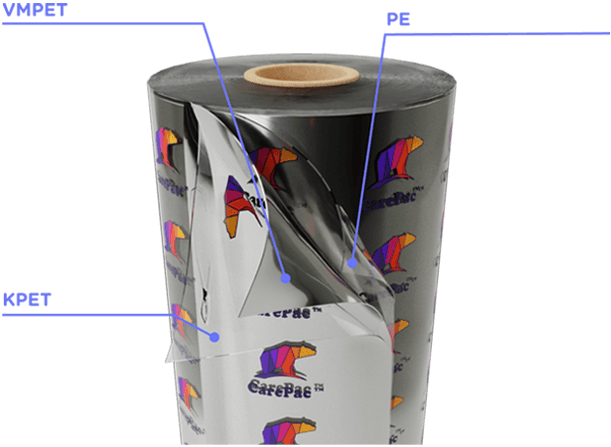
    Great for Food and industrial uses, the film. The outermost layer is PVDC coated PET laminated to a metalized PET producing a lamination structure with enhanced barrier potential. This material is a good choice when the pouch design requires advanced printing techniques such as intricate designs that cannot be diecut into a aluminum foil based film. 

  • CareKraft-KAP

    CareKraft-KAP

    CareKraft-KAP

    Overview

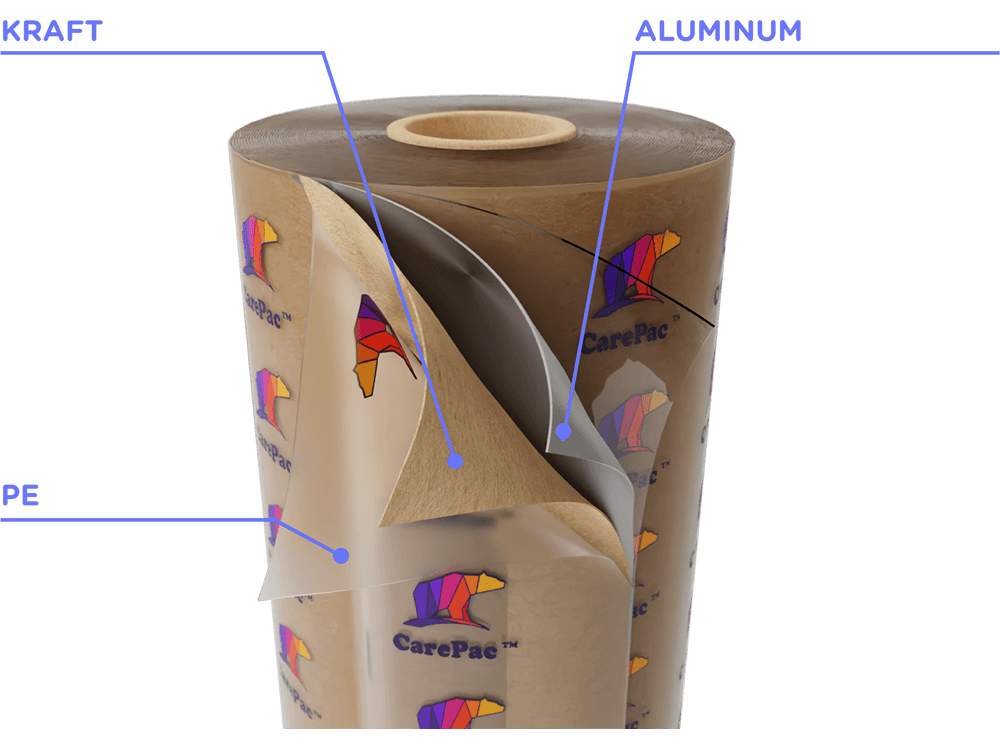
    This FDA approved film is used extensively in food industry where good MVTR and OTR is required and easy entry into pouch is necessary. The brown natural Kraft exterior makes the structure rigid, but it tears easily in both directions. The foil provides excellent barrier to extend shelf life and protect the taste profile. The polyethylene sealant layer is extruded brown to mask the color of the foil. This unique design element makes the PF500 BRN a good fit for customers that do not want to see foil in their packaging but need the protection that it exhibits. 

    It can be converted in many ways: 2-seal pouch, 3-seal pouch, side gusset, stand up pouch and tubing. Features include: recloseable zipper, tear notch, round hang hole, and sombrero hang hole. The PF500 BRN can also be surface printed and is available to web widths of 48”. 

    Note: The performance of any film will be influenced by a number of factors and testing must always be performed to ensure the film meets the use.

    Relative Performance Indications

    Oxygen Barrier

    Moisture Barrier

    Light Barrier

    STrength

    Film Data Sheet

    Here are some of the common indicated properties for this film.

    PROPERTIES

    TEST METHOD

    UNITOF MEASURE

    TYPICAL VALUE

    Caliper 

    TAPPI T 411 

    mils 

    5.0

    Basis Weight 

    TAPPI 410 

    lb / ream 

    73

    MVTR 

    ASTM F 1249 

    gms/100 sq. in./24 hrs

    .0023 

    OTR 

    ASTM D 3985

    cc/100 sq. in./24 hrs 

    .0006 

    Seam Strength

    ASTM F 88 

    lb/in 

    5.5 

    All values indicated regarding film properties or characteristics, were provided by our film supplier and are given as an indication and should be considered as average indicative values. This document is based on our film supplier statements and / or independent lab testing, data from multiple tests, or different film suppliers of the same film family may be combined in the above table. While unexpected, it is possible that the validity of the statements could change without notice.

    Environmental Impact

    This material is a multi-layer laminated plastic and will typically fall into the check-locally, or store drop off category. 

    Property
    Sample Data

    Recyclable

    Multi-Layer Check Locally

    PCR Option Available

    No

    At Home Compostable

    No

    Commercial / Industrial Compostable

    No

    Recyclability and composability varies by jurisdiction. Composability claims are limited by law, and vary by jurisdiction, consult a qualified professional in your state. 

    Compliance

    Compliance is important, and here are CarePac we can support your compliance needs with extensive film supplier and lab testing data.  
     

    BPA FREE

    FDA Food Approved

    PROP 65

    Property
    Sample Data

    CEPE/EuPIA

    Manufactured in accordance with

    Cal. H&S (25214.16)

    Compliant

    PFAS – perfluoroalkyl and polyfluoroalkyl § 37-0209, RCW 70A.222.070

    Does not knowingly add

    Prop 65 (OEHHA)

    Does not contain listed substances

    SR 817.023.021

    Not in excess of overall or specific migration

    EU directive 10/2011/ED

    Compliant

    EU directive 1935/2004

    Compliant

    FDA 21 CFR 73

    Compliant

    Cal. H&S (25214.16)

    Compliant

    RoHS Directive 2011/65/EU

    PASS

    Compliance information above is derived from lab testing, or film supplier statements. Independent verification is advised, and Lot specific testing available

    Related Materials

    CareKraft-KP

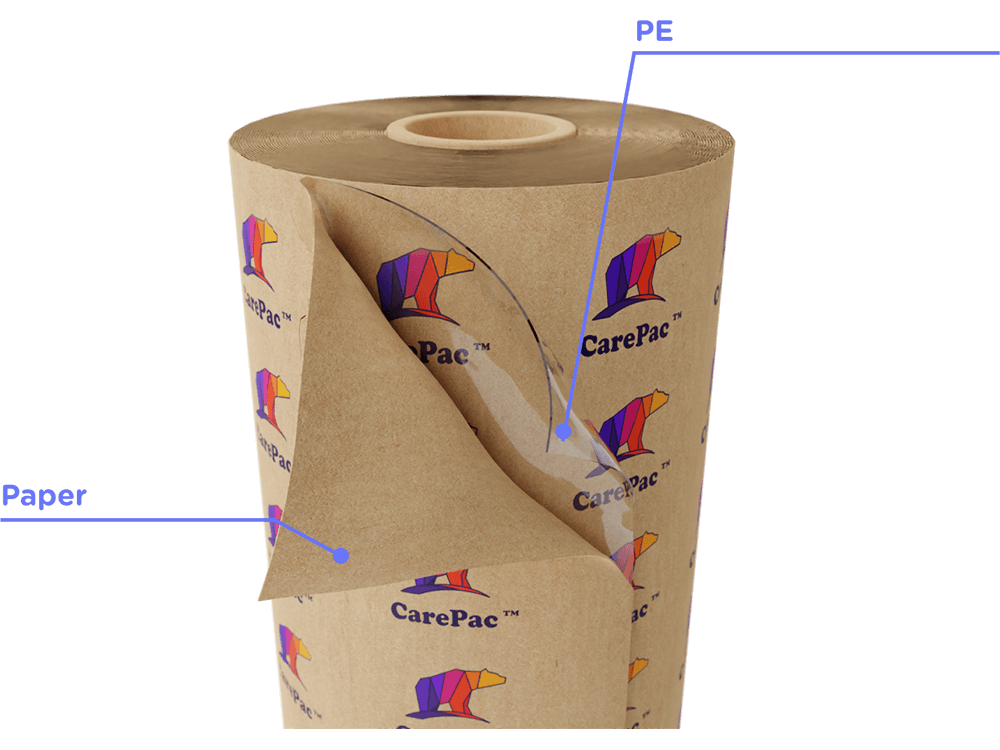
    CareKraft-KP is a kraft paper PE lamination which is not as high of a barrier as KAP but provides a even more natural look and feel. The material is often used for low barrier applications and is a lower cost point than CareKraft-KAP.

    CareFoil-PAP

    CareFoil-PAP is an encapsulated aluminum foil based material with a similar high barrier potential as CareKraft-KAP but with a PET exterior print layer. 

  • CareKraft-KP

    CareKraft-KP

    CareKraft-KP

    Overview

    This FDA approved film does not stretch due to the orientation of the layers during the lamination process. Great for Food and industrial uses, The kraft paper can be either White or Brown kraft and is combined with a heat sealable PE liner. This is a low barrier product which is best suited for shelf stable products that do not require high barrier packaging to extend its shelf life. 

    Note: The performance of any film will be influenced by a number of factors and testing must always be performed to ensure the film meets the use.

    Relative Performance Indications

    Oxygen Barrier

    Moisture Barrier

    Light Barrier

    STrength

    Heat Resistance

    Freezer Storage

    Material Data

    Here are some of the common indicated properties for this film.

    ITEM

    UNITS

    ACCEPTABLE LIMIT

    RESULTS

    ITEM CONCLUSION

    Thickness Deviation

    %

    ±10 

    +1.4~ +8.6

    Pass

    Length Deviation

    mm

    length 101~400;±3.0

    -1.0~0

    Pass

    Width Deviation

    mm

    width 101~400;±3.0

    -1.0

    Pass

    Width Deviation for heat seal

    mm

    seal width 5~10;±1.5

    0~+1.0

    Pass

    Tensile Strength

    N

    ≥40

    Longitudina:6

    Landscape:61

    Pass

    Breaking Elongation

    %

    ≥5

    Longitudina:161

    Landscape:97

    Pass

    Right angle tearing force

    N

    ≥3.5

    Longitudina:13.8

    Landscape:13.5

    Pass

    Interlayer peeling force

    N

    ≥2.5

    Longitudina:8.8

    Landscape:9.3

    Pass

    Sealing force

    N

    ≥20

    Longitudina:30.5

    Landscape:29.5

    Pass

    Anti-pendulum impact energy

    J

    ≥20

    1.92

    Pass

    Water vapor transmission(WVTR 38 ﹾC @90%RH)

    g/(㎡·24h)

    >0.8

    5.8

    Pass

    Oxygen transmission(OTR 23 ﹾC @50% RH)

    ㎝³/(㎡·24h·0.1MPa)

    ≤12

    47

    Pass

    Heat resistance

    ≤50

    Meet the standards

    Pass

    Cold resistance

    %

    No significant deformation,layered,cracking

    96

    Pass

    Oil resistance

    %

    ≥60

    Tensile force change rate:0.87

    Elongation force change rate:7.1

    Pass

    Pressure resistance

    Take 5 bags filled with similar contents 140g and seal them one by one on the smooth contact surface, the area is larger than the sample between the splints, load 400N to maintain 1min, the bag should be no leakage, no rupture.

    Meet the standards

    Pass

    Drop performance

    Take 5 bags filled with similar content 140g, drop height of 500mm, the bag will fall in the horizontal and vertical direction once, the bag should be no leakage, no rupture.

    Meet the standards

    Pass

    Sensory Index;Exterior

    Flat, no wrinkles, good edge seal, no cracks, separation of pores and composite layers.

    Meet the standards

    Pass

    Sensory Index;Bag soaking solution

    No odor,turbidity and discoloration.

    Meet the standards

    Pass

    Evaporation residue;65% Acetic acid,60℃,2h

    mg/L

    ≤30

    12

    Pass

    Evaporation residue;65% Ethanol,Normal temperature,2h

    mg/L

    ≤30

    6.5

    Pass

    Evaporation residue;Ethane,Normal temperature,2h

    mg/L

    ≤30

    3.2

    Pass

    Potassium permanganate consumption(Water),60℃,2h

    mg/L

    ≤10

    0.31

    Pass

    Heavy metal(Pb)4% Acetic acid,60℃,2h

    mg/L

    ≤1

    <1

    Pass

    Toluene diamine(4% Acetic acid)60℃,2h

    mg/L

    ≤0.004

    Not detected

    Pass

    Density at 23℃

    g/cm3

    0.85-1.00

    Meet the standards

    Pass

    FDA 21 CFR 177.1520- Extractable fraction in n-hexane and soluble fraction in xylene

    Test Requested:

    As specified for client, to determine Extractable fraction in n-hexane and soluble fraction in xylene for compliance with the Food and Drug Administration Regulations for

    polypropylene and polyethylene used in contact with food

    Test Method:

    With reference to FDA 21 CFR 177.1520.

    Extractable fraction in n-hexane at 50℃

    w/w%

    1.5

    <0.6

    PASS

    Soluble fraction in xylene at 25℃

    w/w%

    3.3

    10.9

    PASS

    All values indicated regarding film properties or characteristics, were provided by our film supplier and are given as an indication and should be considered as average indicative values. This document is based on our film supplier statements and / or independent lab testing, data from multiple tests, or different film suppliers of the same film family may be combined in the above table. While unexpected, it is possible that the validity of the statements could change without notice.

    Environmental Impact

    This material is a multi-layer laminated plastic and will typically fall into the check-locally, or store drop off category. 

    Property
    Sample Data

    Recyclable

    Multi-Layer Check Locally

    PCR Option Available

    Yes

    At Home Compostable

    No

    Commercial / Industrial Compostable

    No

    Recyclability and composability varies by jurisdiction. Composability claims are limited by law, and vary by jurisdiction, consult a qualified professional in your state. 

    Compliance

    Compliance is important, and here are CarePac we can support your compliance needs with extensive film supplier and lab testing data.  
     

    BPA FREE

    FDA Food Approved

    PROP 65

    Property
    Sample Data

    CEPE/EuPIA

    Manufactured in accordance with

    Cal. H&S (25214.16)

    Compliant

    PFAS – perfluoroalkyl and polyfluoroalkyl § 37-0209, RCW 70A.222.070

    Does not knowingly add

    Prop 65 (OEHHA)

    Does not contain listed substances

    SR 817.023.021

    Not in excess of overall or specific migration

    EU directive 10/2011/ED

    Compliant

    EU directive 1935/2004

    Compliant

    FDA 21 CFR 73

    Compliant

    Cal. H&S (25214.16)

    Compliant

    RoHS Directive 2011/65/EU

    PASS

    Compliance information above is derived from lab testing, or film supplier statements. Independent verification is advised, and Lot specific testing available

    Related Materials

    CareKraft-KVP

    This material has high barrier to moisture vapor and oxygen but low physical strength and the unprocessed paper exterior can crack and crinkle, and tear easily, and must be handled and stored with more care than a plastic product. The natural paper exterior is subject to natural variations in color, texture, and all visual elements between each lot.

    CareKraft-KAP

    The brown natural Kraft exterior makes the structure rigid, but it tears easily in both directions. The foil provides excellent barrier to extend shelf life and protect the taste profile. The polyethylene sealant layer is extruded brown to mask the color of the foil. This unique design element makes the PF500 BRN a good fit for customers that do not want to see foil in their packaging but need the protection that it exhibits. 

  • CareKraft-KVP

    CareKraft-KVP

    CareKraft-KVP

    Overview

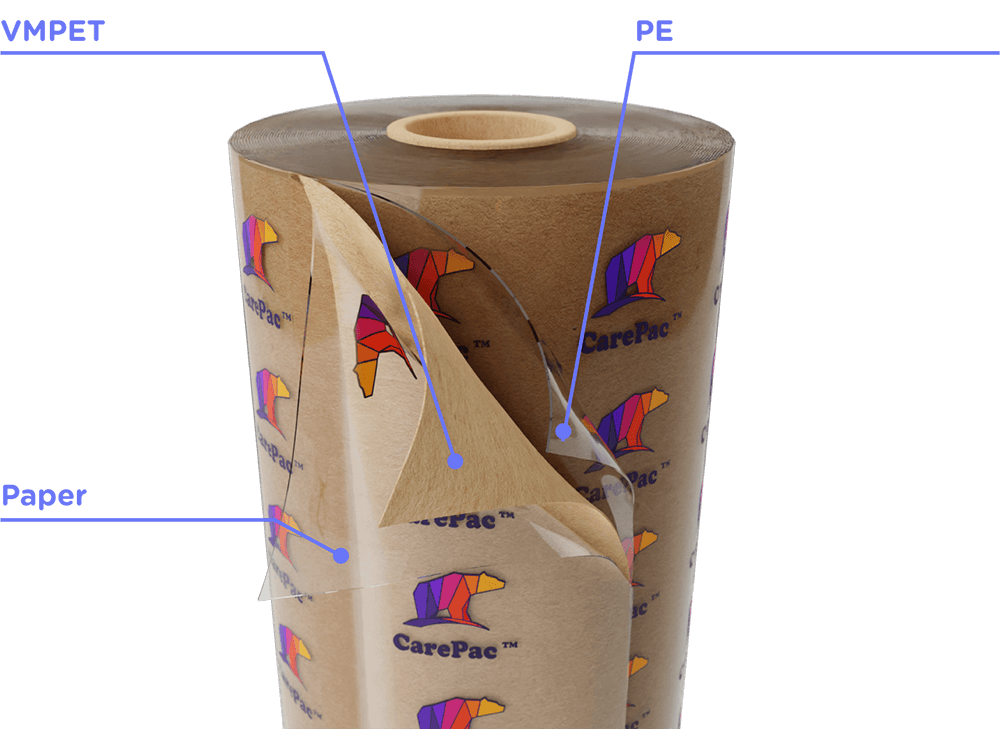
    A popular product for its appealing texture and visual appeal. The Kraft exterior gives this product a very natural look and feel. It is extremely rigid but tears easily in all directions. This material has high barrier to moisture vapor and oxygen but low physical strength and the unprocessed paper exterior can crack and crinkle, and tear easily, and must be handled and stored with more care than a plastic product. The natural paper exterior is subject to natural variations in color, texture, and all visual elements between each lot.

    Note: The performance of any film will be influenced by a number of factors and testing must always be performed to ensure the film meets the use.

    Relative Performance Indications

    Oxygen Barrier

    Moisture Barrier

    Light Barrier

    STrength

    Heat Resistance

    Freezer Storage

    Material Data

    Here are some of the common indicated properties for this film.

    ITEM

    VALUE / RESULT / INDICATION

    Material Composition 

    Kraft Paper/VMPET/PE   

    Available Thickness Range 

    4.5mil – 7 mil nominals  

    Tested Caliper Thickness 

    4.5 mil 

    Tested As  

    Film 

    MVTR 

    .004 g/100in2 day  

    OTR 

    .004 cc/100 in2 day  

    Tensile Strength 

    MD >27 lbs. TD > 16 lbs 

    Tearing Strength 

    MD >64 g CD> 75 g 

    All values indicated regarding film properties or characteristics, were provided by our film supplier and are given as an indication and should be considered as average indicative values. This document is based on our film supplier statements and / or independent lab testing, data from multiple tests, or different film suppliers of the same film family may be combined in the above table. While unexpected, it is possible that the validity of the statements could change without notice.

    Environmental Impact

    This material is a multi-layer laminated plastic and will typically fall into the check-locally, or store drop off category. 

    Property
    Sample Data

    Recyclable

    Multi-Layer Check Locally

    PCR Option Available

    No

    At Home Compostable

    No

    Commercial / Industrial Compostable

    No

    Recyclability and composability varies by jurisdiction. Composability claims are limited by law, and vary by jurisdiction, consult a qualified professional in your state. 

    Compliance

    Compliance is important, and here are CarePac we can support your compliance needs with extensive film supplier and lab testing data.  
     

    BPA FREE

    FDA Food Approved

    PROP 65

    Property
    Sample Data

    CEPE/EuPIA

    Manufactured in accordance with

    Cal. H&S (25214.16)

    Compliant

    PFAS – perfluoroalkyl and polyfluoroalkyl § 37-0209, RCW 70A.222.070

    Does not knowingly add

    Prop 65 (OEHHA)

    Does not contain listed substances

    SR 817.023.021

    Not in excess of overall or specific migration

    EU directive 10/2011/ED

    Compliant

    EU directive 1935/2004

    Compliant

    FDA 21 CFR 73

    Compliant

    Cal. H&S (25214.16)

    Compliant

    RoHS Directive 2011/65/EU

    PASS

    Compliance information above is derived from lab testing, or film supplier statements. Independent verification is advised, and Lot specific testing available

    Related Materials

    CareKraft-KAP

     The brown natural Kraft exterior makes the structure rigid, but it tears easily in both directions. The foil provides excellent barrier to extend shelf life and protect the taste profile. The polyethylene sealant layer is extruded brown to mask the color of the foil. This unique design element makes the PF500 BRN a good fit for customers that do not want to see foil in their packaging but need the protection that it exhibits. 

    CareSilver-PVP

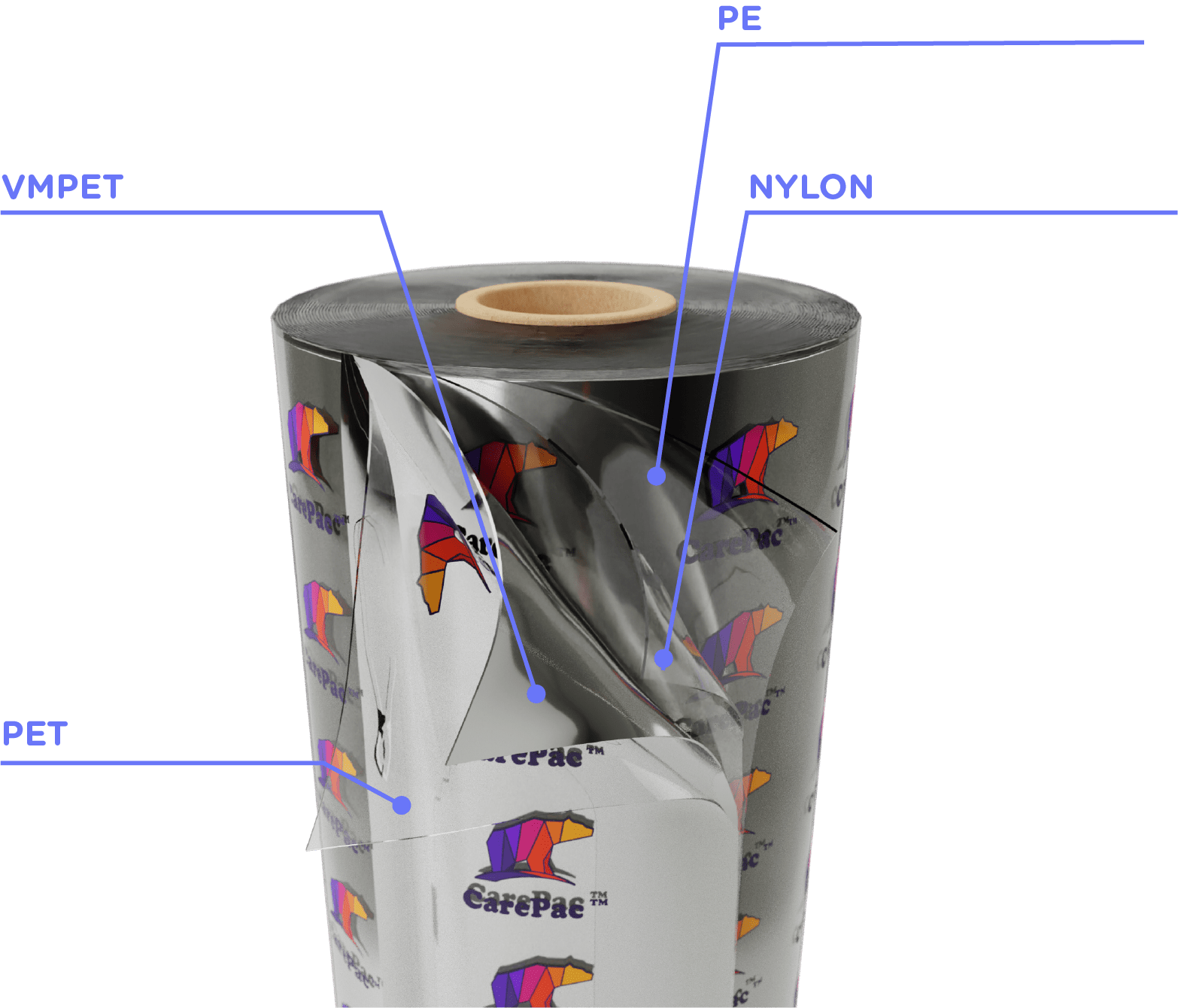
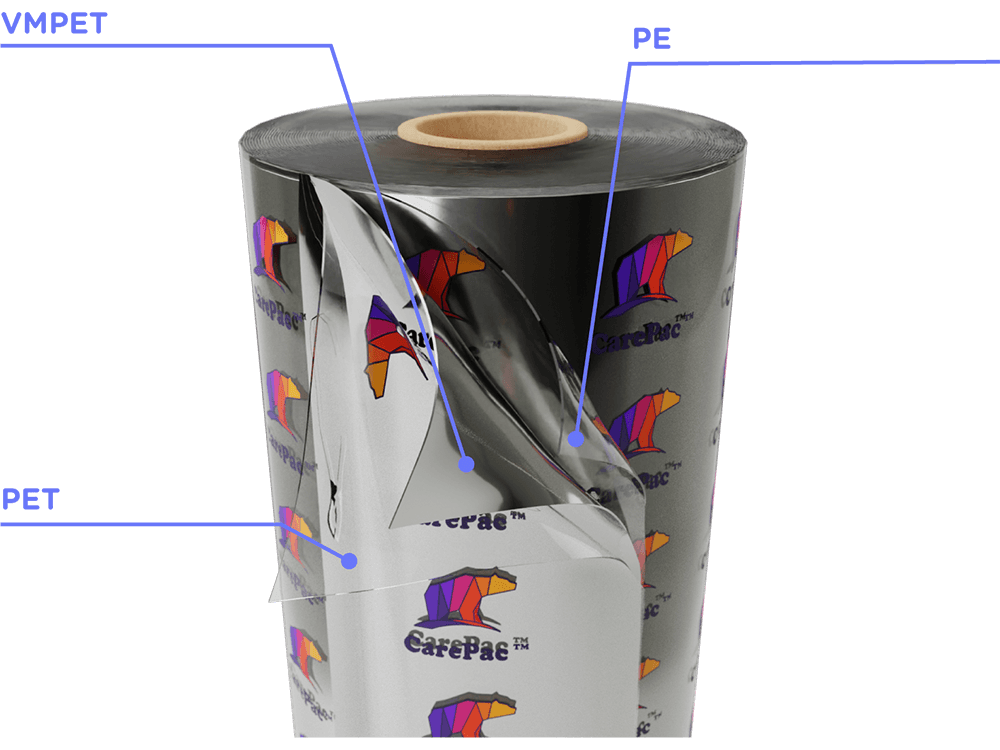
    CareSilver-PVP is a PET/VMPET/PE barrier lamiation film that serves as a great base for printed bags, and provides a quality general use barrier to protect the contents from oxidation, moisture, and premature spoilage. CareSilver, is a 3-layer lamination structure consisting of PET, Vapor Metalized Polyethylene Terephthalate, and PE. It is the primary line of Vapor Metalized polyethylene Terephthalate (VMPET) or Mylar films. 

  • CareVac-NPB

    CareVac-NPB

    CareVac-NPB

    Overview

    CareVac-NPB has a high clarity, high temperature, and extra strength through the incorporation of nylon sets this film up as an excellent choice for heavy duty chamber vacuum applications. This FDA approved film is intended primarily for demanding food applications that require wide temperature swings (freezer to boiling water) The retort tie layers exhibit high strength and low OTR. Hot fill soups, sauces, purees, and hot fill conditions for Condition b 21CFR 176.170:212F for 30 minutes for food groups II, III, IV-A, VII-B.

    Note: The performance of any film will be influenced by a number of factors and testing must always be performed to ensure the film meets the use.

    Relative Performance Indications

    Oxygen Barrier

    Moisture Barrier

    Light Barrier

    STrength

    Heat Resistance

    Freezer Storage

    Material Data

    Here are some of the common indicated properties for this film.

    ITEM

    VALUE / RESULT / INDICATION

    Material Composition 

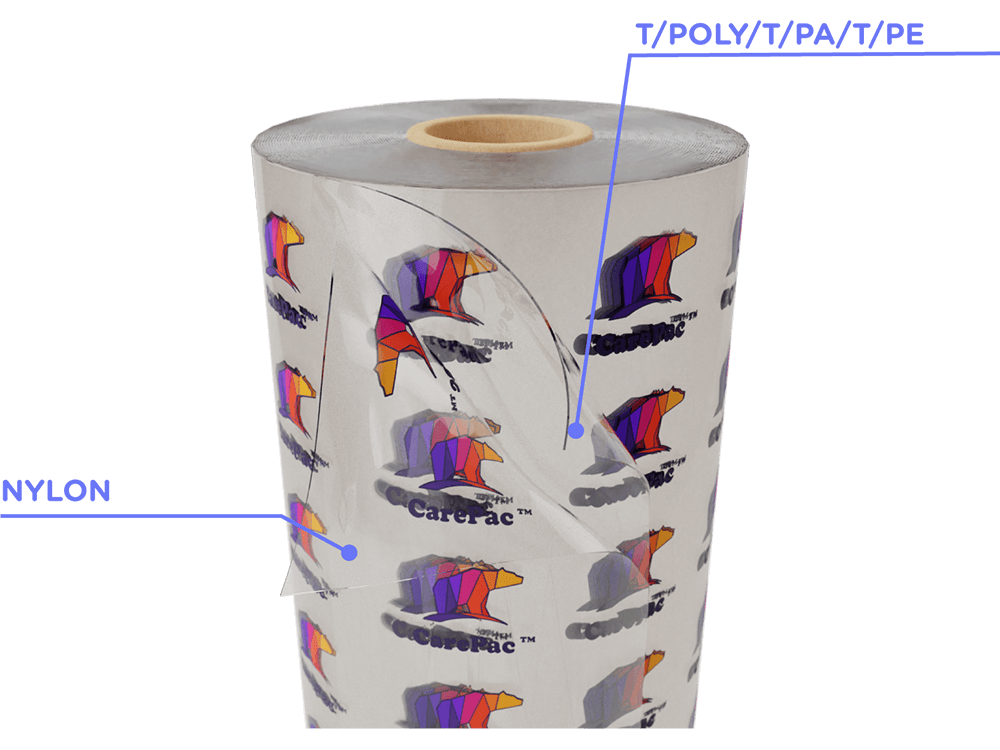
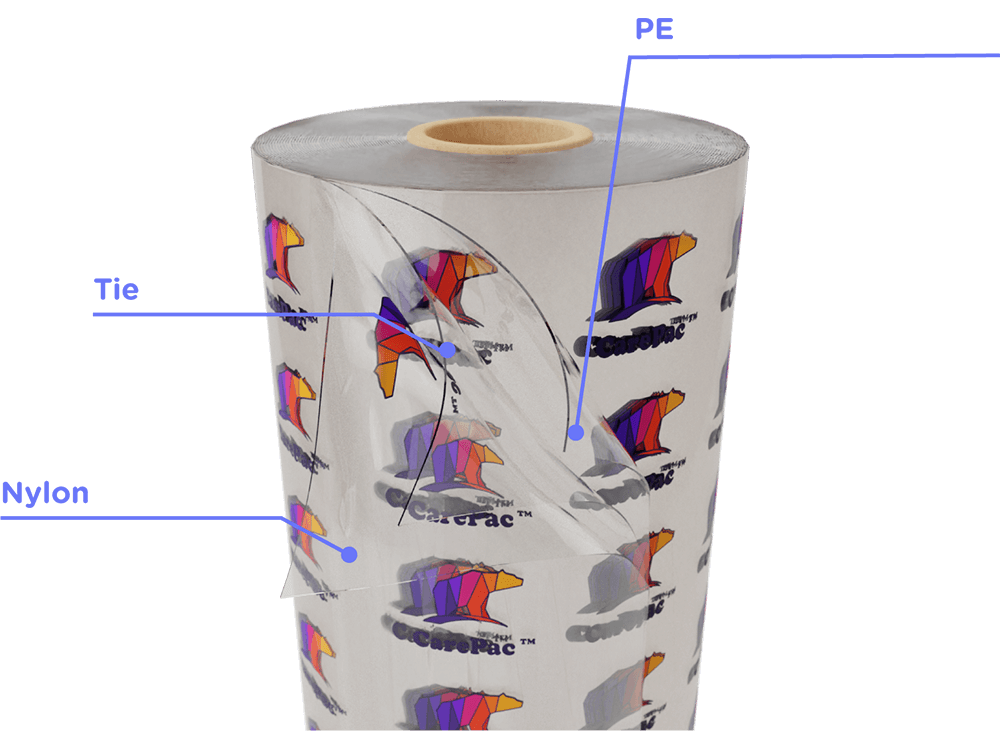
    NYLON/T/Poly/T/PA/T/PE 

    Available Thickness Range 

    4 – 8 mil 

    Tested Caliper Thickness 

    5.0 

    Tested As  

    Film 

    MVTR 

    .32 cc/100sq 

    OTR 

    3.22 gms/100sq 

    Tensile MD/TD 

    4350 / 4060 PSI 

    Haze 

    6  D-1003 

    Elongation 

    >400 D882 

    Tear CD 

    >450 D882 

    Seals 

    >30 N/15mm 

    COF 

    Variable Kinetic -0.1-0.26 D1894 

    All values indicated regarding film properties or characteristics, were provided by our film supplier and are given as an indication and should be considered as average indicative values. This document is based on our film supplier statements and / or independent lab testing, data from multiple tests, or different film suppliers of the same film family may be combined in the above table. While unexpected, it is possible that the validity of the statements could change without notice.

    Environmental Impact

    This material is a multi-layer laminated plastic and will typically fall into the check-locally, or store drop off category. 

    Property
    Sample Data

    Recyclable

    Multi-Layer Check Locally

    PCR Option Available

    No

    At Home Compostable

    No

    Commercial / Industrial Compostable

    No

    Recyclability and composability varies by jurisdiction. Composability claims are limited by law, and vary by jurisdiction, consult a qualified professional in your state. 

    Compliance

    Compliance is important, and here are CarePac we can support your compliance needs with extensive film supplier and lab testing data.  
     

    BPA FREE

    FDA Food Approved

    PROP 65

    Property
    Sample Data

    CEPE/EuPIA

    Manufactured in accordance with

    Cal. H&S (25214.16)

    Compliant

    PFAS – perfluoroalkyl and polyfluoroalkyl § 37-0209, RCW 70A.222.070

    Does not knowingly add

    Prop 65 (OEHHA)

    Does not contain listed substances

    SR 817.023.021

    Not in excess of overall or specific migration

    EU directive 10/2011/ED

    Compliant

    EU directive 1935/2004

    Compliant

    FDA 21 CFR 73

    Compliant

    Cal. H&S (25214.16)

    Compliant

    RoHS Directive 2011/65/EU

    PASS

    Compliance information above is derived from lab testing, or film supplier statements. Independent verification is advised, and Lot specific testing available

    Related Materials

    CareVac-NP

    This film is a coextruded nylon/Poly vacuum film designed for standard food and industrial chamber vacuum applications. Best for conversion into 2-seal and 3-seal pouches.  

    CareClear-PNP

    This material has a higher than average moisture and strength, with good oxygen and gas barrier. As this is a clear product it has limited light barrier potential but does have good heat resistance. Enhanced heat resistance could be obtained with CareClear-PNC is required by the use application.